
Implementing Pancasila Economics in National Energy Policy
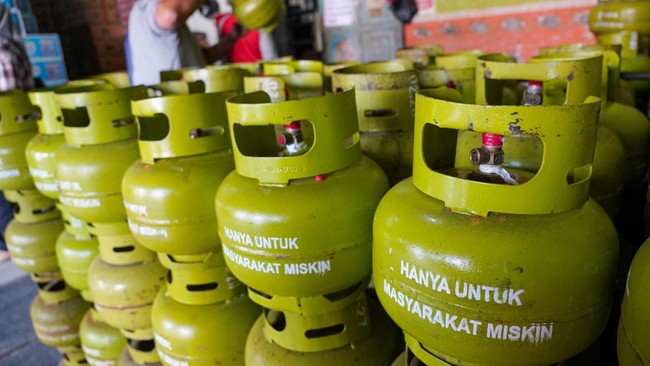
In the midst of globalisation and the world’s energy transition, Indonesia faces fundamental challenges that often escape public attention, particularly the understanding that energy is not merely a technical sector but the foundation of national sovereignty. Energy determines industrial competitiveness, stability of essential commodity prices, smooth transportation and logistics, and social resilience.
Therefore, energy policy must not be treated solely as a matter of business or investment. It must be placed within an ideological and constitutional framework, namely Pancasila Economics.
In Pancasila Economics, the state must not be absent. The state acts as a guide, protector, and guarantor of justice. This does not mean the state monopolises all economic activities, but it is obliged to ensure that strategic sectors are not left entirely to market mechanisms that often disregard social justice. Energy is the most strategic sector among them.
Article 33 of the 1945 Constitution provides a clear mandate that branches of production important to the state and controlling the livelihood of many people must be controlled by the state. Energy falls within this category. Electricity, oil and gas, coal, geothermal, and renewable energy are not merely commodities but the infrastructure of national life. If energy follows only profit calculations, vulnerable groups will be the first affected.
In recent decades, global energy price volatility has repeatedly shaken the national economy. Surges in world oil prices not only impact subsidies but also drive inflation, increase logistics costs, and suppress purchasing power.
Crises due to geopolitical conflicts demonstrate that the international energy market is not always rational. It can change drastically due to wars, embargoes, or supply chain disruptions. Countries that surrender energy entirely to market mechanisms will lose control over their economic stability.
Therefore, Pancasila Economics in energy policy means the state becomes the main actor in maintaining resilience and affordability. The state must ensure that energy prices do not become an instrument that impoverishes the people. The state must guarantee access to electricity, gas, and fuel not only for big cities and industrial areas but also reaching villages and underdeveloped regions. Energy must become a driver of equity, not a reinforcer of inequality.
However, the state’s presence must not stop at subsidies. Subsidies are a tool, not the goal. Pancasila Economics demands consistent long-term planning. The state needs a realistic and measurable national energy roadmap. That roadmap must address three things, including supply resilience, price affordability, and energy industry independence.
This is where the challenge of Indonesia’s energy policy has been so far. We often talk about energy transition, but forget that transition is an industrial competition arena. Many advanced countries promote renewables not only for the climate but to build new industries, new jobs, and mastery of technology.
If Indonesia only becomes a market for solar panels, wind turbines, inverters, batteries, and grid technology from abroad, the transition will deepen dependency.
Pancasila Economics rejects that dependency model. It demands independence. Therefore, the energy transition must be based on industrialisation. The state needs to ensure that renewables are not only installed but also downstreamed.
Key components must be produced domestically. Engineering and system integration industries need to be strengthened. Human resources must be prepared. Without state presence, the market will choose the easiest path, including by importing technology and experts. Indonesia will only become a consumer.
The state must also bridge the main paradox of the transition, namely that the clean energy sector will require massive investment, while industry needs cheap energy. Without smart policies, clean energy can become expensive and hinder industrialisation.
However, with the right policy design, clean energy becomes the foundation of competitiveness. Many global industries now require green energy supplies. Data centres, electric vehicle manufacturing, and export supply chains increasingly demand low-carbon electricity. The state needs to ensure competitive green energy supplies so Indonesia does not lose investment opportunities.
In this context, Pancasila Economics is not anti-market mechanism. However, Pancasila Economics acknowledges the importance of innovation and investment. But the market must be directed towards national goals. Energy incentives must be designed so that investments not only benefit investors but also produce broad social benefits. Energy must strengthen the people’s economy, not just the elite sector.
Energy policy aligned with Pancasila Economics also needs to involve villages and communities. Small-scale renewables like rooftop solar, micro-hydro, biogas, and village biomass can strengthen local independence.
With the right policies, renewables become an instrument of people’s economics that opens jobs, lowers household energy costs, and increases small business productivity. Without state support, access to financing and technology will remain uneven.
We also need to be honest that energy policy is often caught in the tug-of-war of interests. On one side, state revenues from fossil energy are still large. On the other side, clean energy targets are increasingly urgent. Pancasila Economics places national interests as paramount. The transition must be fair and gradual, minimising social shocks, yet committed to supporting a better future.
Strong state presence is also needed so that revenues from fossil energy are not exhausted for short-term consumption. Part of the income must become