
Imparsial Criticises Criminal Approach in Agrarian Conflict, Citizens Vulnerable to Criminalisation
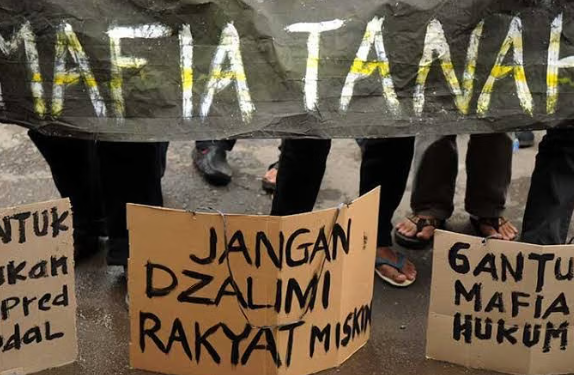
The Bantargebang tragedy serves as evidence of systemic failure.
Imparsial’s Research Coordinator Annisa Yudha has levelled sharp criticism at the state’s tendency to employ criminal law enforcement approaches in handling agrarian conflicts. According to her, this punitive pattern of intervention is highly susceptible to triggering criminalisation of marginalised communities in the field.
The criticism responds to data from the National Human Rights Commission (Komnas HAM) recording at least 3,264 agrarian dispute complaints over the past five years. Regions with the highest case numbers were recorded in North Sumatra, Central Java, and Central Kalimantan.
Annisa stressed that the high number of reports demonstrates that conflict escalation resulting in criminal proceedings remains a serious problem in Indonesia. “The high number of reports shows that agrarian conflicts leading to criminal proceedings remain a serious issue. Fundamentally, agrarian conflict is an administrative or civil dispute concerning land ownership or control,” Annisa said to Media Indonesia on Tuesday (10 March).
According to her, agrarian conflicts should be resolved through administrative or civil mechanisms. However, in practice, the state frequently employs criminal approaches involving police apparatus.
“Rather than resolving conflicts through administrative or civil approaches, the state instead uses a punitive criminal approach by deploying police apparatus that has significant potential to cause criminalisation of citizens, such as indigenous communities, local communities, and farmers,” she said.
She also highlighted the tendency to employ security approaches in agrarian conflicts, including involvement of military apparatus.
“Recently the state has been using coercive approaches by deploying TNI apparatus to become involved in resolving agrarian conflicts, which actually worsens the situation and broadens potential human rights violations,” Annisa said.
Additionally, Annisa criticised the establishment of a Forest Area Enforcement Task Force (PKH), which she deemed requires careful examination in the context of agrarian conflicts. According to her, enforcement approaches that overly emphasise law enforcement without resolving the root problems of land governance have the potential to enlarge conflicts in the field.
“Enforcement approaches that overly emphasise law enforcement without first resolving problems of land governance and land tenure status have the potential to enlarge conflicts in the field,” she said.
Moreover, she stressed that in several cases, forest area enforcement policies also risk displacing communities who have long lived and depended on livelihoods in those regions.
Annisa emphasised that in handling agrarian conflicts, the use of criminal law should be a final step or ultimum remedium.
“In the context of handling agrarian conflicts, the use of criminal law is a final step or ultimum remedium,” she said.
For this reason, law enforcement apparatus must first ensure whether the problem at hand constitutes an administrative dispute that should be resolved through civil mechanisms.
“Law enforcement apparatus must first ensure whether the problem constitutes an administrative dispute that should be resolved through civil mechanisms. If so, the state must guarantee that the administrative legal process runs without needing to involve security apparatus such as TNI or National Police,” Annisa said.
Furthermore, she emphasised that apparatus must also prioritise non-coercive approaches such as mediation and uphold human rights principles in handling agrarian conflicts.
“The step that apparatus should take is to prioritise non-coercive approaches such as mediation and position criminal law as a final step to avoid citizen criminalisation,” she said.
According to Annisa, this step is important to ensure the state continues to guarantee and respect community rights, particularly the right to land, living space, and livelihoods.
“Going forward, both the National Police and TNI involved in handling agrarian conflicts must ensure their presence does not worsen the conflict situation or favour certain interests. That way, indigenous communities and local communities will not remain in vulnerable positions towards intimidation or criminalisation,” she concluded.