
Impact of the US-Iran War on Indonesia's Economy, Lestari Moerdijat Urges Government to Prepare Anticipatory Policies
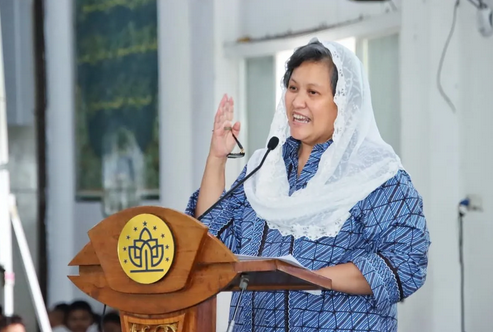
The conflict involving the United States (US), Israel and Iran is seen as potentially exerting wide-ranging impacts on global economic stability and security, including Indonesia. Deputy Speaker of the MPR RI Lestari Moerdijat emphasised that the government must promptly prepare appropriate policies to anticipate the various risks arising from the escalation of the war in the Middle East. ‘The mandate of the 1945 Constitution to protect the entire Indonesian nation and to participate in world peace must be the concern of decision-makers when addressing the impacts of the US-Israel and Iran conflict,’ said Deputy Speaker Lestari Moerdijat in remarks at an online discussion titled Nuclear or Regime Change? The Iran War and Its Influence on Indonesia and the World, organised by Forum Diskusi Denpasar on 12 March.
Moderated by Luthfi Assyaukanie, Ph.D (Senior Advisor to the Deputy Speaker of the MPR RI), the forum featured Indonesian Ambassador to Iran (2012–2016) Dian Wirengjurit; Denni Puspa Purbasari, M.Si, Ph.D (Economics Lecturer, Universitas Gadjah Mada); and Broto Wardoyo, Ph.D (Chair of the International Relations Department, Universitas Indonesia) as discussants. Also present was Dr Hendra Manurung (Lecturer in International Relations at the Indonesian Defence University).
According to Lestari, heightened attention to the US-Israel and Iran conflict is a prudent step given its potentially wide impact. ‘Rerie’, the familiar name for Lestari, said the war between the US and Iran is a continuation of the long-standing conflict since the 1979 Revolution.
She stressed that the impact of the conflict will not be confined to Middle Eastern countries but will be felt by the international community, including Indonesia. Accordingly, stakeholders are urged to devise policies capable of anticipating the various risks that emerge.
Dian Wirengjurit, who served as Indonesia’s Ambassador to Iran from 2012–2016, argued that the United States attacked Iran because of an existential threat to Israel, a justification that has been pursued. He contended that Iran’s existential threat today is being threatened by pressure from the US and Israel through various means.
He also said that efforts to topple the regime in Iran will face substantial obstacles because the country’s leadership structure is very strong. He added that killing Supreme Leader Ali Khamenei would not automatically enable the US to seize control in Iran.
Denni Puspa Purbasari, a lecturer in economics at Universitas Gadjah Mada, highlighted the global economic impact of the conflict closely linked to the energy sector, particularly due to the Hormuz Strait blockade as the main route for the world’s oil distribution.
He stated that the situation could raise logistics costs and erode market confidence due to rising political and security risks. He forecast that oil prices could jump 8–10 percent in the early phase of the war and could rise even higher if the conflict persists.
The impact on Indonesia, he said, would appear in inflation, the external trade balance, the rupiah’s exchange rate, and the nation’s fiscal conditions. He recommended that the government prioritise budget allocations to protect vulnerable groups from economic volatility. He also noted that the strength of the domestic economy would be a key determinant in facing global economic shocks.
Broto Wardoyo, Chair of the International Relations Department at Universitas Indonesia, argued that the US-Israel and Iran conflict relates to a coercive regime-change agenda by the United States. He noted that the US has attacked Iran twice, in June 2025 and February 2026. The June 2025 strike targeted nuclear facilities and killed several nuclear scientists and Iranian military commanders, while the February 2026 attack aimed to disrupt the leadership chain and the military command structure of Iran.
Hendra Manurung, a lecturer in International Relations at the Indonesian Defence University, assessed Iran’s response to the US-Israel attacks as warranted. He also stated that it is unlikely Iran would use nuclear weapons, given that it is a signatory to a nuclear treaty for peaceful purposes.
According to Hendra, there has been a significant shift in the objectives of US attacks on Iran. He argued that US interventions to topple regimes in several countries have often left lasting conflicts.
In the discussion, veteran journalist Usman Kansong highlighted Indonesian public concerns during the five days of the conflict, including questions about whether Lebaran celebrations could proceed normally. He said the public began to worry about fuel availability for the balik kampung travel. Usman urged the president to provide transparent explanations of the economic impact of the US-Iran conflict on Indonesia and to outline mitigations prepared by the government. He also hopes Indonesia will respond to the conflict with concrete actions, including evaluating membership of the Board of Peace and reallocating funds from the Free Nutritious Meals programme to strengthen fuel subsidies. The article also notes an in-depth analysis of the 2026 Iran-Israel-US war’s effects on Indonesia’s economy, global oil prices, and geopolitical stability.
Deputy Speaker Lestari Moerdijat expressed hope that the Christmas celebrations amid the disaster situation would reinforce the values of national unity and the spirit of gotong royong (mutual cooperation).
Permendikbudristek No. 55/2024 has provided broad space for universities to develop healthy campus environments.
The proliferation of media reporting on bullying in educational settings should be responded to with concrete steps.
Deputy Speaker Lestari Moerdijat reaffirmed that defending the nation is a citizen’s right; this is demonstrated in efforts to free hostages from the Abu Sayyaf group in the Philippines region.