
Impact of Middle East Conflict on Indonesia's State Budget: Between Risks and Resilience
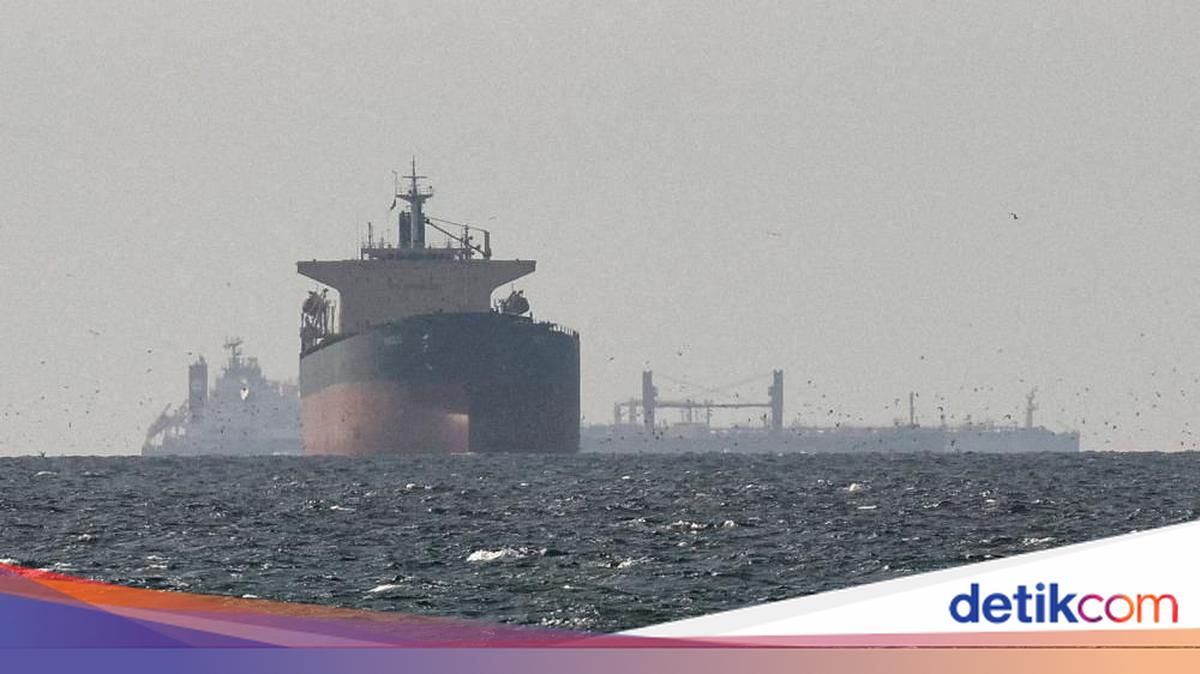
Every bullet fired in the Middle East could quietly erode Indonesia’s state budget. The conflict, geographically distant, can in a matter of days turn into real pressure on energy prices, the rupiah exchange rate, and people’s purchasing power.
The two-week ceasefire that was once agreed upon does indeed provide a respite. However, a respite does not mean safety. In a globally interconnected economy, even the smallest uncertainty in the world’s oil-producing region will quickly be interpreted by markets as a risk.
And, as usual, developing countries like Indonesia are at the forefront of feeling the impact.
State Budget Under the Shadow of Oil Prices
The state budget has been prepared from the outset with the assumption of Indonesia Crude Price (ICP) around US$70 per barrel. However, the Middle East conflict in 2026 is pushing global oil prices beyond that assumption, even potentially reaching US$90 to US$100 per barrel. This condition directly pressures the state’s fiscal space.
Rising oil prices have a major impact on the surge in energy subsidies and compensation. If prices break through US$100 per barrel, the subsidy burden could increase to hundreds of trillions of rupiah. This becomes a serious pressure because the budget must also support social spending, infrastructure development, and debt payments.
From the deficit side, the risk is not small. If the average oil price reaches US$90 per barrel, the additional deficit is estimated at around Rp136 trillion, and could rise to Rp204 trillion if prices reach US$100 per barrel. Even, the deficit could potentially exceed the safe limit of 3% and approach 4% of GDP if the conflict drags on.
Pressure also comes from the exchange rate and inflation. Rupiah depreciation against the US dollar increases the cost of importing energy and raw materials, which then drives up domestic prices.
In this situation, the government faces difficult choices: raising fuel prices or increasing subsidies. On the other hand, adjusting spending through efficiency and reallocation becomes an unavoidable step to maintain fiscal stability.
The question is: how long can we sustain this pattern?
Unresolved Import Dependence
Our fundamental problem has not changed. Indonesia is still a net oil importer. The nation’s energy needs cannot yet be met from domestic production.
This means that every upheaval in the Middle East will always be “translated” into direct pressure on the domestic economy. We are like passengers who do not hold the steering wheel but must bear the jolts.
Without serious steps to reduce this dependence, the state budget will continue to serve as a firefighting tool every time energy prices rise.
Real Impact: From Rupiah to People’s Kitchens
Global conflicts do not only affect oil prices. They also shake financial markets. Global investors tend to withdraw funds from developing countries to safer assets.
As a result, the rupiah exchange rate is under pressure. When the rupiah weakens, the cost of importing energy becomes more expensive. The subsidy burden rises again. This cycle of pressure continues.
The impact does not stop at macro numbers. It enters people’s kitchens. Transportation prices rise. Logistics costs increase. Staple goods prices are pushed up. SMEs that rely on goods distribution are also hit.
We must honestly say: every global crisis ultimately always ends in pressure at the household level.
The State Budget Must Not Continuously Become an “Emergency Shield”
So far, energy subsidies have indeed served as a social buffer. They are important, especially for maintaining economic stability. However, we cannot continue to make them the main solution.
Without bold reforms, the state budget will only become a patching tool every time a crisis comes.
Subsidies must be more targeted. They should no longer be enjoyed by groups that are actually capable. Digital technology must be utilised to ensure aid truly reaches those in need.
More than that, we need to dare to change the paradigm. From simply keeping prices stable to building energy resilience.
Fiscal Resilience: From Discourse to Action
We often talk about fiscal resilience. But resilience is not born from rhetoric. It is born from consistent and bold policies.
First, energy diversification must be accelerated. Renewable energy is no longer a long-term option but an urgent need. Every percent reduction in import dependence is a strengthening for the state budget.
Second, subsidy reform must be continued seriously. This is not about reducing aid, but ensuring fair distribution.
Third, state revenues must be strengthened. Tax reform must not stagnate. When spending pressures increase, the state must have a solid revenue foundation.
Fourth, debt management must remain prudent. In crisis situations, debt is indeed necessary. But without discipline, it can become a long-term burden that limits fiscal manoeuvre.
The Role of the DPR: Supervising, Not Just Approving
As part of the DPR, we do not only have a legislative function but also oversight. The state budget is not just a document of numbers, but a social contract between the state and the people.
Every subsidy policy, every macro assumption, every financing step must be critically tested. Does it truly protect the people? Is it sustainable?
Criticism is not to weaken the government. Criticism is a form of responsibility so that policies do not deviate from public interests.
This Middle East conflict must be read as a warning. That dependence on external factors is a real risk that cannot continue to be ignored.
We cannot control world oil prices. But we can control how we respond to them.
Will we continue to be reactive? Or start building a more robust system?
Managing the state budget amid global turbulence is a matter of courage in making decisions. Between maintaining short-term stability and building long-term resilience.
No policy is without risk. But there is one thing that must be the anchor: r