
Impact of Iran Conflict: Gulf States Reassess Security Relations with the United States
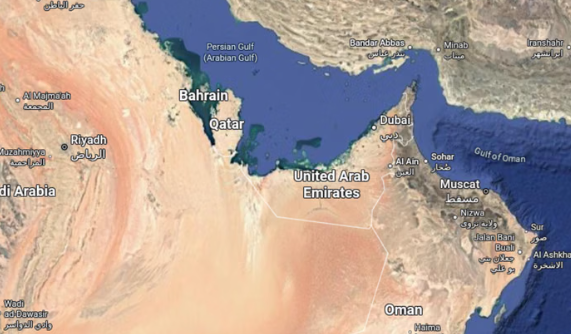
Escalating conflict with Iran is forcing Gulf region nations to re-evaluate the foundations of their security arrangements. Strategic partnerships with the United States, long considered the primary “shield,” are now being questioned for their effectiveness.
Hussein Ibish, senior expert from the Arab Gulf States Institute (IGSI), argues that American military presence on Arab soil does not guarantee absolute security. Despite many Gulf nations hosting US military bases, attacks continue without providing meaningful protection.
Speaking to Al Jazeera, Ibish emphasised that this uncertainty has reached a critical turning point.
“This is one of several turning points, starting at least from the era of Barack Obama and his ‘red line’ regarding chemical weapons use by the Syrian regime some administrations ago. And now, you see another example where the promise, or implicit assumption, about the protection you get by hosting an American base and making the US your security partner does not prove true in practice. It does not protect you from destabilisation,” Ibish stated.
Ibish outlined several painful realities experienced by regional nations. Saudi Arabia, for instance, failed to be protected from Iranian bombing in September 2019. A year later, Abu Dhabi was similarly attacked by Houthi rebels from Yemen.
He highlighted that all GCC (Gulf Cooperation Council) member nations allied with Washington remained vulnerable targets without meaningful consequences for the attackers.
“It did not protect Qatar from bombing by Israel during negotiations with Hamas. And it did not protect anyone, because all six GCC nations, which all have major security relationships with Washington, have all been attacked by Iran, again, without any consequences whatsoever.”
According to Ibish’s analysis, nations such as the United Arab Emirates, Saudi Arabia, and Qatar are increasingly realising that involvement in US aggressive strategy to contain Iran actually places them in dangerous positions. They feel exposed to significant risks yet receive minimal protection in return.
This situation threatens not only regional stability but is predicted to drag the global economy into the conflict.
“So, this creates losses not just in Washington, but also in China, Japan, India, South Korea, globally, because oil and LNG are fungible,” he concluded.
Production declines in the first three countries amount to approximately one-fifth of their January production levels, and in Iraq reach 70%, according to reports.
Drone attacks have struck the US Consulate in Dubai amid escalating tensions between the US-Israel alliance and Iran, expanding tensions that now extend to several Gulf nations and Europe.
French Foreign Minister Jean-Noel Barrot emphasised France’s readiness to defend Gulf allies from Iranian missile attacks, with plans for evacuating 400,000 French residents in the region.
UN Secretary-General António Guterres has engaged in intensive communications with several Gulf nation leaders to contain the escalation in the Middle East conflict.
The Iran-Israel conflict has entered a critical phase, with casualty figures reported across Iran, Lebanon, and US forces following the 28 February attacks.
The United States has relocated 2,000 Marines and the USS Tripoli amphibious assault ship from Japan to the Middle East. Donald Trump has warned Iran regarding freedom of navigation through the Strait of Hormuz.
The term “Alert Status One” has been widely discussed in recent weeks following Indonesian Armed Forces Commander General Agus Subiyanto’s announcement that Indonesia is on Alert Status One.
By 12 March 2026, 24,022 Indonesian pilgrims performing the umrah pilgrimage have returned to Indonesia through various international flights from Saudi Arabia.
US President Donald Trump has warned of potential strikes on Iran’s oil infrastructure on Kharg Island should freedom of navigation in the Strait of Hormuz be disrupted.