
Impact of Geopolitical Tensions, Rupiah Projected to Weaken to Rp 17,070 per US Dollar
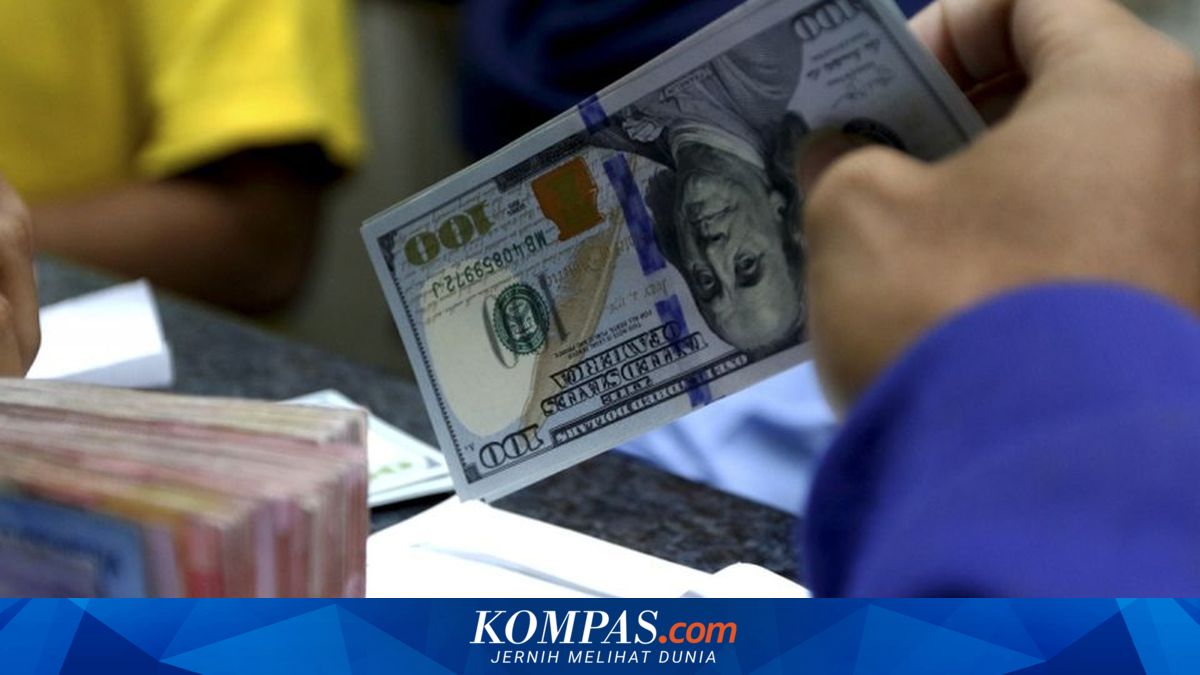
JAKARTA, KOMPAS.com - The rupiah exchange rate is projected to remain under pressure and could weaken to the psychological level of Rp 17,070 per US dollar during trading on Wednesday (1/4/2026).
The weakening of the Garuda currency is in line with rising geopolitical tensions in the Middle East, which have triggered a surge in energy prices.
The rupiah in the spot market did indeed weaken at the close of trading on Tuesday (31/3/2026), falling 39 points or 0.23 percent to Rp 17,041 per US dollar.
Therefore, Currency and Commodities Analyst Ibrahim Assuaibi predicts that the rupiah’s movement will be volatile but tends to weaken in the range of Rp 17,040 to Rp 17,070 per US dollar on Wednesday.
“For tomorrow’s trading, the rupiah will be volatile but close weaker in the range of Rp 17,040 - Rp 17,070 (per US dollar),” said Ibrahim to reporters on Tuesday.
This situation has driven a spike in global oil prices. Brent prices were recorded to have surged up to 59 percent throughout March, while West Texas Intermediate (WTI) rose 58 percent, marking the highest monthly increase in recent years.
Highlighting threats to energy supplies via sea routes from the war between Iran and the United States and Israel, Kuwait Petroleum Corp stated on Tuesday that their fully loaded crude oil tanker, Al Salmi, capable of carrying up to 2 million barrels, was hit by an attack allegedly carried out by Iran in Dubai port. Officials also warned of the potential for an oil spill in the area.
In addition, on Saturday, Yemen’s Houthi forces allied with Iran targeted Israel with missiles, raising new concerns about possible disruptions to the Bab el-Mandeb Strait, a narrow point connecting the Red Sea and the Gulf of Aden and a major route for ships travelling between Asia and Europe via the Suez Canal.
From the domestic perspective, Ibrahim assesses that pressure on the rupiah is also influenced by domestic economic dynamics. Indonesia’s economic growth in Q1-2026 is projected to be in the range of 5.1-5.2 percent, driven by household consumption and government spending.
However, slowing investment and export performance are restraining factors, particularly due to the worsening global conditions throughout March 2026, which have impacted financial markets and exchange rates.
“Economists project Q1-2026 economic growth to be in the range of 5.1 percent - 5.2 percent. The main drivers are household consumption and government spending,” he explained.
“However, there are obstacles from the slowdown in gross fixed capital formation (PMTB)/investment and net exports, caused by the deteriorating global conditions in March 2026 due to the war in the Middle East, which is pressuring energy prices, financial markets, and exchange rates,” Ibrahim continued.