
IMO Secretary-General Does Not Rule Out Mine Risks in Strait of Hormuz
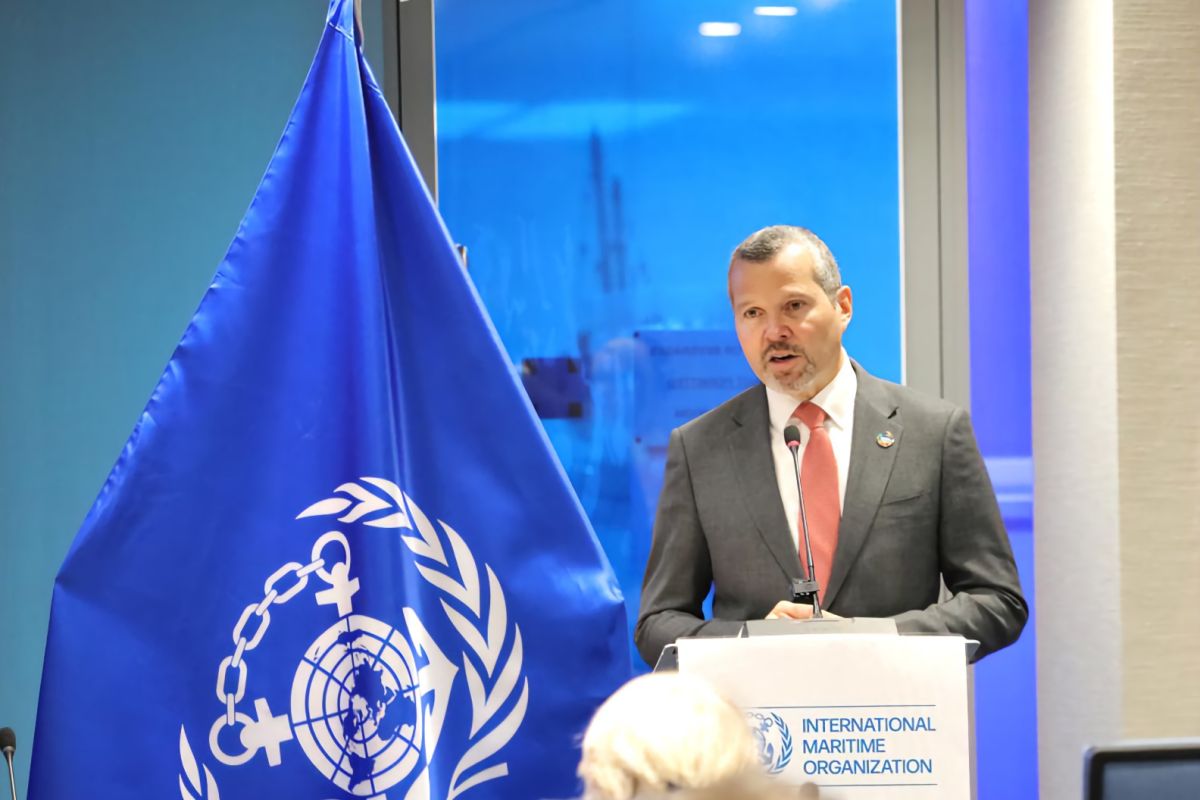
Moscow (ANTARA) - The Secretary-General of the International Maritime Organization (IMO), Arsenio Dominguez, stated that he has no official confirmation regarding mines in the Strait of Hormuz, but acknowledged the risk in the midst of the ongoing crisis in the region.
“There are reports about the risk of mines, particularly in the corridor areas recognised by our organisation,” Dominguez said in an interview with the Spanish newspaper El Pais on Friday.
“But up to today, I have not received official confirmation about the presence of mines in that area,” he added.
The Secretary-General said that before normal ship traffic through the strait can resume, the absence of navigation threats must first be verified.
He added that even a temporary ceasefire does not solve the problem by itself, as shipping requires security guarantees and continuity of existing transit rules.
“The situation remains critical, especially for the 20,000 crew members on nearly 2,000 ships in the Persian Gulf that cannot pass through the strait,” Dominguez said.
The longer the blockade continues, the more acute the humanitarian risks become for the crew, particularly regarding supplies of food, water, and fuel.
Countries in the region are doing what they can to help the seafarers, including providing medical care, he added.
Dominguez said the IMO has prepared mechanisms to evacuate ships from the Gulf after the crisis ends.
He said the evacuation will be carried out gradually, with priority ships identified based on the urgency of crew rotation and the type of cargo.
The evacuation process itself could take several weeks, after which traffic through the strait will be restored gradually.
The IMO Secretary-General also said the organisation supports the return to the 1968 navigation rules, regarding joint management by Iran and Oman, which remains the only recognised basis for safe shipping through the strait.
He criticised unilateral changes to navigation as violations of international law and rejected the imposition of transit fees, adding that freedom of navigation through international straits is enshrined in international law and the UN Convention on the Law of the Sea (UNCLOS).
The United States and Israel launched attacks on several targets in Iran on 28 February, resulting in more than 3,000 deaths.
On 8 April, Washington and Tehran announced a two-week ceasefire. The first round of negotiations, which then took place in Islamabad, ended without any breakthroughs.
However, there have been no reports of the resumption of hostilities, although the US has imposed a blockade on Iranian ports.
Source: Sputnik/RIA Novosti