
Imminent Crisis - Economy Paralyzed, This Asian Nation Faces Collapse
The war in the Middle East is bringing disaster to various parts of the world. One of the focuses is Sri Lanka. The country is struggling to prevent a repeat of the economic collapse four years ago.
Conditions in this South Asian nation are already showing signs of emergency. President Anura Kumara Dissanayake has implemented fuel rationing, raised its price, and increased electricity costs by up to 40% since the war initiated by the United States (US) and Israel against Iran has impacted global energy supplies.
Sri Lankan citizens are panicking and engaging in bulk fuel purchases (panic buying). This revives memories of 2022, when the economy plummeted sharply with inflation reaching 70% after Colombo failed to pay its US$46 billion foreign debt.
The accompanying protests at that time succeeded in ousting the then-president, Gotabaya Rajapaksa. He was accused of corruption and negligence in managing the state.
The Frontline Socialist Party (FSP), which led ‘Aragalaya’ or the struggle movement, warns that Dissanayake’s government may face internal collapse. The FSP is the group that successfully ousted Rajapaksa.
“We believe that the response to this economic crisis will come politically,” said FSP politburo member Duminda Nagamuwa to AFP, quoted from Channel News Asia, Saturday (4/4/2026).
“Because of the strength of the mandate (government), this economic shock is still being absorbed by the people without exploding politically,” he stated.
The Janatha Vimukthi Peramuna (JVP) left-wing party, led by Dissanayake, won a two-thirds majority in the November 2024 parliamentary election, following his own victory two months earlier in the presidential election.
Sri Lanka “Heading Towards the Abyss”
A trader at the Pettah night market in Colombo, Wasantha Jayalath, 55, said he voted for Dissanayake in 2024 hoping for better times, but feels the situation is worsening.
“We voted… thinking that a good and independent era would come for our country,” Jayalath told AFP.
“In reality, the opposite is true; what we realise is that this country is plunging deeper into the abyss,” he added.
A trader at the capital’s main wholesale market, Priyantha Sudharshana Silva, 53, does not blame the government for the current crisis.
“Protests won’t help because this country is already in a difficult position,” Silva told AFP.
“We believe that moving forward, even with these difficulties, is a significant achievement,” he said.
The Country in Emergency Conditions
Human rights lawyer Bhavani Fonseka said protests have subsided because society is busy with daily challenges in securing supplies.
Fuel rationing has shortened queues, but on Thursday (4/4), the government began limiting water supply hours to conserve reserves and pumping costs.
Fonseka said the broad powers granted to authorities under emergency laws to arrest and detain suspects could be used to silence public protests, raising serious concerns among human rights activists.
“We are in a situation where… existing laws, and the way they are used, raise questions about whether rights could be further eroded in the coming weeks and months,” she said.
Deadly Natural Disaster
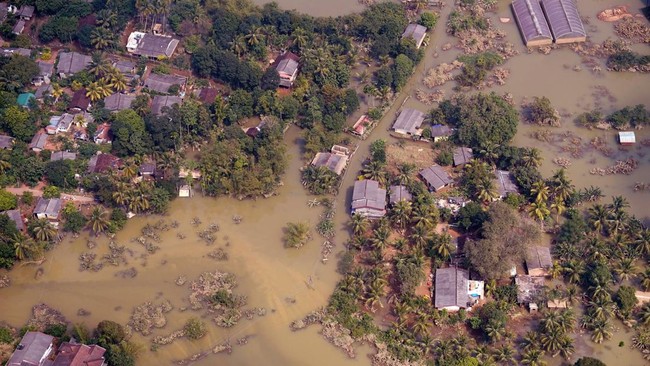
Cyclone Ditwah, the worst disaster since the 2004 Asian tsunami, killed 641 people and affected nearly the entire country at the end of last year.
The cyclone, which triggered floods and landslides, caused losses of around US$4.1 billion, according to the World Bank.
The government announced plans in December for additional spending of US$1.6 billion to fund the country’s recovery.
The funds will be used to rebuild destroyed homes, roads, bridges, and railway lines, as well as for cash assistance to help people regain lost livelihoods.
Colombo also received US$206 million in emergency financing from the International Monetary Fund (IMF) in December to address the disaster’s impact.
An IMF delegation is currently in Sri Lanka to review the four-year US$2.9 billion bailout loan before releasing a US$700 million tranche.
Sri Lankan authorities say they may ask the IMF to modify the loan’s austerity requirements, given the country’s worsening economic conditions due to external factors.