
IMIP Plants 150,000 Mangrove Seedlings to Support Climate Change Mitigation
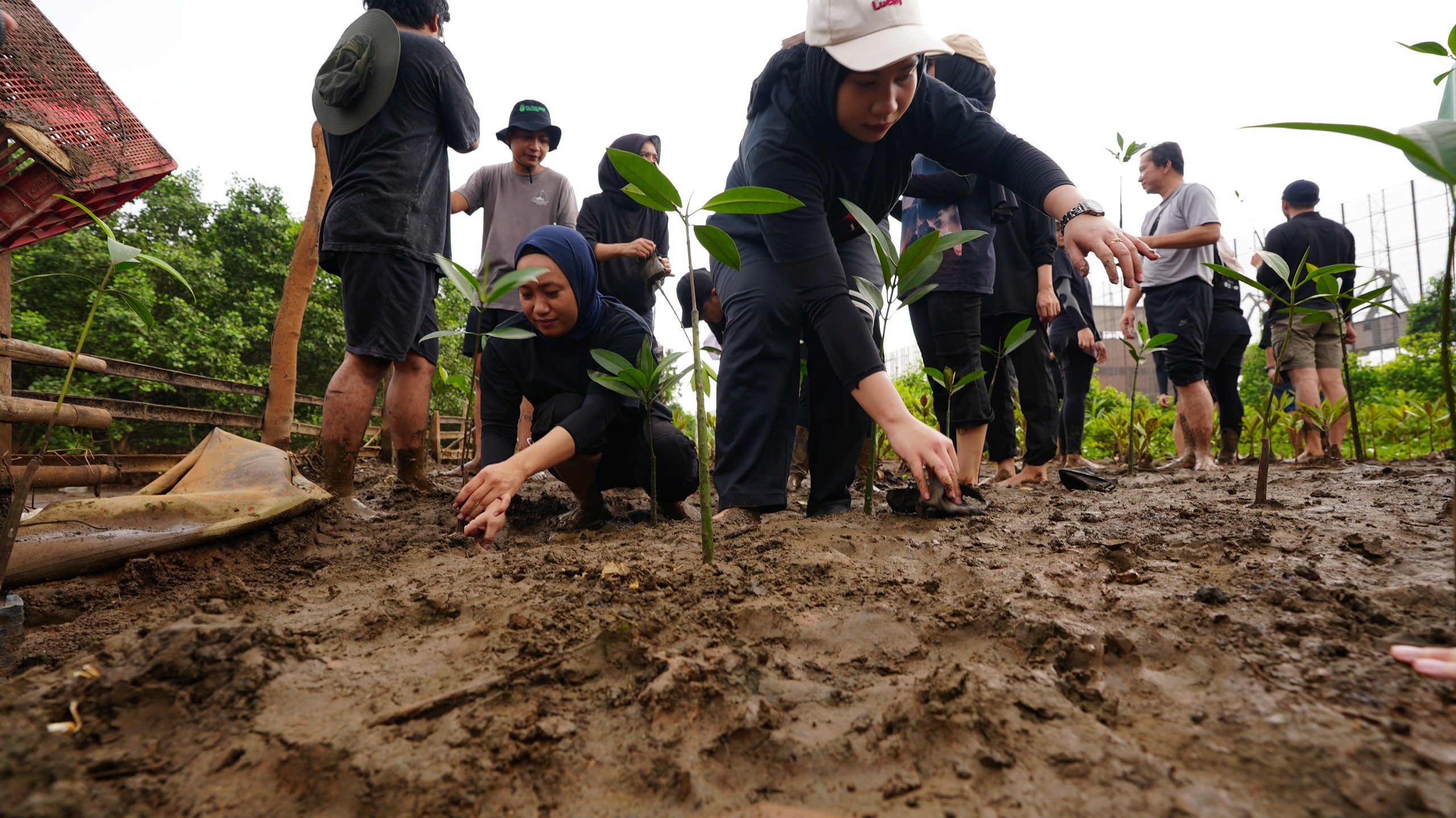
PT Indonesia Morowali Industrial Park (IMIP) places ecosystem balance and adaptation to climate change as the foundation of investment sustainability.
The company continues to strengthen its commitment to carbon emission reductions and biodiversity protection, including participation in the COP30 UNFCCC global climate forum. This effort aligns with Government Regulation No. 21 of 2021, which promotes the development of low-emission industrial zones. IMIP targets approximately 10% emissions reduction per period through energy efficiency, clean technology, and strengthened environmental ecosystems.
IMIP’s Environmental Director, Dermawati S, explained that the company implements a Biodiversity Action Plan. This programme focuses on critical habitat protection, restoration of degraded areas, and development of ecological corridors between natural and industrial zones. “We implement this programme with local communities, academics, and government. We refer to Good International Industry Practice standards and IFC guidelines,” said Dermawati in a press statement.
Since 2018 through 2025, IMIP has planted 70,188 mangrove seedlings in villages around the industrial zone, covering 5.62 hectares. Similar programmes have also been conducted in Palu (10,000 seedlings) and Brebes (30,000 seedlings). Total carbon absorption is estimated to reach 21,483.2 tonnes of CO₂e. In December 2025, the company planted mangroves in four new locations: Matansala Village (Morowali), Tosale Village (Donggala), Bungkutoko District (Kendari), and Tapulaga Village (Konawe). By 2026, IMIP targets planting 150,000 mangrove seedlings.
On land conservation, IMIP is developing IMIP EduPark, covering 23 hectares as a centre for conservation, education, and research of Sulawesi endemic fauna. In 2024, IMIP collaborated with the Natural Resources Conservation Agency to relocate 20 Macaca ochreata to a new habitat at Tokobae Nature Tourism Park.
For energy transition, IMIP promotes emissions reduction through clean energy initiatives. Tenants in the industrial zone operate 502 electric vehicles. PT Huayue Nickel Cobalt utilises waste heat from industrial processes for independent power generation. PT Dexin Steel Indonesia developed a rooftop solar installation with 65.89 MWp capacity using 119,800 solar panels covering 396,700 square metres. The system includes 22 MW/22 MWh energy storage facilities. Currently, IMIP is adding 18 MW of solar capacity for raw material facilities with approximately 80% progress.
Dermawati affirmed that all these measures demonstrate IMIP’s commitment to responsible industrial operations whilst supporting the global climate mitigation agenda. “COP30 is a momentum to strengthen concrete actions for climate crisis mitigation and adaptation. We ensure industrial growth proceeds alongside ecosystem protection and environmental sustainability,” she said.
IMIP delegation attended the COP30 forum in Brazil on 10–21 November 2025. The forum discussed the implementation of the Paris Agreement, global emissions reduction, tropical forest protection and biodiversity, acceleration of clean energy transition, and green technology financing. This participation reaffirms IMIP’s commitment to applying sustainability principles, resource efficiency, and environmental impact minimisation in every production process.