
IMF Notes and Indonesia's "Koteka" Strategy Against Trump Effect
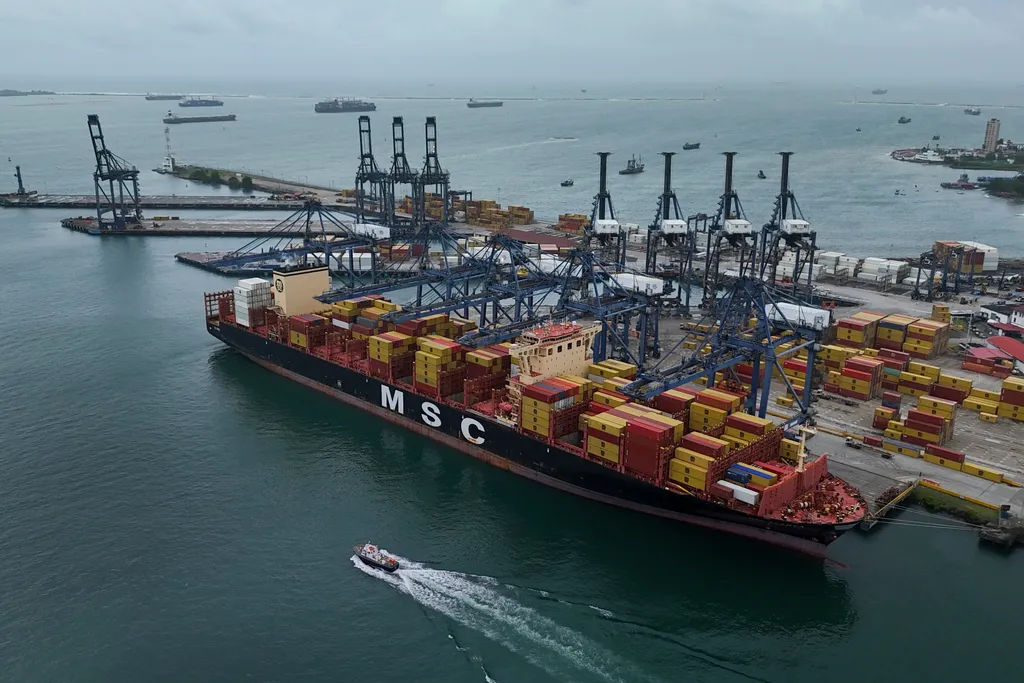
The tariff episode of US President Donald Trump is far from over, and global trading uncertainty continues. The International Monetary Fund (IMF) has weighed in on the matter, whilst Indonesia has adopted a “koteka” strategy as one approach to maintaining robust export performance.
Following the US Supreme Court’s annulment of Trump’s reciprocal tariff policy, the president has not remained idle. He still has five other options to sustain import tariff policies without relying on the International Economic Emergency Powers Act (IEEPA) of 1977.
One such option is a 10 per cent import tariff on all countries, based on Section 122 of the 1974 US Trade Act. Trump is citing balance-of-payments crisis as his primary justification. This 10 per cent tariff will apply from 24 February 2026 for 150 days onwards and can be extended through congressional approval. Trump is also considering raising this to 15 per cent.
Trump has also requested the US Trade Representative (USTR) conduct additional investigations under Section 301 of the 1974 US Trade Act, focusing on allegedly discriminatory practices against US business and trade. For countries deemed discriminatory, Trump can impose 50 per cent import tariffs without time limits or further investigation, citing Section 338 of the 1930 Smoot-Hawley Tariff Act.
The IMF and World Trade Organization (WTO) could potentially review US tariff policies justified by balance-of-payments concerns, based on Article XIII of the General Agreement on Tariffs and Trade (GATT) and the 1994 Understanding on Balance-of-Payments Provisions. However, as of Friday 27 February 2026, the WTO has not commented since the Supreme Court’s ruling, whilst the IMF has acknowledged that the US faces genuine balance-of-payments problems but has issued several caveats.
In its 2026 Article IV Consultation Report for the United States released on Wednesday 25 February 2026, the IMF noted that problems persist in several components of the US balance of payments, particularly regarding current account transactions, fiscal balance, and debt. Although showing slight improvement, the US current account and fiscal balance remain in deficit. The current account deficit fell from 4 per cent to 3.6 per cent of GDP in 2024-2025 but is projected to rise to 3.8 per cent by 2026. Similarly, the fiscal deficit declined from 7.9 per cent to 6.8 per cent of GDP but is expected to increase to 7.5 per cent by 2026.
Conversely, the trend in the ratio of US government debt to GDP has been rising since 2024 and is projected to continue until 2031. The ratio increased from 122.3 per cent to 123.8 per cent of GDP in 2024-2025, and is forecast to rise further from 126.2 per cent to 141 per cent by 2031.
The IMF stated: “We encourage the US to work constructively with trading partners. Eliminate various policy distortions in the US and other countries that have caused trade imbalances.”
The IMF also noted that in the short term, higher import tariffs should modestly reduce the trade balance deficit (part of the current account). Tariff increases would also boost revenue by approximately three-quarters of a per cent of GDP. However, this must be offset by an increase in personal consumption expenditure price index of roughly half a per cent in early 2026, and the output value of goods and services is projected to decline by about half a per cent of GDP.
IMF Managing Director Kristalina Georgieva stated that the US government has attempted to address trade and current account deficits, partly through tariff increases. However, these increases have triggered goods inflation, hampering stronger growth. In the long term, tariffs will distort resource allocation and undermine productivity.
“For this reason, we encourage the US to work constructively with trading partners. Eliminate various policy distortions in the US and other countries that have caused trade imbalances,” she said during a press conference on the 2026 Article IV Consultation Report results in Washington DC.
Rising debt is also a critical concern requiring US attention. The IMF has several recommendations to address it, including increasing tax revenue and addressing structural imbalances in Social Security and Health Insurance programmes.
In its consultation report, the IMF projects US economic growth of 2.6 per cent in 2026, compared to 2.8 per cent in 2024 and 2.2 per cent in 2025.
Regarding Indonesia, following the US Supreme Court ruling, the Indonesian government has not opted for a review of the US-Indonesia Reciprocal Trade Agreement (ART). Instead, the Indonesian government is continuing the ratification process for the ART. Simultaneously, the government will reschedule meetings with the US government, aiming to ensure that tariff exemptions for 1,819 Indonesian product tariff lines remain in effect. For other products, Indonesia prefers to be subject to 15 per cent rather than 19 per cent tariffs.
On another front, Indonesia has worked to maintain a strong non-oil trade balance over the past six years. From 2020 to 2025, Indonesia’s trade balance has consistently shown a surplus, with the highest surplus occurring in 2023 at 54.25 billion US dollars, equivalent to approximately 909.12 trillion rupiah. In 2025, the figure continues this positive trend, reflecting Indonesia’s commitment to sustaining export competitiveness amid global trade uncertainties.