
ILUNI FEB UI Reflects on One Year of Danantara as Indonesia's Economic Engine
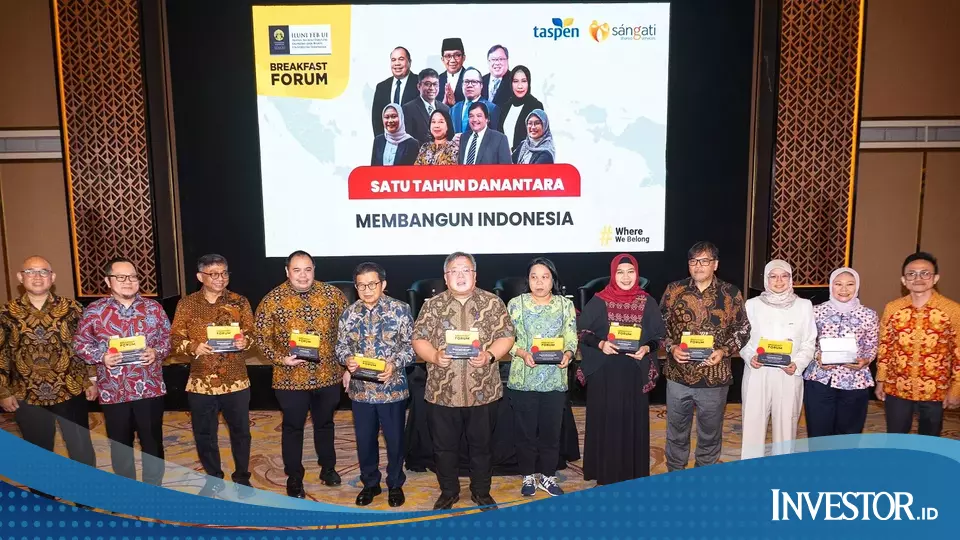
Entering its first year, the Daya Anagata Nusantara Investment Management Agency (Danantara) continues to attract attention as a new hope for Indonesia’s economy.
In the strategic discussion at the Breakfast Forum held by the University of Indonesia’s Faculty of Economics and Business Alumni Association (ILUNI FEB UI) in Jakarta, experts and practitioners thoroughly examined whether this institution has succeeded in becoming an “engine of growth” or is still trapped in bureaucratic complexities and legal uncertainties.
Former Finance Minister Prof. Bambang Brodjonegoro opened the discussion with a stark warning about the middle-income trap. According to him, the government cannot go it alone in bringing Indonesia to developed nation status.
“A growth engine outside the government is needed, with long-term financing capacity. The question is, does Danantara emerge as a driver for state-owned enterprises or as a provider of patient capital (long-term capital) for strategic sectors that are not yet commercial?” stated Prof. Bambang in his official remarks on Saturday (25/4/2026).
In agreement, Danantara’s Deputy Supervisory Board Chairman Prof. Muliaman Hadad affirmed that Danantara’s strength lies in combining business logic with a development mission.
Danantara is not merely a container for assets, but an architecture that transforms the optimisation of national wealth into a sustainable source of financing for national priority projects.
Investment Discipline Amid Market Storms
On the operational side, Danantara’s Chief Investment Officer Pandu Sjahrir emphasised the importance of high discipline, especially in uncertain market conditions. “The challenge is to remain bold in taking positions when the market is fearful. Most risks are already reflected in prices,” explained Pandu.
He cited the waste-to-energy project as real proof of Danantara’s ability to execute investments quickly while maintaining good governance. This investment focuses on crucial sectors such as mineral downstreaming, energy transition, food, and digitalisation.