
Ilham Habibie: "Smart engineering" must address societal challenges
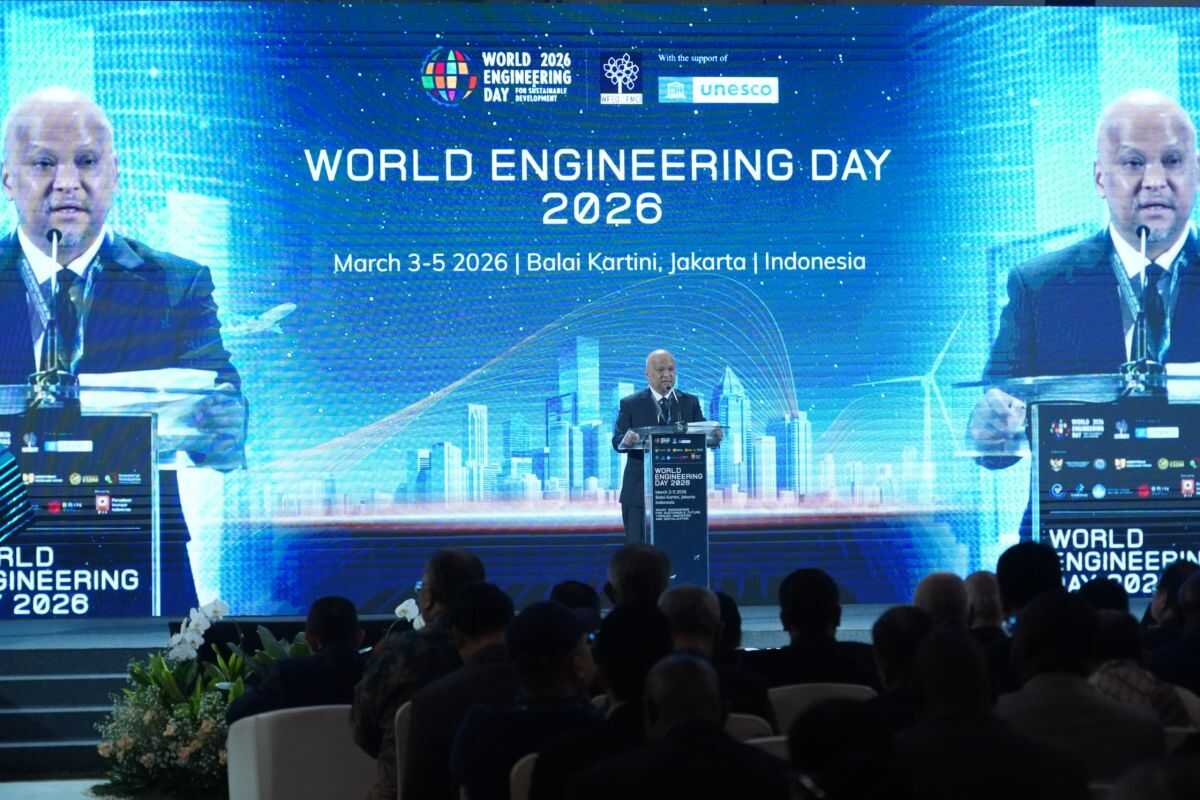
Jakarta (ANTARA) - Ilham Akbar Habibie, chairman of the Indonesian Engineers Association (PII), said that smart engineering must be able to respond to real societal challenges.
“World Engineering Day is a celebration of engineering’s contributions to solving global challenges, particularly those related to the Sustainable Development Goals (SDGs). The smart engineering we promote must be able to respond to real challenges in society,” he said in a statement released in Jakarta on Wednesday, during World Engineering Day (WED) for Sustainable Development 2026.
This international forum, held on 4-5 March 2026 in Jakarta, brought together around 600 delegates from 39 countries, including ministers, leaders of international organisations, academics, industry representatives, young engineers, and students.
WED 2026 is described as a strategic platform that brings together engineering expertise, technology, and public policy to address global sustainable development challenges, while reaffirming Indonesia’s contribution to the global engineering landscape.
As the federation of engineering organisations representing more than 30 million engineers from around 100 countries, he said, the World Federation of Engineering Organizations (WFEO) provides Indonesia with an opportunity to host WED 2026.
“With the theme ‘SMART Engineering for a Sustainable Future Through Innovation and Digitalisation’, this underscores the central role of engineering in driving attainment of SDG 9: Industry, Innovation, and Infrastructure,” he said.
As part of this global platform, WFEO also announced the winners of the WFEO Hackathon, one of the main events of WED focusing on student engineers worldwide.
Of the three thousand applicants and 270 proposals from various countries, the winning team was “THINK: Smart Adaptive Streetlight System for Extreme Heat Resilience in the UAE” from the American University of Sharjah, United Arab Emirates (UAE). Overall, the winning teams originated from Africa, Asia, and the Middle East.
According to WFEO president Seng-Chuan Tan, WED 2026 marks a series of concrete steps to strengthen the global engineering community and its contributions to sustainable development.
These steps include the launch of the WFEO Institute, a global hub dedicated to promoting engineering excellence, policy leadership, and capacity building.
Next, the establishment of the World Academy of Engineering which will recognise leading engineering leaders for their contributions to the SDGs.
Thirdly, a new initiative enabling prominent engineers to contribute to support developing countries and Small Island Developing States facing sustainable development challenges, including climate change and disaster risk reduction.
Finally, the signing of a memorandum of understanding with the International Research Center of Big Data for Sustainable Development Goals (CBAS) to align engineering solutions with global sustainability goals, and to open new opportunities for joint research, training, and policy development.
On this agenda, PII also signed a memorandum of understanding with the Directorate General of Intellectual Property Indonesia to optimise the effectiveness of collaboration, especially in realising the protection and utilisation of intellectual property for engineers’ innovations in line with Indonesia’s constitutional provisions.
“WED is not merely an annual ceremony; it is a global collaboration platform for delivering concrete solutions. The use of artificial intelligence (part of smart engineering) in engineering practice must continue to uphold digital literacy and ethical considerations, so that innovation does not surpass humanitarian values and sustainability,” he said.