
IKN Requires 12 Tonnes of Fish per Month, ITB-Trained Fishermen Ready to Support
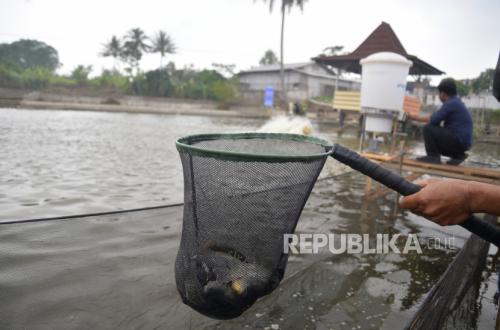
On the banks of the Mahakam River, the sound of splashing water is more than mere noise. It is the pulse of life, a story of hopes that once sank, slowly revived, and now prepare to meet the needs of a new capital city.
As thousands of civil servants begin arriving at the Nusantara Capital (IKN), food requirements are also rising. Behind the bustle of development, a village in Loa Kulu sub-district, Kutai Kartanegara, East Kalimantan, is quietly preparing to play a crucial role: supporting the fish needs of the future capital.
Standing on neatly arranged floating net cages in the Mahakam River’s flow, Muhmajadi oversees operations. He has been engaged in fish farming for 24 years. Before him, thousands of tilapia fish compete for feed, creating small ripples that sound like a long breath finally returning to normal.
Yet the journey to this point was not without scars.
The year 2005 marked the darkest period. The Koi Herpes Virus (KHV) outbreak wiped out the carp that formed the mainstay of the farmers’ livelihoods. Dead fish floated along the cages, leaving behind a sense of despair that nearly extinguished their spirits.
Muhmajadi was among those hit hardest. The business he started in 2002 seemed to collapse in mere weeks. Many other farmers gave up. They shut down. Leaving behind silent cages.
But not Muhmajadi.
He chose to persevere. With his group, he made a critical decision: switching from carp to tilapia, a more resilient commodity in the face of environmental changes.
That decision became a turning point.
Today, from his 36 cage plots, Muhmajadi can harvest up to one tonne of tilapia every month. Within one farming group, production can even exceed 10 tonnes.
The Loa Kulu Aquaculture Fishing Village is now home to 40 farming groups, operating from fish seeding to rearing. Tilapia is the main commodity, as well as the backbone of the local economy.
However, this story does not end with production figures.
In 2025, Muhmajadi along with eight other farmers received a rare opportunity: participating in intensive education at the People’s Fisheries School (SPR) of Bandung Institute of Technology for seven months. There, they not only learned farming techniques but also business management, disease mitigation, and scientific approaches to modern fisheries.