
IIF States ESG Now a Determinant of Infrastructure Investment
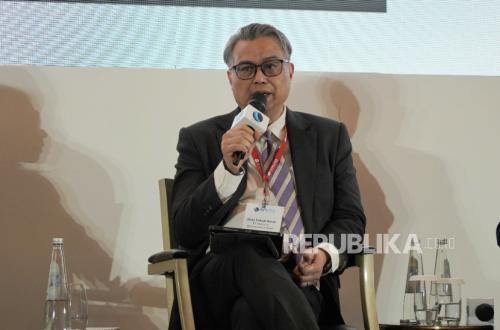
PT Indonesia Infrastructure Finance (IIF) assesses that accelerating infrastructure investment does not solely depend on the availability of funds but also on the discipline in applying environmental, social, and governance principles, or ESG. This aspect is increasingly becoming the primary factor in determining the quality and sustainability of projects.
IIF’s President Director and CEO, Rizki Pribadi Hasan, stated that government initiatives and market liquidity remain important; however, without strong ESG standards, investments risk being unsustainable. Rizki conveyed this at the APLMA Loan Market Conference Indonesia 2026 in Jakarta last week. “Competitive pricing and ESG discipline are non-negotiable factors,” Rizki said in a press release on Monday (20/4/2026).
Rizki explained that IIF positions itself as a non-bank financial institution that strengthens infrastructure financing with a more comprehensive approach. He emphasised that IIF’s role is to complement, not replace, banking, through more adaptive financing schemes, including for projects with social and environmental impacts.
“Our mandate is to complement, not compete with, the banking industry and capital markets,” he said.
In the past 16 years, IIF, along with several institutions, has financed more than 150 infrastructure projects. As the need for sustainable investment grows, the ESG approach has become the foundation for every financing provided.
Rizki noted that implementing ESG is not just about compliance but also plays a role in reducing long-term risks. Strict environmental and social standards are deemed capable of enhancing project quality while maintaining investment sustainability.
“IIF has spent the last five years lowering the cost of funds while strengthening environmental and social standards in every project,” he said.
From the market perspective, domestic liquidity is still sufficiently strong to support long-term financing. The banking loan-to-deposit ratio is around 80 per cent, while pension funds and insurance continue to seek stable long-term investment instruments.
IIF is also promoting ESG-based financing innovations through various capital market instruments. These include green perpetual notes, credit-enhanced bonds, and long-tenor bonds that support sustainable projects.
IIF has also signed financing for a health sector project. This project reflects a focus on social infrastructure development that not only has economic impacts but also improves community quality of life.
Going forward, ESG integration is expected to increasingly determine the direction of infrastructure investment in Indonesia. This approach not only safeguards project sustainability but also strengthens investment attractiveness amid global dynamics.