
IIF Emphasises Orientation Towards Climate Risk Management
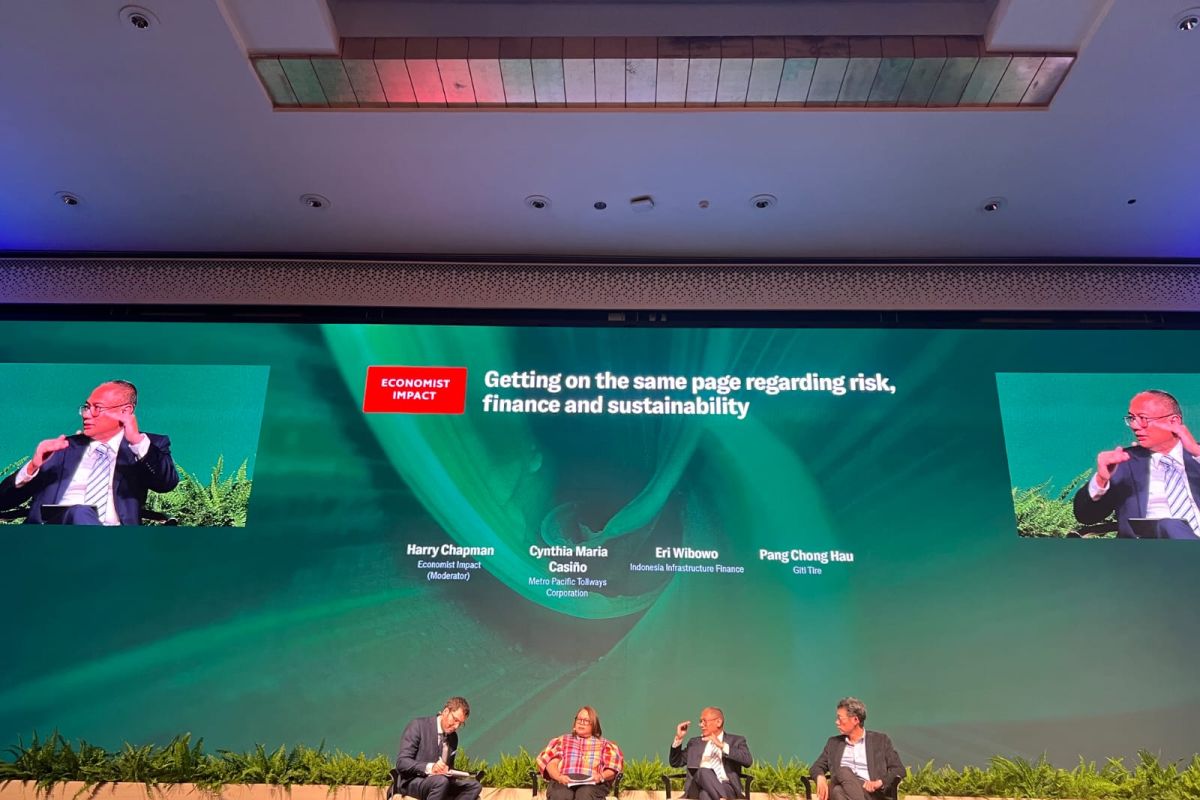
Jakarta (ANTARA) - Chief Executive Officer of PT Indonesia Infrastructure Finance (IIF) Rizki Pribadi Hasan has emphasised the orientation towards climate risk management. “IIF’s role is not only focused on economic growth but also on climate risk management as one of the main priorities, ensuring that every financing provides tangible impacts on environmental and social aspects,” he stated while participating in the 5th Annual Sustainability Week Asia organised by Economist Impact in Bangkok, Thailand, according to an official statement from Jakarta on Tuesday. In the context of transitioning to a low-carbon economy, IIF has directed financing allocations towards sustainable infrastructure projects such as renewable energy and those with resilience to climate change. Although these projects require larger initial investments, they are considered to offer better long-term cash flow stability and more controlled risks. This commitment is strengthened through various strategic initiatives, including collaboration with Danareksa and the Indonesia Export Financing Agency (LPEI) to promote the implementation of Environmental, Social, and Governance (ESG) principles, particularly in financing productive sectors. On the other hand, international investor confidence in IIF’s role continues to grow, as reflected by the US$30 million investment from FinDev Canada in early 2026 to IIF as support for driving low-carbon economic growth in Indonesia. From a financial performance perspective, Rizki conveyed that for the fiscal year ending 31 December 2025, the company has successfully recorded a net profit of Rp185 billion, a 51.2% growth compared to Rp122.5 billion in the previous year. Total assets also grew 5% year-on-year to Rp15.4 trillion, driven by a 2% increase in productive assets. “In facing the sustainability transition, companies are not only required to move quickly but also carefully in managing risks. The approach taken is not merely about speed, but how to ensure every investment decision remains flexible, measured, and able to maintain a balance between growth and long-term resilience,” he explained.