
IHSG Weakens Following Regional Asian Markets Amid Iran-Israel-US Conflict
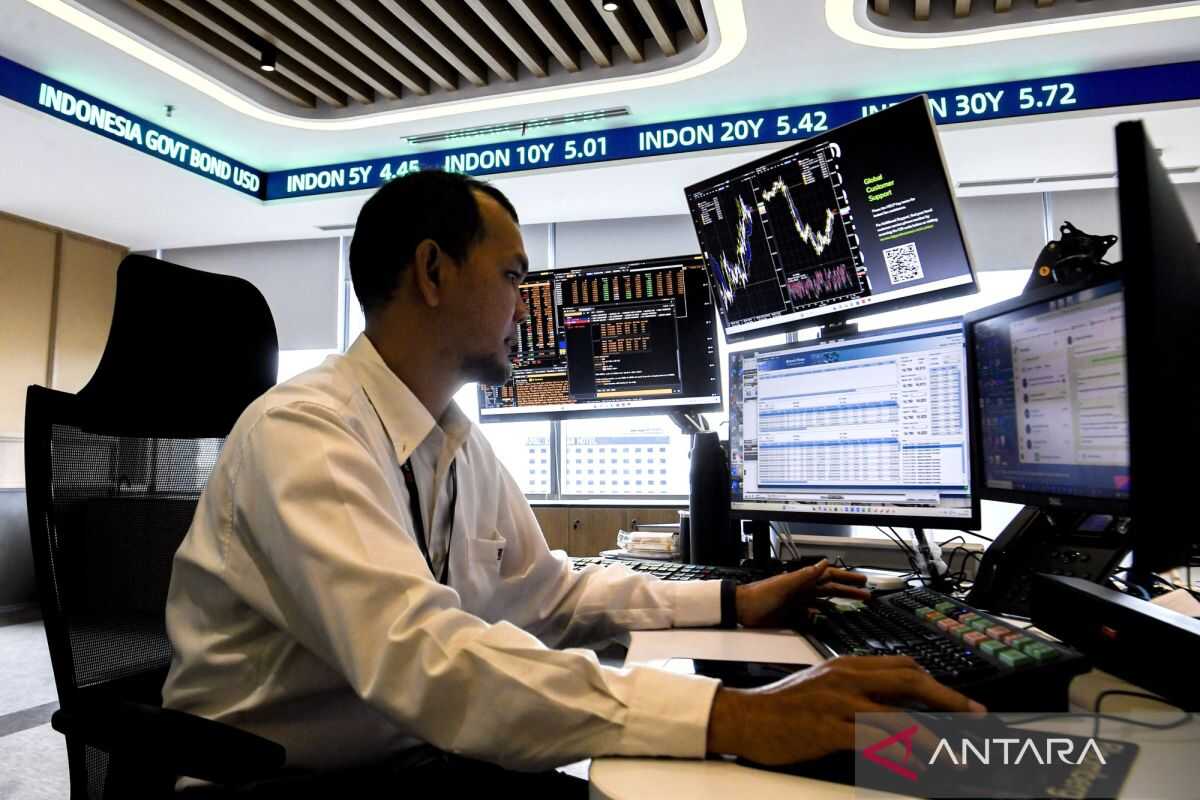
Jakarta — The Indonesian Stock Exchange’s Composite Index (IHSG) declined on Monday morning, tracking weakness across Asian regional markets sparked by rising geopolitical tensions between Iran, the United States and Israel.
The IHSG opened 23.95 points weaker, or 0.29 per cent, at 8,211.31. The blue-chip LQ45 index fell 2.99 points, or 0.36 per cent, to 834.90.
“Kiwoom Research recommends reducing portfolio positions and adopting a wait-and-see stance for the time being,” said Liza Camelia Suryanata, Head of Research at Kiwoom Securities Indonesia, in a briefing in Jakarta on Monday.
Suryanata noted that market participants are entering the week with geopolitical risk as the primary driver. She identified energy and precious metals as the main defensive sectors, whilst global equities and risk assets face heightened volatility at Monday’s market opening and throughout the coming week.
“Key investor focus points are the duration and escalation level of the conflict, Strait of Hormuz stability, and oil price direction above $90-100 per barrel,” Suryanata said.
Looking at the precedent of the 2022 Russia-Ukraine war, Suryanata observed that Indonesia’s commodity-driven market would actually benefit from rising global commodity prices.
Across Asia, regional exchanges weakened significantly. Kuwait’s stock exchange suspended trading, and the United Arab Emirates closed its markets on Monday and Tuesday following Iran’s strikes.
The European Union called for “maximum restraint”, civilian protection, full respect for international law, and prevention of escalation that could disrupt the Strait of Hormuz and trigger global economic consequences, though internal bloc divisions and limited European influence over the conflict persist.
Domestic market participants await February 2026 inflation data and January 2026 trade balance figures, which are expected to show a surplus increase to $2.76 billion, alongside growth in both imports and exports.
US stock markets declined sharply on Friday trading, with the Dow Jones index falling 1.05 per cent to 48,977.92, the S&P 500 correcting 0.43 per cent to 6,878.88, and the Nasdaq weakening 0.92 per cent to 22,668.21.
Asian regional indices fell across the board: Japan’s Nikkei index declined 908.90 points, or 1.54 per cent, to 57,941.39; China’s Shanghai index fell 19.35 points, or 0.47 per cent, to 4,143.52; Hong Kong’s Hang Seng index dropped 698.67 points, or 2.62 per cent, to 25,931.85; Malaysia’s Kuala Lumpur index fell 15.02 points, or 0.87 per cent, to 1,701.59; and Singapore’s Straits Times index declined 101.54 points, or 2.03 per cent, to 4,893.52.