
IHSG Under Pressure After MSCI and FTSE Russell Remove Indonesian Stocks
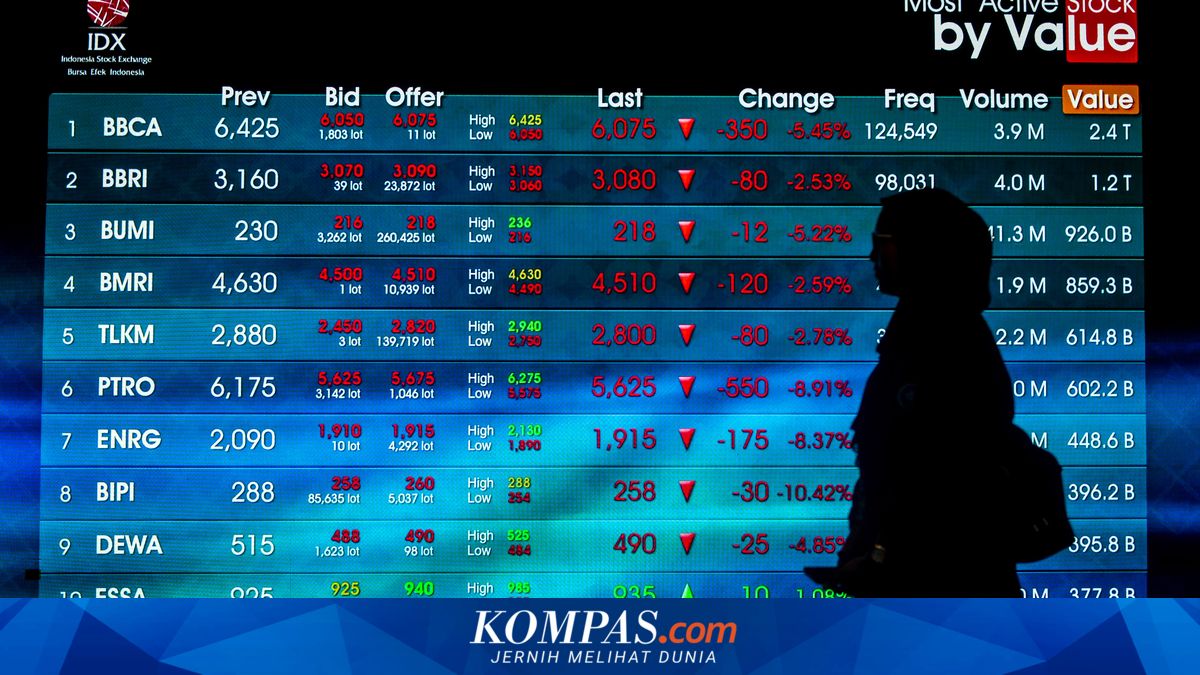
JAKARTA – The Indonesian stock market is once again under pressure after two global index providers, MSCI and FTSE Russell, took steps that are seen as sending negative signals regarding the quality and liquidity of several domestic stocks. Not only has this triggered a correction in the Composite Stock Price Index (IHSG), but it has also raised concerns about the diminishing appeal of Indonesia’s capital market to global investors. In its May 2026 periodic index review, MSCI removed six Indonesian stocks from the MSCI Global Standard Indexes. The six stocks are PT Amman Mineral Internasional Tbk (AMMN), PT Barito Renewables Energy Tbk (BREN), PT Chandra Asri Pacific Tbk (TPIA), PT Dian Swastatika Sentosa Tbk (DSSA), PT Petrindo Jaya Kreasi Tbk (CUAN), and PT Sumber Alfaria Trijaya Tbk (AMRT). The pressure intensified after FTSE Russell announced plans to remove stocks categorised as High Shareholding Concentration (HSC) from its indexes. FTSE has even opened the possibility of valuing stocks with overly concentrated ownership at zero. This move is regarded as a serious warning for Indonesia’s capital market, as it pertains to issues of liquidity and ease of transactions for global investors, particularly passive fund managers based on indexes. Several stocks removed from the MSCI index experienced sharp pressure. TPIA shares plunged 14.85 per cent, BREN fell 11.36 per cent, DSSA weakened 11.16 per cent, and CUAN dropped 10.05 per cent. Foreign investors also recorded net selling activity of Rp1.53 trillion across the market. Year-to-date, the value of foreign net selling has reached Rp40.25 trillion. Market observer and Founder of Republik Investor, Hendra Wardana, stated that the impact of this MSCI rebalancing remains significant on foreign capital flows, although some market participants had anticipated the decision in recent weeks. “On the other hand, defensive and domestically focused stocks are relatively more advantaged as they are considered more resilient to external pressures,” said Hendra. Director of Research and Investment at Pilarmas Investindo Sekuritas, Maximilianus Nicodemus, assessed that the reduction in the number of Indonesian stocks in the MSCI index could diminish potential capital inflows to the domestic market.