
IHSG Today, 10 March 2026: Strengthening as Middle East Conflict Eases
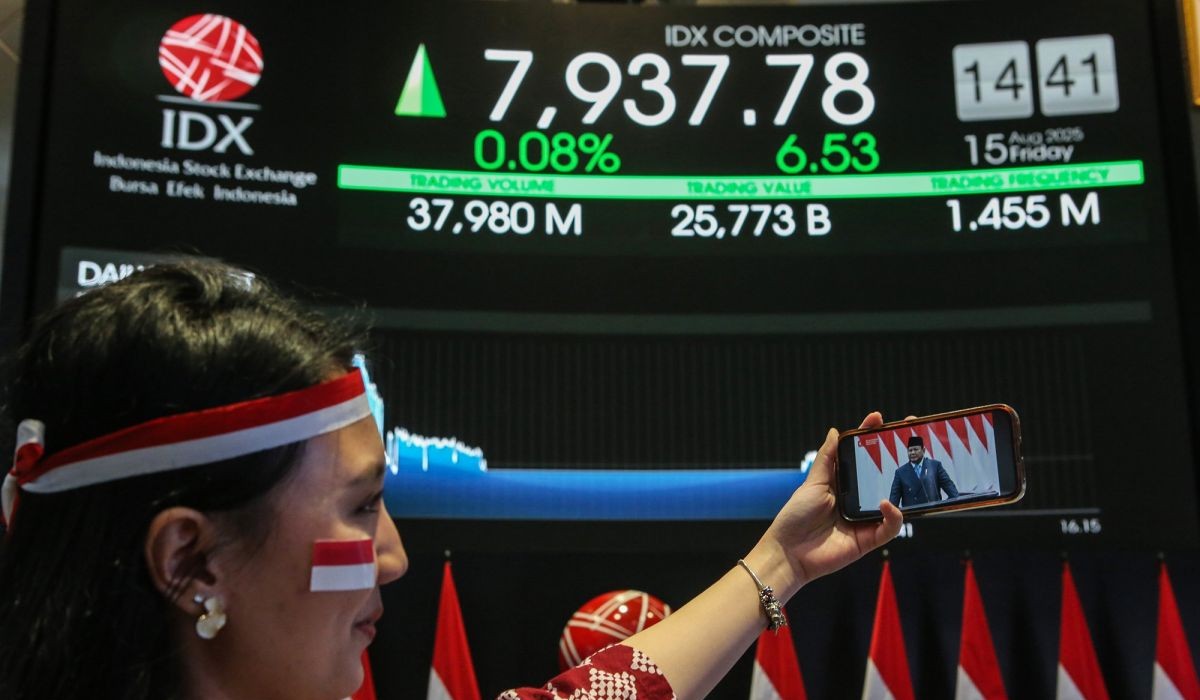
Indonesia’s Composite Stock Price Index (IHSG) on the Indonesia Stock Exchange opened stronger on Tuesday, 10 March 2026, following global market movements, driven by easing geopolitical tensions following US President Donald Trump’s statement regarding the conflict with Iran. The IHSG opened up 105.68 points or 1.44 per cent to 7,443.05. Meanwhile, the LQ45 index, comprising 45 leading shares, also strengthened by 9.98 points or 1.33 per cent to 760.56.
Liza Camelia Suryanata, Head of Research at Kiwoom Sekuritas Indonesia, said market sentiment improved following Trump’s statement indicating military operations against Iran were nearly complete.
“That statement reduced the geopolitical risk premium and triggered short covering and bargain-hunting in the stock market,” said Liza in her research note in Jakarta.
Trump previously stated that military operations against Iran had progressed “very complete” and the conflict was unfolding faster than initial estimates of four to five weeks.
The global stock market strengthening was also driven by falling world oil prices, which had previously approached $120 per barrel but subsequently declined to around $90 per barrel. The oil price decline followed reports that G7 countries were discussing the possibility of releasing strategic oil reserves to boost global supply.
During morning trading at 09.20 Western Indonesia Time, West Texas Intermediate (WTI) crude oil prices fell 9.99 per cent to $85.30 per barrel, whilst Brent crude fell 10.40 per cent to $88.67 per barrel.
Additionally, the United States granted a temporary 30-day exemption allowing the sale of stranded Russian oil at sea to India. The US government is also considering releasing oil from the Strategic Petroleum Reserve, which currently holds approximately 415 million barrels.
Although market sentiment is improving, Liza expects volatility to remain elevated as the market monitors two major risks. The first risk is potential energy supply disruption from the Strait of Hormuz, a strategic channel through which approximately 20 per cent of world oil trade flows. The second risk is the possibility of stagflation, following last week’s US employment data showing signs of weakness.
The market currently estimates approximately a 77 per cent probability of a Federal Reserve rate cut in July, based on Fed Funds Futures indicators, with a full rate cut cycle projected for September.
Several countries have begun taking steps to mitigate the impact of energy price spikes. China is limiting domestic fuel prices, South Korea is considering similar policies for the first time in nearly 30 years, whilst Japan is preparing for possible strategic oil reserve releases and emergency government fund allocations.
Pakistan has closed schools for two weeks and is promoting work-from-home policies to reduce fuel consumption. Hungary has implemented fuel price caps and urged the European Union to suspend energy sanctions against Russia.