
IHSG Thought to Be Manchester City, Turns Out Arsenal
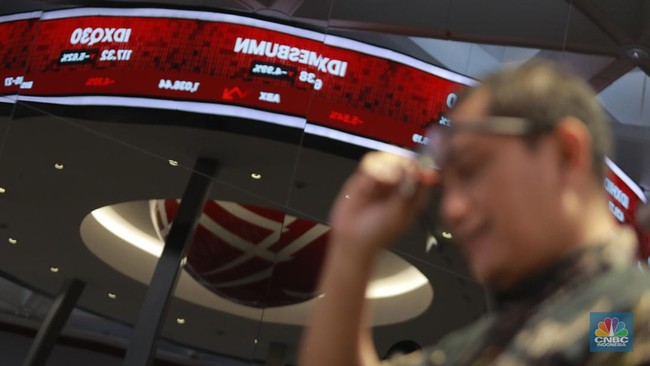
The Jakarta Composite Index (IHSG) underwent significant turbulence throughout the first quarter and into the early second quarter of 2026.
The IHSG’s movements were initially very convincing from the start of 2026 until the end of January. On 20 January this year, the IHSG even reached an all-time high of 9,134.7.
In intraday trading, its record high on 20 January 2026 was 9,174.47. However, afterwards it collapsed, battered by successive storms. The IHSG closed at 7,072.39 on Tuesday’s trading (28/4/2026). This means the IHSG has evaporated 30% from its highest level.
This drastic decline is an accumulation of several events as well as aggressive external sentiments, global geopolitical uncertainties, and the vulnerability of the domestic market’s fundamental conditions.
Early-Year Euphoria and MSCI Downgrade Pressure
The index’s movements in January were initially driven by market participants’ euphoria in accumulating large-cap stocks for MSCI Play. This momentum successfully pushed the IHSG through the psychological level of 9,000.
However, the market direction reversed when the MSCI authority announced the potential downgrade of Indonesia’s stock market status to Frontier Market category on 28 January 2026.
MSCI’s warning was based on their evaluation of the regular market’s liquidity levels, accessibility issues for foreign investors, and market structure deemed not fully aligned and transparent with global operational standards.
This announcement immediately triggered selling actions and mass foreign fund withdrawals, pressuring the IHSG to fall to its lowest correction point at 7,922 on 2 February 2026.
Global institutional investors using the MSCI index as a portfolio benchmark were forced to adjust their investment weights in the Indonesian market, especially for active funds managed by institutions not using ETFs.
US-Iran Geopolitical Crisis Crushes the Market
After experiencing a technical rebound driven by oversold conditions towards 8,392 by the end of February, the market was again faced with a global-scale crisis.
Entering mid-March, the outbreak of open conflict between the United States and Iran delivered a severe blow to stock exchanges in emerging countries.
This conflict intensified due to escalations in shipping route disputes and strategic blockades in the Middle East region, which directly threaten the smoothness of global energy supply chains and maritime logistics distribution.
Fears of a global inflation surge due to rising crude oil prices prompted investors to aggressively shift their assets to safer instruments. This panic selling action led the IHSG to a new low of 7,022 on 16 March 2026.
The lowest point since the start of the year was at 6,971 on 7 April 2026.
Hopes from a ceasefire agreement briefly brought the index to a temporary rebound of 7,279 on 8 April 2026, but this optimism did not last long, and the IHSG corrected again.
Rupiah Weakening and Domestic Challenges
Entering the last weeks of April, the IHSG’s weakening was further exacerbated by deteriorating macroeconomic indicators. The sell-off continued massively, pressuring the index to drop back towards 7,000.
This sustained selling action is a direct response to the rupiah’s weakening, pressured by the strengthening US Dollar Index amid uncertainties in global interest rates projected to stagnate or rise.
From the domestic side, local conditions added to investor doubts. Reports of a high budget deficit against GDP that is quite concerning have led market participants to question Indonesia’s fiscal posture and economic stability in facing external shocks.
Stock Exchange Reforms as Mitigation Steps
Facing these layered capital flight pressures, capital market authorities and related regulators are accelerating the stock exchange reform agenda. This step is taken as a crucial response to prevent the realisation of the status downgrade by MSCI, which could have dire consequences for long-term liquidity, estimated to create foreign outflows of up to Rp 450 trillion.
The current focus of stock exchange reforms is directed at comprehensive market structure improvements. This includes adjustments to regulations on share free float limits, enhancements to issuer transparency standards to protect public investors such as UBO and HSC data providers.
Through these structural reforms, stock exchange authorities hope to restore confidence from foreign and domestic investors, including MSCI and other active fund institutions, increase average daily transaction values, and create a more resilient capital market ecosystem against future global economic fluctuations.
This is known as International Best Practice, championed by current regulators to ensure foreign funds receive fair treatment and benefits when investing in Indonesia’s capital market.
Can the IHSG Recover?
With so many successive blows, investors are now waiting to see when the IHSG will recover. Pressures clearly remain ahead, particularly the MSCI announcement in June, recap of first-quarter 2026 issuer performance, budget performance, second-quarter 2026 economic growth realisation in early May, and geopolitical pressures.
However, hopes for recovery remain, especially if the war eases and there are signals of Fed rate cuts. Stock exchange reforms are also expected to help the IHSG rise from its slump.
In the world of football, the IHSG’s journey is indeed similar to Arsenal under Mikel Arteta. It often looks convincing to win the English Premier League, plays well, tops the table, and fans are convinced, ‘this is Arsenal’s time to win.’
But as the season end approaches, Arsenal slips. The momentum is lost, then overtaken by Manchester City, Pep Guardiola’s team. In the end, it’s City again that