
IHSG This Week Predicted to Fluctuate amid Iran-US Conflict
The brutal and deadly attack by Israel and the United States against Iran on Saturday, 28 February, sent shockwaves through global markets.
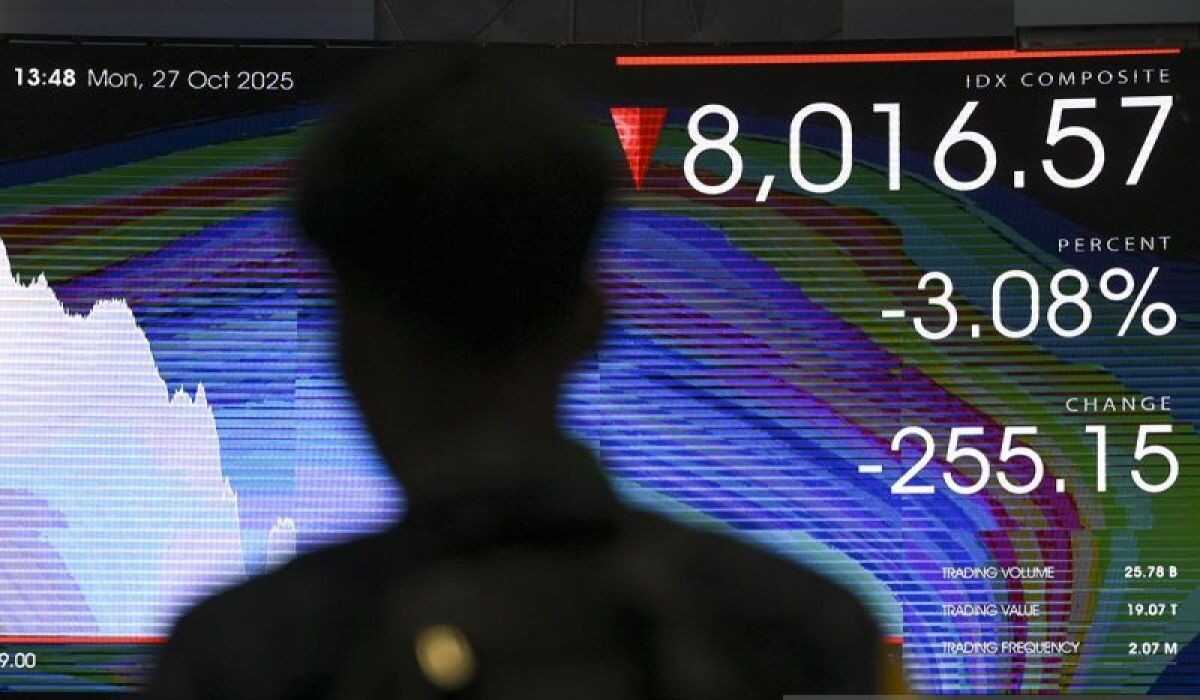
Equity Analyst at PT Indo Premier Sekuritas (IPOT), Imam Gunadi, has projected that the Indonesian Composite Stock Index (IHSG) will move volatilely with consolidation tendencies this week, as global geopolitical risks intensify.
“The IHSG this week has the potential to move volatilely with consolidation tendencies, with support at 8,031 and resistance at 8,437,” Imam stated in an official statement in Jakarta on Monday.
According to Imam, the escalation of Middle Eastern conflict between Iran, the US, and Israel, along with tensions in the Asia-Pacific region, have increased global risk premiums. This situation is worsened by developments around the Strait of Hormuz, a vital global energy distribution route.
“This uncertainty has the potential to drive US dollar strengthening and rising energy commodity prices, which typically trigger fund rotations towards safe-haven assets and constrain capital inflows to emerging markets, including Indonesia,” Imam said.
Nevertheless, rising oil and coal prices could provide support for domestic energy and mining sectors, particularly if commodity prices remain elevated.
As an exporter of coal and other energy commodities, Indonesia stands to benefit from increases in average selling prices (ASP) and improved margins for emitters in related sectors.
“In uncertain global conditions, commodity-based stocks often serve as hedges against geopolitical risks and global inflation,” Imam noted.
However, sharp and prolonged energy price spikes pose risks of elevated global inflation and rupiah depreciation. Significant oil price increases could worsen the current account balance due to rising energy import costs and drive rupiah volatility.
“If the rupiah weakens and global bond yields rise, IHSG volatility could increase as foreign investors tend to reduce exposure to risky assets,” Imam explained.
In the short term, the direction of IHSG movement heavily depends on whether energy price increases remain controlled and support commodity emitter performance, or conversely transform into inflationary pressures that threaten macroeconomic stability.
Beyond geopolitical factors, US trade policy dynamics also influence market sentiment. The US Supreme Court previously struck down portions of global import tariffs imposed during the Trump administration, deeming them to exceed legal authority. In response, Trump announced plans to raise global import tariffs to 15 per cent.
Simultaneously, the US Department of Commerce has imposed anti-subsidy duties on solar panels from several countries, including Indonesia, with tariffs ranging between 86 per cent and 143.3 per cent.
“These high tariff provisions could restrain Indonesian renewable energy sector exports to the US market and add pressure to the trade balance in related sectors,” Imam said.
Domestically, rating agency S&P Global Ratings has warned of increasing fiscal pressure on Indonesia. The debt interest payment-to-government revenue ratio is estimated to have reached or has the potential to remain above 15 per cent, an important indicator in assessing fiscal health. Should this condition persist in the medium term, the potential for a credit rating downgrade remains open despite the current stable outlook.
“This warning adds caution among investors and policymakers in responding to global turbulence whilst managing domestic fiscal challenges,” Imam concluded.