
IHSG Performance During Ramadan Over Six Years: Investor Patience Tested, 2026 Most Volatile
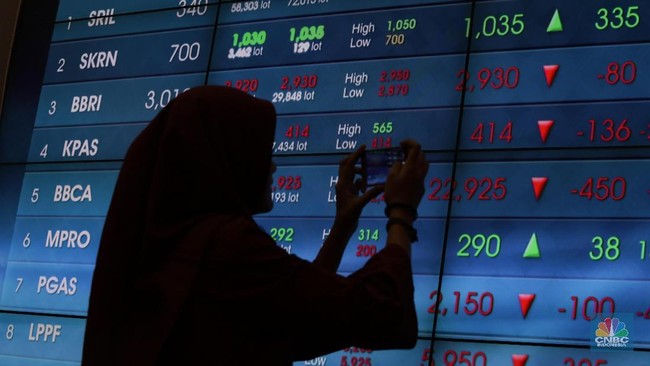
Jakarta — The movement of Indonesia’s composite stock index (IHSG) during the fasting month has long been a particular focus for market participants.
Historically, the Ramadan period is often characterised by market dynamics that test investor patience, given the high volatility and market’s tendency towards consolidation.
To gain a more comprehensive picture, it is important to examine the performance data of the domestic stock market during Ramadan periods over the past five years, including the current 2026 fasting period.
The following are the fasting dates that serve as the basis for data analysis:
— 2021: 13 April – 11 May 2021
— 2022: 3 April – 28 April 2022
— 2023: 23 March – 18 April 2023
— 2024: 11 March – 5 April 2024
— 2025: 1 March – 27 March 2025
— 2026: 18 February – 9 March 2026 (Session I)
IHSG Performance Details During Ramadan
Based on these timeframes, IHSG performance was measured through three main indicators: overall returns during the fasting month, the deepest decline from the highest point (maximum drawdown), and the percentage of trading days closed in the red.
High Frequency of Daily Corrections
The data above shows that investing during the fasting month indeed requires a higher degree of patience. Even in years where IHSG achieved positive overall performance (such as 2023 and 2025), the percentage of red days remained in the range of 47% to 52%.
This indicates that, statistically, investors will see their portfolio values decline on nearly every other trading day.
Additionally, historical cycles show a consistent weakening as the second half of Ramadan approaches. Heading towards the Eid al-Fitr holiday break, investment managers and retail market participants typically tend towards profit-taking and securing cash positions to minimise the risk of global uncertainty whilst the domestic exchange is closed.
Extreme Volatility Anomaly in 2026
The year 2026 has so far recorded the most aggressive market movement anomaly. Unlike previous years where IHSG weakness occurred gradually and in stages, the selling pressure during this year’s fasting period has been extremely severe.
By 9 March 2026, IHSG had plummeted with a maximum drawdown reaching -15.18%, accompanied by a red day percentage touching 64.29%.
In conclusion, the Ramadan period consistently provides psychological testing through slow market movement at the beginning and selling pressure at the end. For investors, this period requires the application of more disciplined risk management and caution in responding to short-term market volatility.