
IHSG Opens Lower, Continues to Weaken Amid Global Sentiment
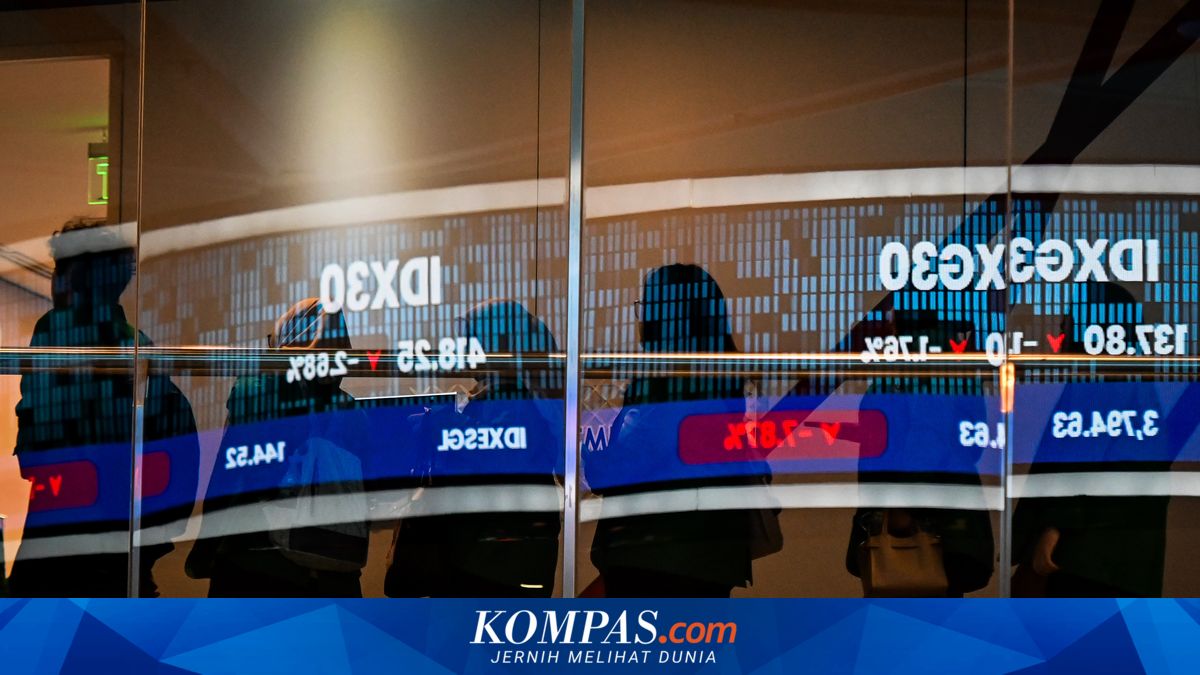
JAKARTA, KOMPAS.com – The Composite Stock Price Index (IHSG) reversed direction and weakened during Thursday’s trading (2 April 2026), in line with pressures in Asian stock markets and the majority of sectors moving in the red zone. Citing data from the Indonesia Stock Exchange (BEI), the IHSG opened down 31.32 points or 0.44% to the level of 7,153.11. By 9:31 AM WIB, the index was further trimmed by 1.11% to 7,105.19. The LQ45 Index also weakened by 0.87% to 720.77. In the first session, the IHSG moved in the range of 7,099.57 to 7,161.79. A total of 352 stocks were recorded as weakening, 199 stocks strengthening, and 172 stocks stagnant. The majority of stock sectors corrected. The industrial sector led the weakening with a 2.5% decline, followed by the infrastructure sector at 2.28% and basic materials at 2.07%. The technology sector also fell 1.5%. Meanwhile, the energy sector weakened by 0.91%, health by 0.56%, property by 0.44%, finance by 0.26%, transportation by 0.10%, and non-cyclical consumer by 0.31%. The cyclical consumer sector was the only one to strengthen, rising 1.06%. According to him, the previous market strengthening more reflected a short-term response based on expectations, not permanent fundamental changes. “Such sentiments are characteristically short-term and based on expectations, not certainty,” he said. He assessed that as long as there is no concrete realisation regarding the de-escalation of the conflict between the United States (US), Israel, and Iran, IHSG movements tend to be technical. In such conditions, risk-on patterns usually only last briefly because market participants tend to take profit actions when there are no further developments. This scenario is supported by the potential decline in energy prices that could ease global inflation pressures. This situation opens room for central banks to loosen monetary policy, while encouraging foreign fund flows to emerging markets, including Indonesia.