
IHSG Likely to Experience Volatility This Week as Geopolitical Risk and Global Policy Become Primary Sentiment Drivers
A brutal and deadly attack by Israel and the United States against Iran on Saturday, 28 February, has sent shockwaves across the world.
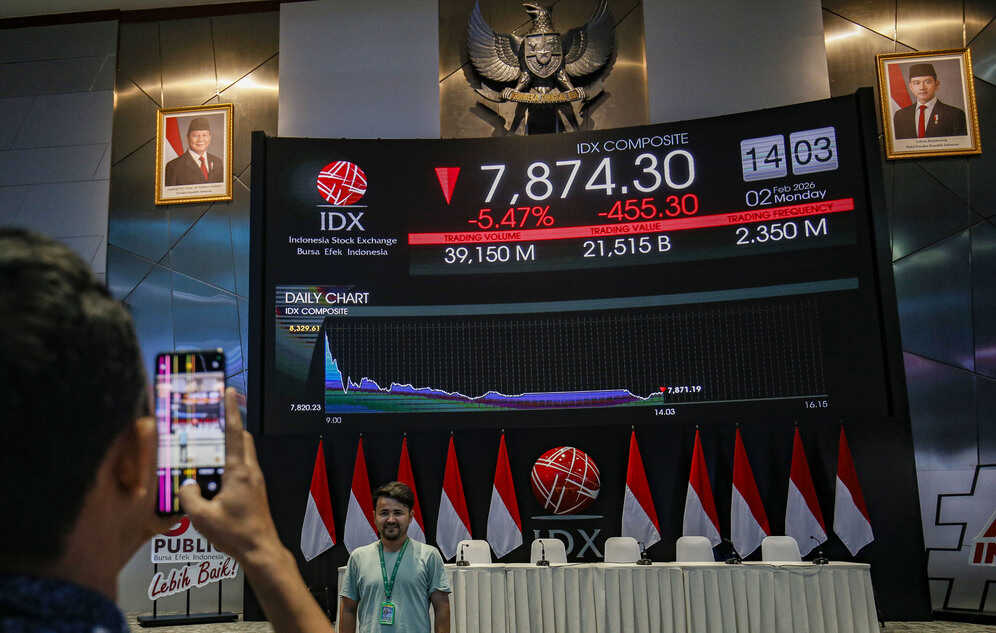
The Composite Stock Price Index (IHSG) is expected to move fluctuatively throughout this week, with increased global geopolitical risk and dynamics in United States economic policy serving as primary market drivers.
Imam Gunadi, Equity Analyst at PT Indo Premier Sekuritas (IPOT), assessed that IHSG movements are likely to remain in a consolidation phase with relatively high volatility. “The IHSG this week is likely to move volatilely with a consolidation trend, supported at 8,031 and with resistance at 8,437,” said Imam in an official statement in Jakarta on Monday, 2 March.
According to Imam, escalating tensions between Iran, Israel, and the United States are driving increased global risk premiums. The situation around the Strait of Hormuz has become a serious concern as this passage represents one of the world’s principal energy distribution routes.
“This uncertainty potentially drives strengthening of the US dollar and rising energy commodity prices, which typically trigger fund rotation towards safe haven assets and weaken capital flows to emerging markets, including Indonesia,” Imam stated.
Amid these conditions, rising oil and coal prices could actually become positive sentiment for stocks in the energy and mining sectors, particularly if commodity prices remain elevated. Indonesia, as an exporter of coal and various energy commodities, stands to benefit from rising average selling prices (ASP) and potential margin improvements for related issuers.
“In conditions of global uncertainty, commodity-based shares often serve as a hedge proxy against geopolitical risk and global inflation,” said Imam.
Nevertheless, excessively high and prolonged energy price surges could trigger fresh pressures, particularly on global inflation and the rupiah exchange rate. Significant increases in oil prices are assessed to potentially widen the current account deficit due to increased energy and fuel imports, whilst simultaneously raising rupiah volatility.
“If the rupiah weakens and global bond yields rise, IHSG volatility could increase as foreign investors tend to reduce exposure to risky assets,” said Imam.
In the near term, the IHSG’s direction will be heavily influenced by whether energy price increases remain controlled and support commodity emitter performance, or conversely transform into inflationary pressure that disrupts macroeconomic stability.
Imam also highlighted Middle Eastern tensions occurring alongside changes in US trade policy and warnings from rating agencies regarding Indonesia’s fiscal conditions.
“The combination of these issues creates a cautious environment in both global and domestic financial markets,” said Imam.
Globally, the impact of conflict escalation is particularly pronounced through developments at the Strait of Hormuz, which serves as a strategic passage for approximately 20-25 per cent of global crude oil and LNG supplies daily. Disruptions to this passage could trigger energy price shocks, disrupt supply chains, and increase shipping and insurance costs.
On another front, US economic policy has undergone significant changes. The US Supreme Court invalidated most global import tariffs previously implemented during President Donald Trump’s administration. However, Trump subsequently responded by announcing plans for 15 per cent global import tariff increases.
Additionally, the US Department of Commerce imposed anti-subsidy duties on solar panels from several countries, including Indonesia, with tariffs ranging from 86 to 143.3 per cent.
“These high tariff provisions could suppress Indonesia’s renewable energy sector exports to the US market and add pressure on the sector’s trade balance,” said Imam.
Domestically, S&P Global Ratings has cautioned of increasing fiscal pressures. The debt interest payment ratio relative to government revenue is estimated to have reached or potentially remain above 15 per cent, representing an important indicator of fiscal health.
If this ratio remains elevated over the medium term, the possibility of credit rating downgrade could emerge, though the current outlook remains stable.
“This warning adds to investor and policymaker caution in responding to global turbulence whilst managing domestic fiscal challenges,” said Imam.
Entering early March 2026, markets will also monitor several crucial economic data releases, including:
Indonesia Manufacturing PMI for February 2026
Indonesia Trade Balance for January 2026
Indonesia Inflation for February 2026
US ISM Manufacturing PMI for February 2026
US ISM Services PMI for February 2026
China NBS Manufacturing PMI for February 2026
US Initial Jobless Claims
Indonesia Foreign Exchange Reserves
US Non-farm Payrolls
US Unemployment Rate
This series of data is expected to serve as additional catalysts influencing IHSG movements in the near term.