
IHSG Collapses for Months — When Will Recovery Come?
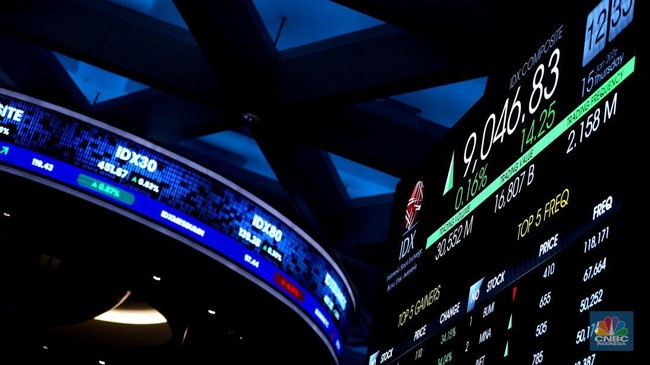
Indonesia’s capital market is undergoing a severe adjustment phase. Since the shock that occurred in late January, the Composite Stock Index (IHSG) has failed to recover through mid-March 2026.
The IHSG, which reached its all-time high of 9,174.47 on Tuesday, 20 January 2026, has now fallen significantly to 7,000 points as of Tuesday, 17 March 2026.
Within nearly two months, the IHSG has depreciated by 24.6%, or lost 2,257.15 points. This massive decline in market capitalisation over a short timeframe represents an accumulation of interconnected negative sentiment from both domestic structural factors and escalating global geopolitical tensions.
Below is an explanation of the 10 key factors that have served as catalysts for market pressure since late January 2026:
- MSCI Index Freeze and Free Float Uncertainty (28 January 2026)
The global index rating agency MSCI imposed a temporary freeze on the adjustment of Indonesia’s equity index constituents. This decision was made due to concerns from global institutional investors regarding the transparency of actual share ownership in the domestic market.
In response, the stock exchange authorities advanced discussions on raising the minimum public share requirement (free float) from 7.5% to 15%.
This prospect created supply overhang in the market, as investors anticipated large-scale share releases by controlling shareholders of big-cap issuers to meet the new quota, which automatically depressed share prices in the secondary market.
- Revised Recommendations from Foreign Financial Institutions (29 January – 1 February 2026)
In response to the free float change discussions and the potential halt of passive fund flows from MSCI indices, several global Tier-1 investment banks took mitigation steps.
Goldman Sachs was the first to cut its recommendation for Indonesia’s equity portfolio to Underweight on 29 January. This was followed by UBS and Nomura, which downgraded their outlook to Neutral positions.
This coordinated revision of recommendations triggered asset disposals by foreign investment managers using these research benchmarks, thereby inflicting additional negative sentiment on the IHSG and depressing performance.
- Leadership Transition at the Financial Services Authority (30 January 2026)
Amid intense selling pressure and demands for stock exchange transparency reforms, the market faced institutional uncertainty. The resignation of the President Director of the Indonesian Stock Exchange (BEI) alongside several Board Members of the Financial Services Authority (OJK) created temporary leadership vacancies.
This sudden transition triggered doubts about short-term policy direction, prompting a sell-off in the market and market panic to liquidate assets.
- US Supreme Court Cancellation of Trump-Era Tariffs (20 February 2026)
The US Supreme Court’s decision to cancel the reciprocal tariff policy established under the previous administration triggered a restructuring of global supply chains.
Although potentially normalising trade over the long term, this sudden transition forced multinational corporations and developing country exporters—including Indonesia—to readjust pricing strategies and distribution routes.
This operational uncertainty prompted investors to withhold exposure to export-oriented issuers. Just one day before this decision, President Prabowo signed a counter-tariff contract setting reciprocal tariffs at 19% on Indonesian goods and provided consumer data to the United States.
- Escalation of US-Iran Conflict Following the Khamenei Incident (February – March 2026)
Global geopolitics intensified sharply following an incident resulting in the death of Iran’s Supreme Leader, Khamenei. The outbreak of open military conflict between the US and Iran erased risk appetite in financial markets.
A large-scale flight to safety phenomenon occurred, where foreign capital was withdrawn from risky assets in developing countries towards safe instruments such as US government bonds (US Treasury) and Bitcoin, which experienced considerable appreciation in the days following the geopolitical escalation.
- Closure of the Strait of Hormuz Shipping Route (March 2026)
As a logical consequence of the armed conflict in the Middle East, the Strait of Hormuz was forced to close. Given that this strait serves as an artery for approximately 20% of the world’s crude oil supply, its closure directly created a supply shock.
Global crude oil benchmark prices surged sharply, imposing a double burden on net oil-importing countries such as Indonesia, both in terms of the trade balance and fiscal stability.
As of Monday, 16 March 2026, Brent and WTI prices remained elevated, hovering around $98 for WTI and $103 for Brent. Before the Iran-US war escalation occurred, WTI prices were still at $66 and Brent at $70.
- Outlook Downgrade by Fitch and Moody’s (February – March 2026)
Examining fiscal vulnerabilities and economic policy governance, two major credit rating agencies, Fitch Ratings (4 March) and Moody’s Ratings (5 February), successively revised Indonesia’s debt outlook to Negative, while maintaining the rating at Investment Grade level (BBB/Baa2).
This decision was driven by perceptions of increasing macroeconomic policy uncertainty and weakening fiscal framework credibility amid a tendency towards centralised decision-making.
Both agencies highlighted the risk of APBN deficit widening, projected to reach 2.9% of GDP in 2026, due to the government’s ambition to pursue 8% growth whilst financing expansive social programmes such as MBG (Health Insurance Programme).
This risk was compounded by the state revenue ratio projected to reach only 13.3% of GDP, far below the median for equivalently-rated countries (25.5%).
Additionally, the emergence of a new sovereign wealth fund, Danantara, triggered concerns regarding potential quasi-fiscal burdens lacking transparency.