
IHSG at Risk of Pressure from Iran-US-Israel Conflict Escalation, Analyst Hendra Wardana Warns Investors
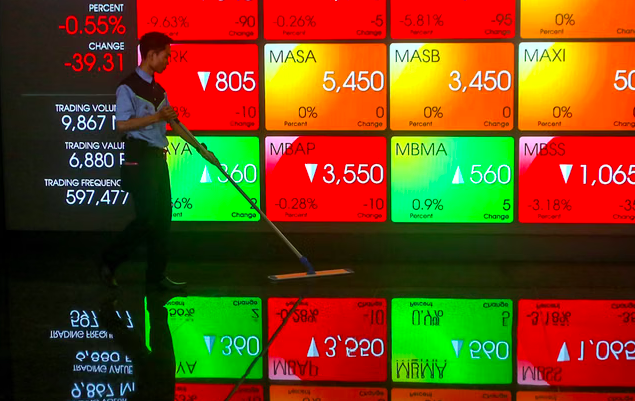
Capital market analyst and Founder of Republik Investor Hendra Wardana has warned of the risk of pressure on the Indonesian Composite Index (IHSG) in the coming week as a result of escalating conflict in the Middle East region.
According to Hendra, the escalation of conflict between Iran, the United States (US), and Israel is not merely a political issue but has entered the realm of economic risk at the global level.
“The market responds directly with a risk-off pattern. Global investors tend to exit risky assets and seek protection in safe haven assets,” Hendra said to Antara in Jakarta on Sunday (1 March).
Should the conflict escalation disrupt tanker shipping through the Strait of Hormuz, according to Hendra, it could cause global oil prices to spike higher as the market recalculates supply risks.
“The impact could spread to global inflation, exchange rates, and interest rate policies in various countries,” said Hendra.
Meanwhile, for the Indonesian capital market, he explained that pressure could come from two sides. Firstly, the potential for capital outflow as foreign investors reduce their exposure in emerging markets.
Secondly, the risk of import inflation due to a spike in energy prices at the global level.
Should oil prices remain at elevated levels, he said this could increase production costs and squeeze the margins of listed companies.
“In conditions like this, the IHSG has the potential to weaken and test the classic support level at 8,133. If that level breaks, the psychological area of 8,000 becomes the next support. Meanwhile, the nearest resistance is at 8,300,” said Hendra.
However, according to him, not all sectors will be negatively impacted. For retail investors, Hendra recommends that the best approach is discipline and selectivity.
“If you have an aggressive profile, the momentum in the commodities sector can be leveraged with strict risk management,” said Hendra.
Meanwhile, for conservative investors, he said a wait-and-see strategy remains relevant whilst monitoring conflict developments and foreign capital flows.
“In a heated geopolitical situation, the key is not merely entering or exiting the market, but the ability to read sector rotation and keep risks under control,” said Hendra.
From Friday’s (27 February) closing data from the previous week, the IHSG closed up 0.23 points or 0.00 per cent to 8,235.49. Meanwhile, the 45 premier shares group or LQ45 index fell 3.53 points or 0.42 per cent to 834.36.
Share trading frequency totalled 2,526,942 transactions with 47.64 billion shares traded valued at Rp38.24 trillion. A total of 341 shares rose, 315 shares fell, and 163 shares remained unchanged.