
IHSG and Rupiah Weaken amid US-Iran Conflict and Federal Reserve Policy Concerns
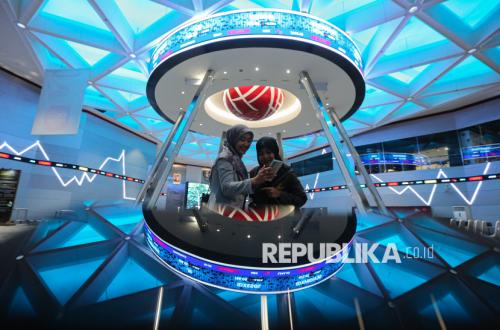
Indonesia’s stock exchange weakened on Friday, 13 March 2026, as market participants anticipated that the Federal Reserve would adopt a hawkish stance due to global energy inflation risks stemming from the conflict between the United States and Iran.
The Composite Stock Price Index (IHSG) of the Indonesia Stock Exchange (IDX) opened lower by 23.30 points or 0.32 per cent to 7,338.82. Meanwhile, the blue-chip LQ45 index declined 2.74 points or 0.36 per cent to 748.45.
“As Kiwoom Research predicted, the IHSG faces difficulty rising significantly given various global sentiments, particularly ahead of the extended Eid al-Fitr holiday which prompts many investors to reduce their portfolio positions to avoid market volatility during the holiday period,” said Liza Camelia Suryanata, Head of Research at Kiwoom Securities Indonesia, in her analysis in Jakarta on Friday.
From abroad, the International Energy Agency (IEA) stated that the conflict between the US and Iran could represent the largest energy supply disruption in history.
Oil flow through the Strait of Hormuz has dropped dramatically from approximately 20 million barrels per day before the conflict to nearly a complete halt, forcing regional Gulf producers to cut production by around 10 million barrels per day.
Globally, oil supply is estimated to decline by approximately 8 million barrels per day in March 2026. The IEA responded by releasing approximately 400 million barrels from strategic reserves, whilst the US plans to release approximately 172 million barrels from its emergency reserves.
On the other hand, Iran has warned that oil prices could reach 200 US dollars per barrel should the conflict escalate. Nevertheless, Iran has continued sending approximately 11.7–12 million barrels of oil through the Strait of Hormuz to China since the conflict began on 28 February 2026.
West Texas Intermediate (WTI) crude oil was trading at 95.54 US dollars per barrel, whilst Brent crude stood at 100.41 US dollars per barrel based on trading data at 09.07 WIB. The continuing effects of the oil price surge could increase risks of global stagflation and dampen expectations for monetary easing in various countries.
Previously, market participants had estimated two to three interest rate cuts by the Federal Reserve this year. However, the market now anticipates only approximately 20 basis points of easing by year-end.
US President Donald Trump has again urged Federal Reserve Chairman Jerome Powell to lower interest rates immediately. However, the market assesses that the energy price surge could actually extend inflationary pressures. In the coming weeks, the Federal Reserve will hold a Federal Open Market Committee (FOMC) meeting on 17–18 March 2026 to determine its benchmark interest rate policy.
Domestically, the government has begun withdrawing a portion of Bank Indonesia’s (BI) surplus to the state treasury to help finance the state budget amid rising budgetary needs. Approximately 16 trillion rupiah has reportedly been withdrawn under the authority granted in Finance Ministry Regulation No.115/2025.
Finance Minister Purbaya Yudhi Sadewa emphasised that the withdrawal was not conducted in full and remains coordinated between the government and BI to maintain equilibrium between fiscal and monetary policy and financial system stability.
Nevertheless, this step is assessed as potentially causing investor concern as it could be perceived as intervention in the central bank and reflect increasing fiscal pressure.
In Thursday’s trading, European stock exchanges closed broadly lower. The Euro Stoxx 50 index fell 0.69 per cent, the British FTSE 100 index weakened 0.47 per cent, the German DAX index fell 0.21 per cent, and the French CAC 40 index weakened 0.71 per cent.
US stock exchanges on Wall Street also closed broadly lower on Thursday, 12 March. The Dow Jones Industrial Average fell 739.42 points or 1.56 per cent to 46,677.85. The S&P 500 index weakened 1.52 per cent to 6,672.77, and the Nasdaq Composite index corrected 1.78 per cent to 22,311.98.
Meanwhile, Asian stock exchanges on Friday morning were mostly lower. The Nikkei index fell 551.00 points or 1.01 per cent to 53,902.00, the Shanghai index fell 4.47 points or 0.11 per cent to 4,124.62, the Hang Seng index weakened 85.84 points or 0.33 per cent to 25,630.91, whilst the Straits Times index rose slightly by 0.58 points or 0.01 per cent to 4,855.92.