
IHSG and Rupiah Continue to Slump, Unit-Linked Policyholders Prepare to Top Up
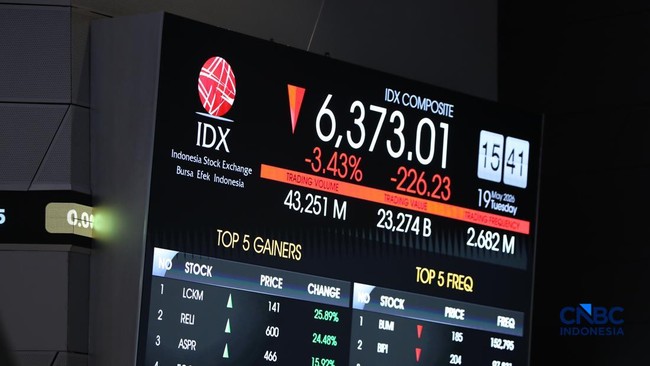
Jakarta, CNBC Indonesia - The Indonesian capital market is not in good shape. Large foreign outflows have driven the Jakarta Composite Index (IHSG) and the rupiah lower at the same time. Based on Refinitiv data as of 19 May 2026, the year-to-date movement of the IHSG had corrected by 2,351 points or 26.88% to 6,396. Meanwhile, the rupiah’s exchange rate against the US dollar had depreciated by 6.36% to Rp17,640 per US dollar. In this bearish environment, holders of unit-linked insurance products should check the status of their policies. After all, the unit fund of your unit-linked policy will certainly be affected by the fall in equities and the depreciation of the rupiah. Before it’s too late and you regret, you should evaluate and adjust your unit fund management strategy. Unlike conventional insurance products, unit-linked insurance has a high dependence on the performance of the capital market. When the IHSG falls and the rupiah depreciates, not only are investment returns eroded, but the resilience and sustainability of the policy can also be threatened. And typically, many customers do not realise that unit-linked policies can lapse (automatic cancellation/termination) even though regular premiums are paid. Protection and Investment. In a unit-linked insurance premium structure, the premium payments are split into two portions: for acquisition & protection costs and for investment allocation in the capital market. Over time, the share of insurance costs typically increases, and in normal or bullish market conditions, the rise is offset by the investment returns generated. A persistent correction in the stock market can erode the value of the unit investments, so your investment balance could be exhausted and no longer sufficient to cover the cost of insurance (COI), which tends to rise as policyholders age. If the policy lapses because the available balance is insufficient to pay the COI, all insurance protection benefits—both health and life—will lapse even if premiums have been paid for years. In such a situation, the options are to switch the investment portfolio and to top up funds to prevent the policy from lapsing. To avoid lapse, policyholders can mitigate with two strategies: first, switching funds. For example, from an initial 100% equity allocation to a mix of 30% equities, 50% bonds, and 20% money market. The aim of switching funds is to reduce volatility, preserve the cash value, and extend the policy’s resilience. In the illustration, switching funds could reduce a previously -10% negative return to around -3%. Second, a top-up strategy when the market is crashing. When the market declines, unit prices become cheaper, allowing additional funds (top ups) to buy more units. In simulations, a bear-market top-up strategy can improve the final value of the investment because the recovery on a rebound is larger. Unit-linked insurance products are not static, so customers are urged to actively check their investment balances to monitor policy sustainability and adjust investment strategies according to market conditions. Indeed, when the rupiah weakens and the IHSG remains bearish for an extended period, the greatest threat is not merely investment losses but the loss of insurance protection due to the policy’s cash value being eroded by policy costs.