
Igniting the Nation from Palm Oil
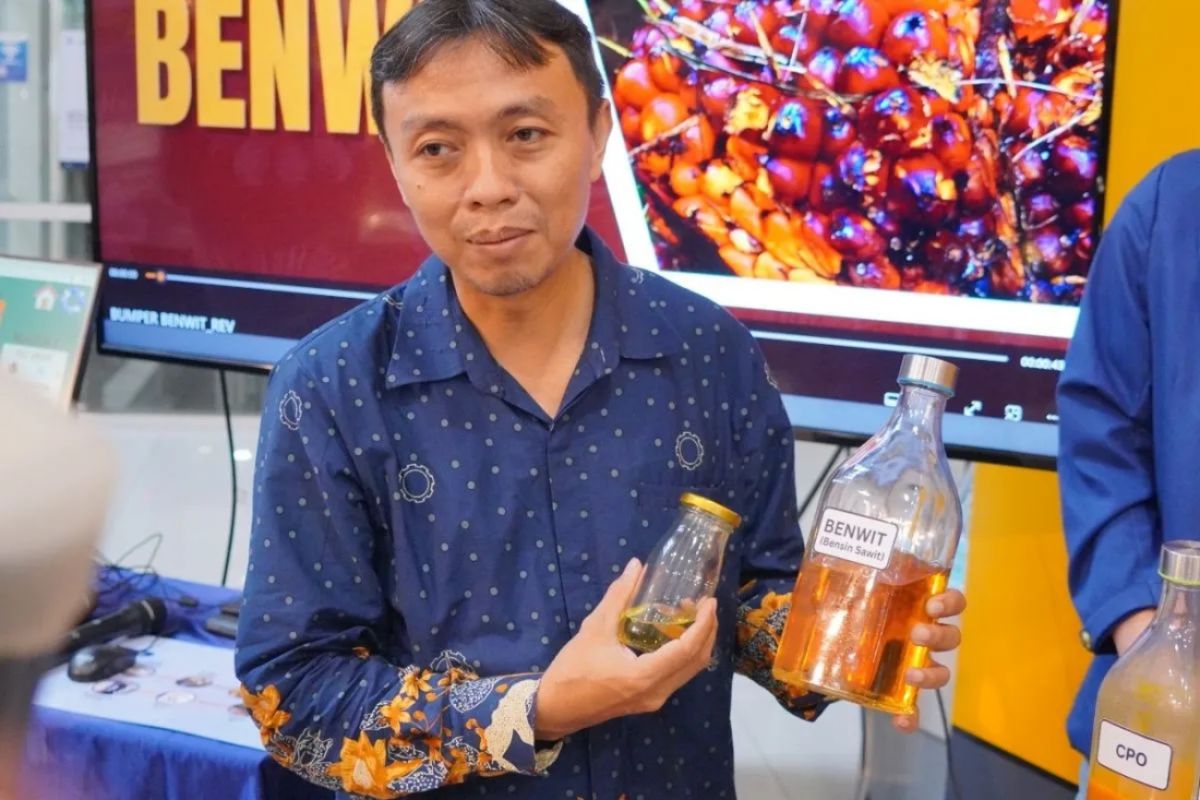
Surabaya (ANTARA) - Amid the uncertainty of global oil prices and the shadow of an energy crisis, efforts to find alternative energy sources are becoming an urgent necessity, no longer just an option. In this context, palm oil, which has long been synonymous with export commodities, is being repositioned as an energy raw material. From the abundant raw materials in this tropical nation, a more ambitious idea has emerged: transforming it into petrol. The innovation developed by the Institut Teknologi Sepuluh Nopember (ITS) in Surabaya is not merely an academic experiment. It arises in a broader context, namely the urgent need to strengthen national energy independence. Indonesia’s dependence on fossil fuels, particularly imports, remains a recurring structural problem. It is here that palm petrol or biogasoline finds its relevance. However, like many other energy innovations, the important question is not just “can it be done”, but “how viable, efficient, and sustainable is it”. Energy Transformation For decades, palm oil has been the backbone of Indonesia’s exports. Production reaching tens of millions of tonnes per year positions Indonesia as a major global player. However, the greatest added value is often enjoyed abroad, when the raw material is further processed. ITS’s efforts to convert crude palm oil (CPO) into petrol represent an important step in shifting the paradigm from mere raw material exporter to high-value energy producer. Through the catalytic cracking method, palm oil is broken down into short-chain hydrocarbons equivalent to commercial petrol components. In the initial stage, conversion efficiency was only around 60 percent at high temperatures up to 420 degrees Celsius. However, the development of a nickel oxide and copper oxide-based bimetallic catalyst brought a significant leap. The operating temperature dropped to 380 degrees Celsius, while the yield increased to 83 percent. These figures are not just technical achievements. They demonstrate that technology based on domestic resources can compete in efficiency with conventional processes. Even more intriguingly, the by-products of this process are not wasted. The gas is reused as reactor fuel, while the liquid residue can be utilised as an alternative fuel. This approaches the zero-waste concept that has long been the ideal standard in the modern energy industry. From an economic perspective, the potential is enormous. With abundant national CPO production, converting even a small portion into fuel could significantly reduce pressure on fuel imports. In the long term, Indonesia could even become an exporter of plant-based energy. However, behind this optimism, there is a fundamental challenge: can palm petrol production be price-competitive compared to fossil fuels that are still subsidised? Without a clear answer, this innovation risks remaining in the laboratory.