
If PT Agrinas Continues Importing 105,000 Indian Pick-up Trucks, KSPN Demands Immediate KPK and BPK Audit
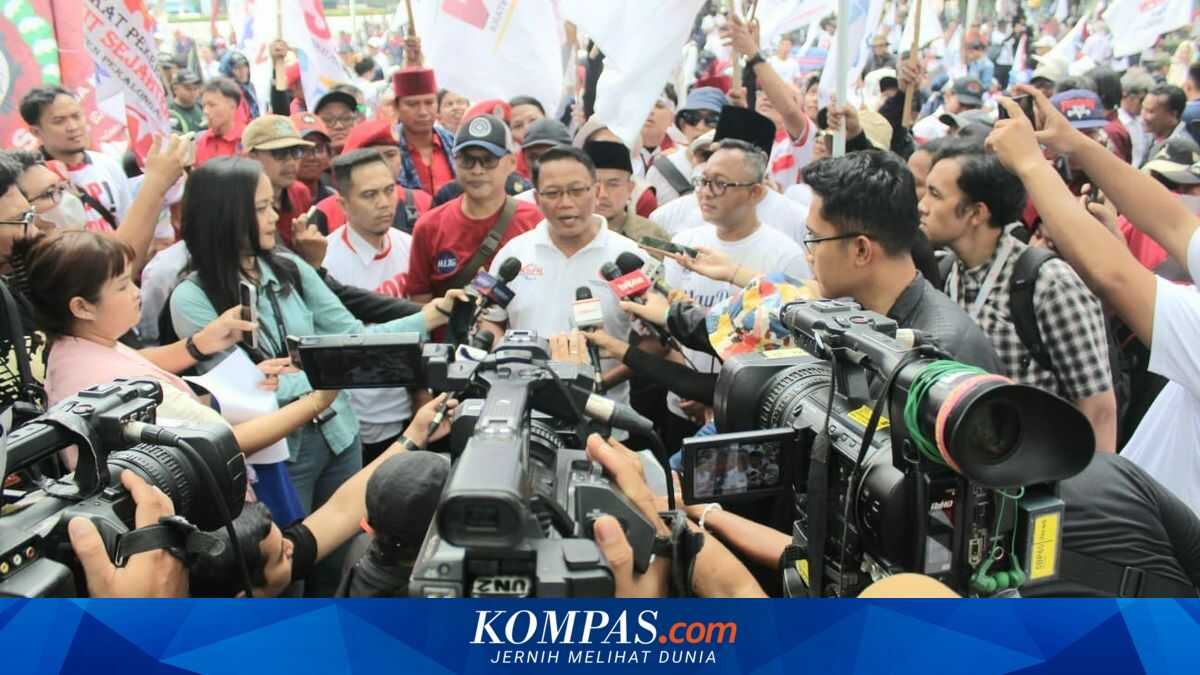
The controversy surrounding the import of operational commercial pick-up trucks (4x4) for village cooperatives continues to escalate. Multiple stakeholders, including the Confederation of Indonesian Workers’ Unions (KSPN), have called for the project to be cancelled, and the House of Representatives has requested a postponement.
However, PT Agrinas remains unmoved, and the vehicles have already begun arriving and being displayed.
Most alarmingly, recent information reveals that PT Agrinas has already paid a down payment of approximately 6 trillion rupiah.
Given PT Agrinas’s determination to proceed with importing 105,000 4x4 pick-up trucks from India, KSPN President Ristadi issued a formal statement received by Kompas.com on 1 March 2026, requesting that the KPK (Anti-Corruption Commission) and BPK (Supreme Audit Board) conduct an immediate audit. This request is based on the following grounds:
Whilst KSPN supports pro-people programmes aimed at improving citizens’ welfare, including that of Indonesian workers, the organisation wishes to ensure that programme implementation is properly targeted and that no irregularities occur that would damage state finances and public funds.
Irregularities in the import process and justification:
Although the procurement scheme for this village cooperative project is based on Presidential Instruction 17/2025 through direct appointment, the public was not informed until after the import contract was agreed. The initial planning process was highly opaque despite involving substantial state budget allocations for public benefit purposes.
Law No. 3 of 2014 on Industry, Articles 85 and 86, stipulate that the government and state-owned enterprises must purchase domestically produced industrial products when purchasing is financed by the state budget, regional budgets, or capital investment. PT Agrinas’s decision to import vehicles from India appears to violate this provision.
Relevant stakeholders were not involved in the import planning process. This is evidenced by statements from the Indonesian Chamber of Commerce (Kadin) and the Minister of Industry confirming that the domestic automotive industry is capable of producing 4x4 pick-up trucks if given an order for 105,000 units.
PT Agrinas claimed to have consulted automotive manufacturers; however, PT Mitsubishi, producer of the Pick-up L300, denied ever being contacted about the matter. PT Mitsubishi stated it is capable of producing domestically manufactured 4x4 pick-up trucks if provided with a large order.
PT Agrinas stated that 4x4 pick-up trucks are suited to Indonesia’s agricultural terrain, yet this contradicts field reality. Indonesian farmers have long relied on 4x2 pick-up trucks, which have performed adequately for transporting agricultural produce. PT Agrinas should identify which regions specifically require 4x4 vehicles—likely far fewer than 105,000 locations.
PT Agrinas claimed that importing 4x4 pick-up trucks from India is more efficient and cost-effective than domestic production, despite the fact that the domestic automotive industry has not yet manufactured such vehicles. Any existing vehicles are imported as complete built-up units (CBU), not domestically manufactured.
Recent information indicates that the Mahindra Scorpio 4x4 vehicles meet only BS4 emission standards, below the BS6 standard currently enforced in India. In other words, these vehicles are no longer permitted to circulate in India, suggesting their stock accumulation may result from poor sales within India. KSPN requests that the KPK and BPK investigate this matter further, as it suggests potential price manipulation.
PT Agrinas’s stated justifications may merely be pretexts for importing Indian pick-up trucks, and there is potential for corrupt and manipulative practices.
- President Prabowo has stated that Indonesia must achieve economic nationalism and strengthen domestic industry. However, PT Agrinas’s actions appear to constitute a misuse of delegated authority and directly contradict the President’s vision of economic nationalism and domestic industry strengthening.
KSPN commends and supports the Minister of Industry, Kadin, and Gaikindo (Indonesian Automotive Manufacturers Association) for their apparent commitment to strengthening and developing the domestic automotive industry to expand employment and prevent workforce retrenchment. This is the crux of KSPN’s criticism regarding the import of 105,000 4x4 pick-up trucks.