
IEA Releases 400 Million Barrels of Oil Reserves as Middle East Conflict Triggers Global Energy Crisis
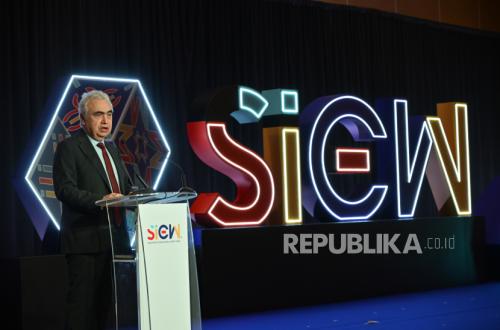
REPUBLIKA.CO.ID, PARIS – The intensifying conflict in the Middle East region since the end of February 2026 has begun to shake the global energy market. Disruptions to strategic distribution routes in the Strait of Hormuz, along with attacks on energy infrastructure, have triggered price surges and posed serious threats to the world’s energy resilience.
International Energy Agency Executive Director Fatih Birol emphasised that this situation is not merely a regional conflict but a crisis with broad implications for global economic stability.
“Disruptions to oil and gas flows through the Strait of Hormuz, as well as attacks on energy infrastructure, have major implications for energy security, price affordability, and the global economy,” Birol stated in his official remarks, as reported on Friday (27/3/2026).
According to the IEA, the war that began on 28 February has impeded energy trade flows through the Strait of Hormuz and created the largest supply disruption in the history of the global oil market. As a result, global liquefied natural gas (LNG) supplies have also declined by around 20 per cent.
In response, on 11 March, IEA member countries unanimously agreed to release 400 million barrels of emergency oil reserves, marking the largest such action in history to dampen market turbulence.
The pressure on the energy market is immediately reflected in price surges. Brent crude oil has risen nearly 50 per cent since the conflict erupted, while European benchmark natural gas prices (TTF) have jumped more than 70 per cent.
In the Asian region, prices for derivative products such as diesel and jet fuel have even more than doubled, showing greater pressure on energy-importing countries.
The IEA notes that oil flows through the Strait of Hormuz have plummeted dramatically from around 20 million barrels per day to nearly halted. Limitations on alternative routes and filling storage capacities have forced Gulf countries to cut production by more than 11 million barrels per day.
“This situation creates layered pressures, both on the supply side and logistics, making the energy market increasingly tight,” Birol said.
The Gulf region has long been the main supplier of refined products such as diesel and aviation fuel. However, more than 3 million barrels per day of refinery capacity has been halted due to attacks and limited export access.
The impacts have spread beyond the region. Refineries in various countries have also reduced production due to concerns over raw material supplies. Meanwhile, markets for products like diesel and jet fuel are already in tight conditions, leaving very limited room to increase output.
Amid this pressure, global oil reserves have become the primary support. The IEA records that total world oil stocks have reached more than 8.2 billion barrels, the highest level since February 2021.
Around half of these reserves are held in advanced economies, including 1.25 billion barrels stored by governments for emergency conditions.
“These reserves provide space for countries to respond to short-term supply disruptions and stabilise the market,” Birol said.
The IEA affirms that it will continue to monitor developments and coordinate with governments worldwide to maintain energy supply stability amid the ongoing escalation of the conflict.