
IEA: Middle East Crisis Disrupts Global LNG Supply Until 2027
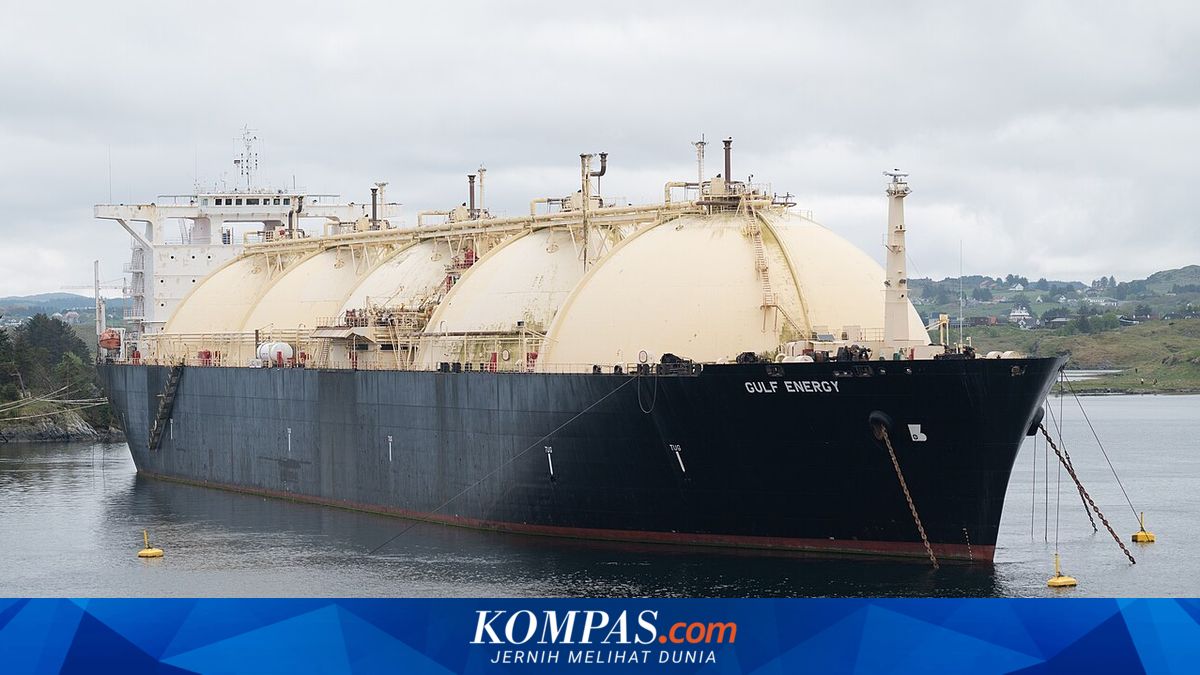
The conflict in the Middle East is beginning to alter projections for the global liquefied natural gas (LNG) market, not only in the short term through supply disruptions and price spikes, but also in terms of worldwide supply expansion until the end of the decade.
The International Energy Agency (IEA) in its latest quarterly report, quoted on Friday (24/4/2026), states that disruptions to shipments through the Strait of Hormuz since early March 2026 have created significant uncertainty in the global gas market, wiping out nearly 20 percent of global LNG supply from the market and triggering price surges in major importing regions.
These disruptions occurred when the market had previously shown signs of balancing during the 2025/2026 winter.
In the same five-month period, benchmark gas prices in Europe and Asia fell by around 25 percent, reflecting the easing of supply pressures that had previously loomed over the global energy market.
However, this trend reversed sharply in March when the Middle East conflict caused a de facto closure of the Strait of Hormuz to many LNG cargoes.
The IEA notes that global LNG production fell 8 percent year-on-year, triggered by a sharp decline in exports from Qatar and the United Arab Emirates, which was only partially offset by increased production from other regions.
IEA Executive Director Fatih Birol assesses that this situation demonstrates the fragility of the global energy system.
“This disruption occurs when the global gas market was already tight, so the impact is quickly felt on prices, supply, and energy security,” said Birol, as quoted by the IEA.
Supply pressures are directly reflected in prices.
Asia’s spot LNG price approached 21 US dollars per million British thermal units (MMBtu), while Europe’s average gas price was around 18 US dollars per MMBtu.
This price increase is driving new pressures on the demand side.
The IEA notes that natural gas demand in Europe fell by around 4 percent year-on-year in March 2026, mainly driven by stronger renewable energy power generation.
This situation marks an important shift in the market, where high prices are not only a consequence of tight supply but are beginning to alter energy consumption patterns.
Nevertheless, the IEA assesses that this demand reduction is not yet sufficient to offset the loss of supply from the market.
“We are living in a very fragile situation,” said Birol in a separate warning this week.