
IDEAS Research Reveals Potential of Fitrah Zakat This Year Projected to Decline, What's Behind It?
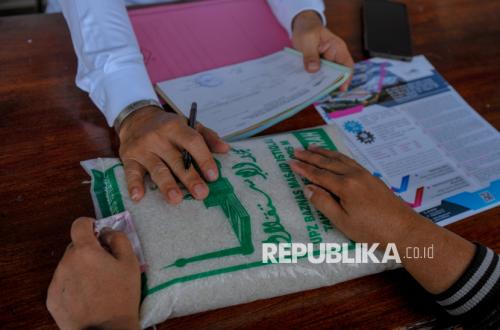
Jakarta — The research institute Institute for Demographic and Affluence Studies (IDEAS) has released findings regarding the potential of fitrah zakat in Indonesia for 2026. The research shows that the national potential for fitrah zakat during Ramadan 2026 is projected to fall between 480.1 and 541.4 thousand tonnes of rice, equivalent to 6.4–7.1 trillion rupiah.
This figure represents a decline compared to the fitrah zakat potential during Ramadan 2025, which was between 476.3 and 536.8 thousand tonnes of rice, or 6.8–7.5 trillion rupiah.
The fitrah zakat potential for Ramadan 2026 is calculated based on an estimated number of contributors (muzakki) projected at 192.0–216.6 million people, or approximately 80–90 per cent of Indonesia’s total Muslim population. By contrast, the fitrah zakat potential for 2025 was calculated with an estimated 190.5–214.7 million contributors.
“Although the volume (number of contributors) has increased compared to the previous year, its economic value is projected to decline,” wrote IDEAS researcher Tira Mutiara in a statement received by Republika on Friday (13 March 2026).
Mutiara explained that the increase in fitrah zakat potential in rice form is primarily driven by the growing number of contributors. However, the declining price of rice, which forms the basis for the calculation, means that the rupiah value of fitrah zakat has also decreased.
“In terms of volume, fitrah zakat has increased due to a rise in the number of contributors. However, when converted to rupiah value, the potential has actually declined by approximately 5.5–6.39 per cent compared to the previous year. This is influenced by a reduction in the average price of rice consumed by the community,” she said.
In IDEAS’ simulation, the value of fitrah zakat is calculated based on rice potential multiplied by the average price of rice consumed by households according to expenditure decile groups and district/city regions.
The decline in fitrah zakat value is driven by two main factors. First, rice prices, which had previously surged, are now showing a downward trend. Whereas prices had previously ranged around 16,000 rupiah per kilogramme, rice prices are currently averaging around 15,000 rupiah per kilogramme.
Second, there are indications of a shift in household consumption patterns from premium rice, which is relatively more expensive, towards rice at more affordable prices. This shift reflects household adjustment amid pressure on purchasing power following food price increases over recent years.
According to Mutiara, the largest decline in fitrah zakat value has occurred in the upper-middle-class contributor group, falling from approximately 3.8 trillion rupiah in 2025 to 3.5 trillion rupiah in 2026, a decline of approximately 8.9 per cent.
“This situation shows that economic pressure is not only felt by poor and vulnerable groups, but is beginning to spread to the middle class. Their fiscal space is becoming increasingly limited, including for meeting social-religious obligations such as fitrah zakat,” she explained.
Mutiara added that pressure on the middle class is also reflected in the latest data concerning the composition of economic groups in Indonesia. In 2025, the middle class numbered 46.6 million people, or approximately 16.6 per cent of the total population, down by approximately 1.1 million people compared to the previous year.
Furthermore, the Mandiri Saving Index as of 24 January 2026 also shows that the middle class savings index fell to 100.7 from 101.2 in December 2025.
“When the middle class faces pressure, the impact extends beyond household consumption to philanthropic activity. This group has been an important contributor to zakat, infak (voluntary giving), sedekah (charity), and social donations,” said Mutiara.
Despite the decline in fitrah zakat value, this instrument continues to play an important role as a buffer for food consumption among poor and vulnerable households. Fitrah zakat of 2.5 kilogrammes of staple food can help improve food access for groups in need.
In IDEAS’ simulation, recipients of fitrah zakat are estimated to be Muslim residents in the first decile, or the poorest group, numbering 24.1 million people. Should they receive fitrah zakat of 480.1–541.4 thousand tonnes of rice, per capita daily rice consumption could potentially increase from 0.210 kilogrammes to 0.873–0.958 kilogrammes over one month.
If fitrah zakat is paid in cash with a potential value of 6.4–7.1 trillion rupiah, recipients are estimated to receive approximately 265,000–296,000 rupiah per capita. This additional amount could potentially increase the average food consumption expenditure of the poorest group from 322,000 rupiah per capita per month to approximately 588,000–618,000 rupiah per capita per month during Ramadan.
Mutiara added that fitrah zakat impacts not only beneficiaries but also contributes to economic circulation in the community.
“Fitrah zakat can serve as an economic buffer for vulnerable groups to maintain food consumption. At the same time, its distribution also encourages economic circulation at the community level,” she concluded.