
IDAI States Routine Immunisation Can Prevent Outbreaks of Infectious Diseases
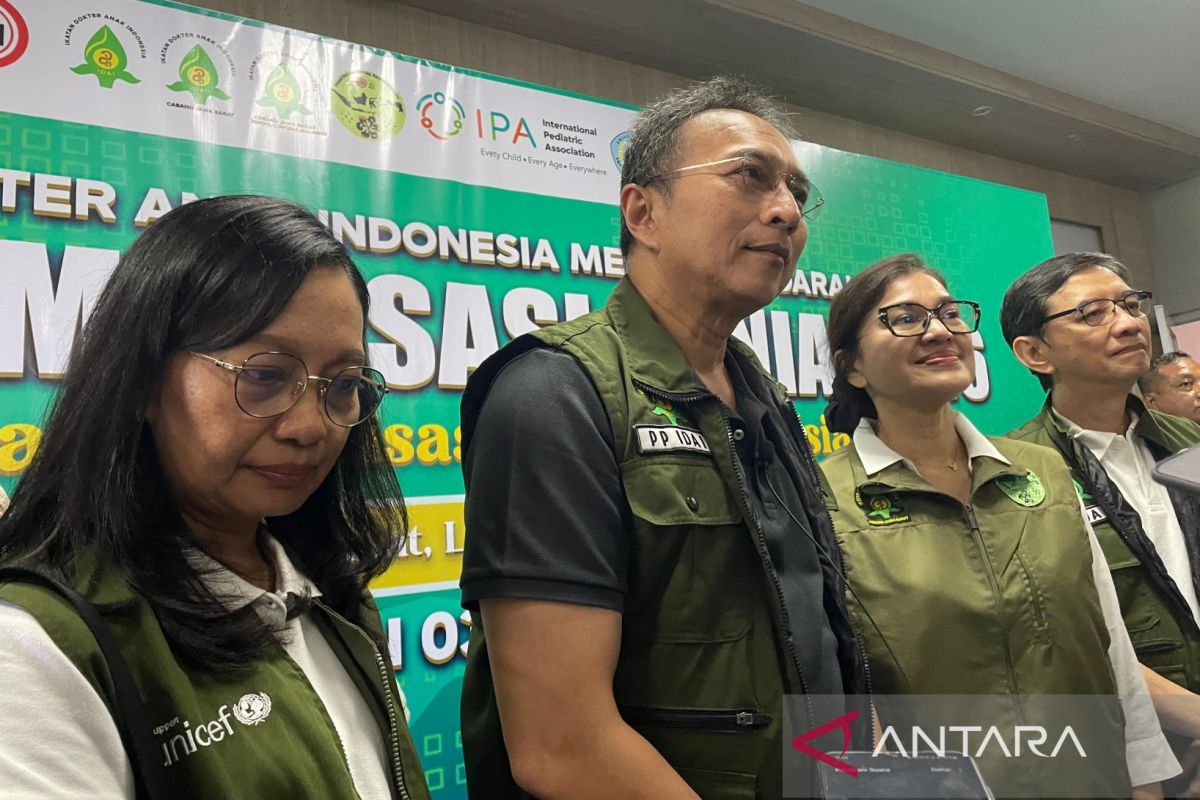
Cirebon (ANTARA) - The Indonesian Paediatric Society (IDAI) states that routine immunisation is one of the main keys to preventing extraordinary events (KLB) of infectious diseases that are still occurring in Indonesia, including in Cirebon, West Java.
The Chairman of the IDAI Central Board, Piprim Basarah Yanuarso, in Cirebon on Sunday, said that various emerging cases could actually be prevented if immunisation coverage in the community is high and equitable.
According to him, the peak of the World Immunisation Week 2026 commemoration, centred at Gunung Jati University in Cirebon, serves as a momentum to restore public trust in immunisation.
“We are still seeing how Indonesia is preoccupied with various KLB or outbreaks of infectious diseases that can actually be prevented through immunisation,” said Piprim.
He explained that history shows that high immunisation coverage is able to control the spread of diseases, especially those with high transmission rates.
In addition, Piprim emphasised that prevention through immunisation is far more efficient than handling outbreaks that have already occurred.
He said that outbreak response programmes such as Outbreak Response Immunisation (ORI) require greater costs and resources compared to routine immunisation.
“If a KLB occurs, the cost is far more expensive than if we carry out routine immunisation,” he stated.
Although no specific figures were mentioned, he conveyed that the pandemic has impacted immunisation services not only in Indonesia but also in various countries around the world.
He explained that, in addition to service disruptions, doubts about vaccines in the community also pose challenges in restoring immunisation coverage.
Hartono gave an example of countries in Europe that were previously measles-free but are now experiencing KLB due to declining trust in vaccines.
IDAI urges parents to check the completeness of their children’s immunisation through the Maternal and Child Health Book (KIA) and to complete it immediately, in order to protect children and prevent disease transmission in the surrounding environment.
“By completing children’s immunisation, it not only protects the child but also protects other family members,” he said.
Previously, the Cirebon City Health Office (Dinkes) recorded that the extraordinary event (KLB) of measles has been declared since 20 February 2026, following an increase in cases found in the area.
Based on data up to week 13 or as of 4 April 2026, the number of measles suspects reached 150 cases, with nine of them confirmed positive by laboratory tests.