
IDAI: Measles Transmission Extremely Rapid, One Case Can Infect Up To 18 People
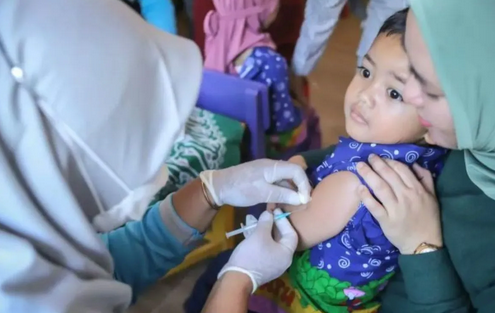
Measles is not only dangerous because of the risk of complications, but also because of its extremely high transmission rate. The Indonesian Paediatric Association (IDAI) has warned that the measles virus can spread rapidly, particularly if immunisation coverage in the community remains low.
Anggraini Alam, Chair of West Java IDAI and member of IDAI’s Infectious Diseases and Tropical Medicine Unit, explained that the measles virus spreads through the air via airborne transmission. For this reason, controlling transmission is difficult in densely populated environments with poor ventilation.
“Measles is airborne, transmitted via air. Someone coughs, someone sneezes. Even when I talk like this, the virus can float around,” she said on Saturday (28 February).
She stated that the measles virus can survive in the air or remain on surfaces for more than two hours after being expelled by an infected person. This condition increases the risk of transmission, particularly in enclosed spaces.
In certain situations, one person infected with measles can transmit the virus to many people in a short time. The transmission rate of measles is considered extremely high, with one case potentially infecting up to 18 other people. “Imagine from one it can go to 18,” Anggraini said.
Transmission can also occur before symptoms appear. The measles incubation period, which can last up to three weeks, means a person can still potentially spread the virus even though they have not yet shown signs of illness. “Nobody knows if they’re carrying the virus and already spreading it,” she added.
Patients typically only become aware of infection after a rash appears on the skin. However, at that stage transmission can have already occurred for several days prior. This condition increases the risk of outbreaks in the community if control measures are not implemented optimally.
According to IDAI, the high transmissibility of measles makes individual protection alone insufficient. To prevent epidemics, herd immunity is required, which can only be achieved if immunisation coverage reaches at least 94 percent evenly across the population.
With increasingly high population mobility, the measles virus also has the potential to spread across regions and even borders. For this reason, immunisation is considered the most effective measure to reduce transmission risk and prevent outbreaks among the population.