
ICW Criticises DPR Member's Claim that Asset Forfeiture Bill Could Violate the Constitution
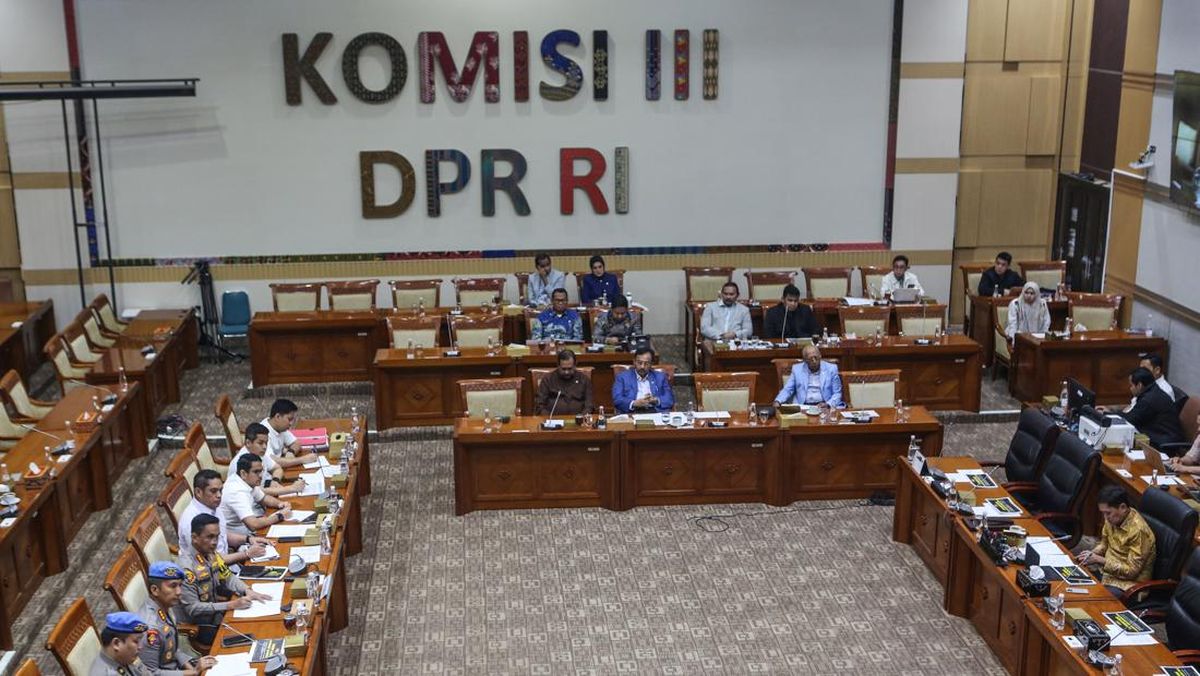
Indonesia Corruption Watch (ICW) has criticised a statement by a member of the DPR’s Commission III, Soedeson Tandra, who claimed that the Asset Forfeiture Bill (RUU Perampasan Aset) could potentially violate several legal principles and constitutional provisions.
ICW researcher Yassar Aulia reminded DPR members to review the latest draft before offering such views.
“The first thing the DPR should do is to open the latest draft currently being discussed in Commission III of the DPR. As far as ICW knows, there has been no circulation of the most recent draft version to the public,” Yassar said when contacted via written message on Friday (10/4).
Yassar reminded the DPR not to pass legislation without meaningful public participation, as seen in several controversial bills recently, such as the revision of the TNI Law.
Yassar then highlighted Soedeson’s view that the Asset Forfeiture Bill focuses on in rem (assets) without criminal conviction, rather than in persona (individuals).
“In fact, the in rem or non-conviction based forfeiture approach in combating corruption has been adopted by many countries with far better human rights safeguards than Indonesia,” he explained.
“At least hundreds of countries—including those adopting civil law systems like Indonesia—have incorporated this approach into their positive law to target illicit enrichment activities,” he added.
Yassar suggested that Commission III of the DPR conduct comparisons with other countries.
“There, it can easily be seen how the construction of articles can optimally guarantee corruption eradication by targeting the main logic of corruptors, namely illicit enrichment, while ensuring that law enforcement is not manipulated or even violates human rights,” he said.
Previously, Soedeson stated that the mechanism of asset forfeiture without criminal proceedings risks violating Article 28 of the 1945 Constitution.
After all, every citizen, without exception, has the right to protection of their property.
Referring to Article 6 of the Judiciary Power Law, Soedeson continued, a person cannot be declared guilty without a valid court decision.
“This has been a concern of mine from the start. Because this asset forfeiture focuses on in rem, on the goods. Whereas our character is civil law, ‘whoever’, in persona,” Soedeson said in his statement on Thursday (9/4).
“Citizens, including criminals, are protected in their property by the Constitution. A person cannot be declared guilty without a judge’s decision. That’s clear,” the Golkar politician added.
Meanwhile, from a civil law perspective, Soedeson said, the transfer of property rights in Indonesia has rigid procedures, from agreements to administrative handover processes.
He was concerned that if the Asset Forfeiture Bill ignores these processes, the state would take actions considered premature under the law.
The DPR’s Commission III has invited several experts to seek opinions on asset forfeiture.