
Ibas Urges Islamic Banking to Facilitate Capital Access for Small-Scale Traders
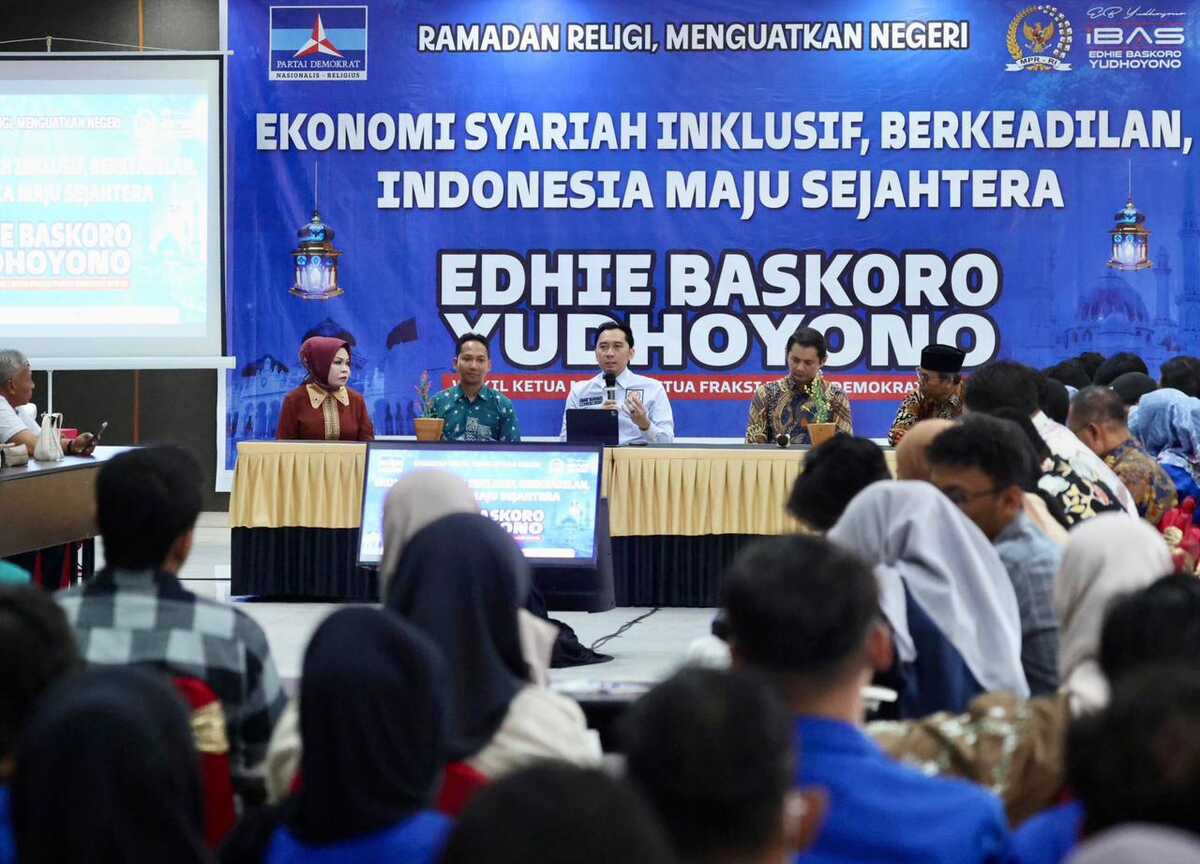
Deputy Chair of Indonesia’s People’s Consultative Assembly, Edhie Baskoro Yudhoyono (Ibas), has emphasised that strengthening inclusive and equitable Islamic economics represents a key strategy for promoting community welfare at the grassroots level. According to Ibas, this economic system based on Islamic principles is not merely a financial matter but serves as an instrument to strengthen micro-entrepreneurs and regional economies.
Ibas conveyed this message during a dialogue forum titled “Inclusive Islamic Economics, Equitable, Prosperous Indonesia” in Madiun, East Java. “Islamic economics must be capable of empowering communities from the bottom up. If UMKMs and people’s economies are strong, then families are strong, regions are strong, and ultimately our nation becomes stronger,” Ibas stated in a press release on Monday (2 March).
Ibas highlighted several challenges in developing Islamic economics in Indonesia, ranging from low financial literacy to difficult financing access for rural communities. He urged closer integration between the education sector, financial institutions, and business operators.
Ibas also emphasised the importance of easy capital access for UMKMs through the Islamic People’s Business Credit (KUR Syariah) scheme. He requested that financing procedures be simplified whilst remaining productive. “Capital access must be easy, not complicated. Appropriate financing will create employment opportunities and stimulate local economies,” said the Chairman of the Democratic Party Faction in the House of Representatives.
During the dialogue session, Ibas responded to aspirations from lecturers and students from Muhammadiyah University Ponorogo and UIN Ponorogo regarding women’s roles in UMKMs and obstacles to accessing KUR in villages. He proposed establishing mentor communities for residents wishing to access banking services.
“Universities and lecturers must become motors of education. Young people should not merely seek employment but dare to create ventures based on Islamic values that benefit society,” he added.