
Ibas Urges Acceleration of Digital Transformation Towards a Smart Indonesia
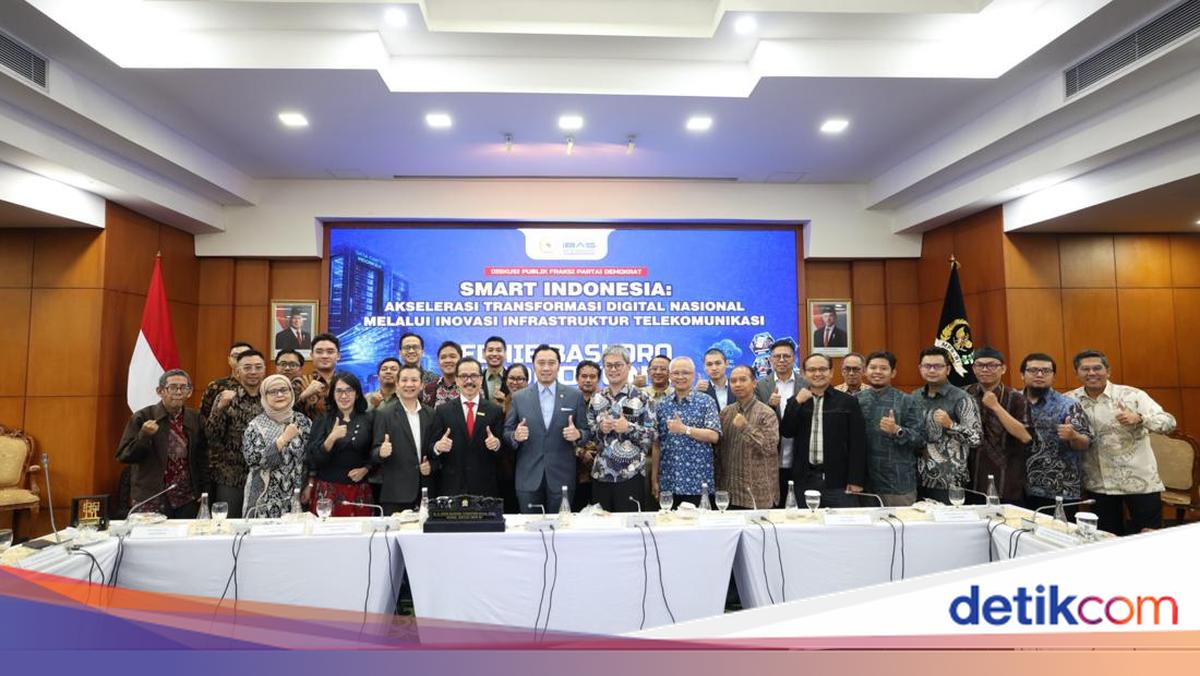
Deputy Speaker of the People’s Consultative Assembly (MPR RI) Edhie Baskoro Yudhoyono (Ibas) has asserted that Indonesia must not merely serve as a market for global technological developments. Instead, the nation must become a major player in the global digital transformation by strengthening telecommunications infrastructure, data sovereignty, cybersecurity, talent development, and collaboration between government, education, and industry. The Chairman of the Democratic Party Faction in the House of Representatives (DPR RI) made these remarks during a public discussion titled ‘Smart Indonesia: Accelerating National Digital Transformation Through Telecommunications Infrastructure Innovation’ at the MPR RI Complex. The event was attended by telecommunications and digital experts, academics, technology industry players, professional organisations, and digital communities from various regions. In his opening speech, Ibas emphasised that digital transformation is a decisive factor for Indonesia to realise its ambition of becoming the largest economic power in Southeast Asia. However, he noted that significant challenges remain, particularly the disparity in access and quality of digital services across different parts of Indonesia. ‘The challenge for us is how we can become the largest economy in Southeast Asia. The digital divide as a national challenge is still evident,’ Ibas stated. ‘We want quality internet access that can be enjoyed tangibly so that digital literacy is truly realised.’ Ibas argued that telecommunications infrastructure development must be viewed as a long-term strategic investment. He believes that digital communication networks now play a role as crucial as physical infrastructure in driving national economic growth. ‘Telecommunications infrastructure is the backbone of digital communication. Every BTS tower we build, every kilometre of fibre optic cable we lay, is a vital investment to support Indonesia’s digital transformation,’ said the DPR RI member representing the East Java VII electoral district. Beyond expanding digital access, Ibas also stressed the importance of strengthening cybersecurity and personal data protection amidst increasing global digital threats. He noted that technological advancement must be balanced with regulations and governance capable of safeguarding national interests. ‘The next challenge is how we anticipate the capabilities of parties who are increasingly skilled and established in conducting cyberattacks. This threat is real and serious,’ Ibas warned. ‘Therefore, personal data protection and the implementation of the Personal Data Protection Law (UU PDP) must be a shared concern.’ Furthermore, Ibas highlighted the need for Indonesia to prepare for the next generation of technology. He stated that Indonesia must take a strategic position in developing future technologies, including 5G, 6G, artificial intelligence (AI), and national data management. ‘The future of 5G and preparations towards 6G must be prepared now. Indonesia must not only be a market but must become an important part of the global digital ecosystem,’ explained the Deputy Chairman of the Democratic Party. ‘Campuses, industry, and government must collaborate in research and application so that the future we aspire to can truly be realised.’ According to Ibas, artificial intelligence can also be an important instrument to accelerate bureaucratic reform and more effective public services. However, its implementation must uphold the principles of accountability and public interest. ‘AI can help deliver public services that are faster, cheaper, more transparent, and remain accountable. At the same time, we must strengthen national data and cyber sovereignty through strong governance and regulations that safeguard the nation’s interests,’ he said. Ibas added that Indonesia actually possesses a large pool of human resources to win the global digital competition. Therefore, all stakeholders must ensure that national talents receive adequate support. ‘The MPR feels it has a moral responsibility in the nation’s development. We do not lack talent. What we must do is ensure these talents get the support they need so their potential can develop optimally,’ he stated. Ibas called on all elements of the nation to view digital transformation as a strategic national agenda requiring courage, collaboration, and a long-term vision. ‘Digital transformation is not just about technology, but about the future of our nation. If we can build strong infrastructure, produce superior talent, maintain data sovereignty, and strengthen national innovation, Indonesia will not only be a user of technology but also a creator and leader in the global digital economy,’ he said. During the discussion session, several speakers shared strategic views on Indonesia’s digital future. Awanio Co-Founder and CEO Irfan Yuta Pratama emphasised the importance of national digital sovereignty by providing greater space for local technology companies to grow. He argued that government technology spending should not only be procurement-oriented but also serve as an instrument to build a strong national technology industry. Similarly, NoLimit Indonesia Founder and CEO Aqsath Rasyid assessed that Indonesia has great potential to become a technology creator in the Southeast Asian region, with the strengthening of digital talent being the key to facing global competition and future narrative wars. Meanwhile, Microsoft Indonesia Director of Government Affairs RR Widyasari Listyowulan highlighted the importance of building a robust national data ecosystem, including the development of data centres and increasing human resource capacity.