
Ibas Pushes for Legal Certainty on Waqf Land for Community Welfare
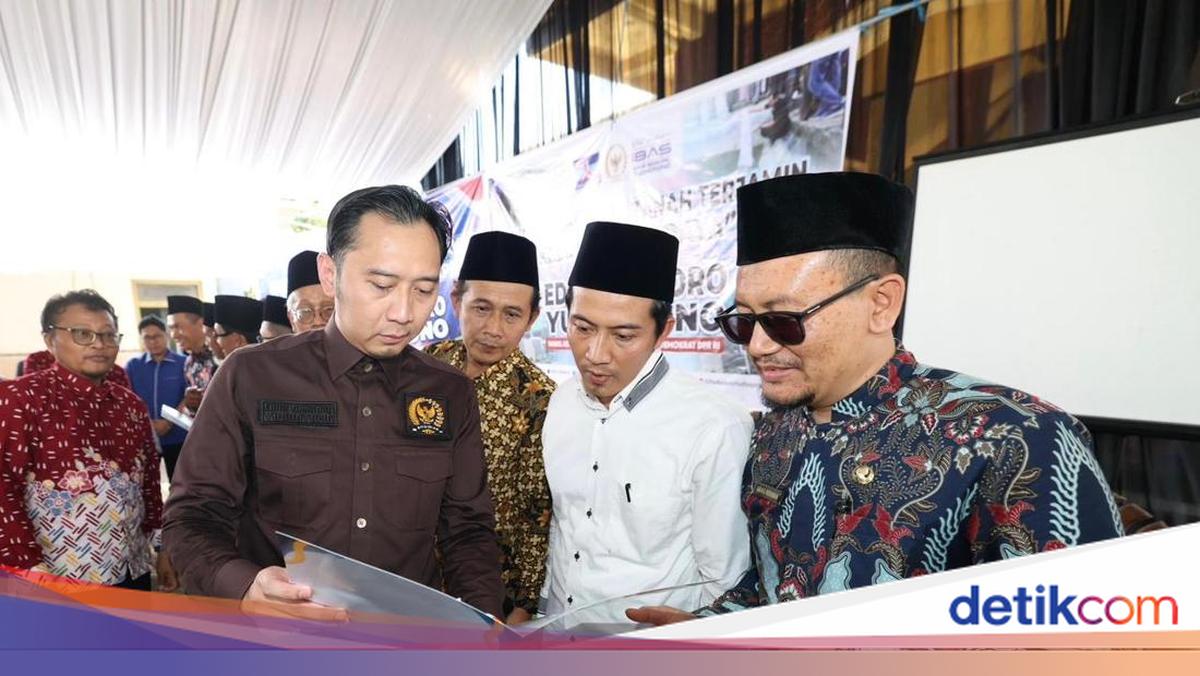
During the event, Ibas also engaged in dialogue with villagers regarding the importance of simplifying land administration to provide legal certainty over land owned or managed for social and religious purposes. “Waqf land must bring benefits to many in the community. The key is to keep its value alive and usable for collective interests and public welfare,” said Ibas in his statement on Monday (11/5/2026). The Chairman of the Democratic Party Faction in the Indonesian House of Representatives stressed that waqf land must deliver broad benefits to society and can be used for various community needs, from education and social activities to places of worship and village empowerment. The Deputy General Chairman of the Democratic Party also highlighted the need to accelerate land administration through the Complete Systematic Land Registration (PTSL) programme. According to him, the programme is implemented to bring agrarian reform justice to the people so that small communities can more easily and equitably obtain rights and administrative certainty. “We want the people to have legal certainty over their land. This acceleration of complete administration and PTSL is carried out to deliver land reform justice that truly favours the community,” he said. On this occasion, Ibas also conveyed his appreciation and support to the Ministry of Agrarian Affairs and Spatial Planning/National Land Agency (ATR/BPN) along with all levels of government that continue to push for the acceleration of land legality and administration for the public. “We certainly appreciate the hard work of the relevant ministry and all parties who continue to help the community obtain land administration certainty. May programmes like this continue to run and their benefits be increasingly felt by the people,” he stated. According to Ibas, clear land legality not only provides a sense of security but also serves as important capital for the community to be more productive and independent in improving family welfare. Therefore, in the dialogue with residents, Ibas encouraged the community to remain creative and productive in utilising village potential, including through community economic empowerment and independent business development. “We hope the community stays enthusiastic, productive, and creative. When the community is independent and has certainty over its assets, opportunities to reduce poverty and unemployment will also increase significantly,” he said. For the Sukowetan community, the handover of waqf land certificates is not merely an administrative agenda but a symbol of attention to community interests and an encouragement for community assets to be utilised more optimally for collective welfare.