
Ibas Promotes Arts and Culture as National Identity and Economic Driver
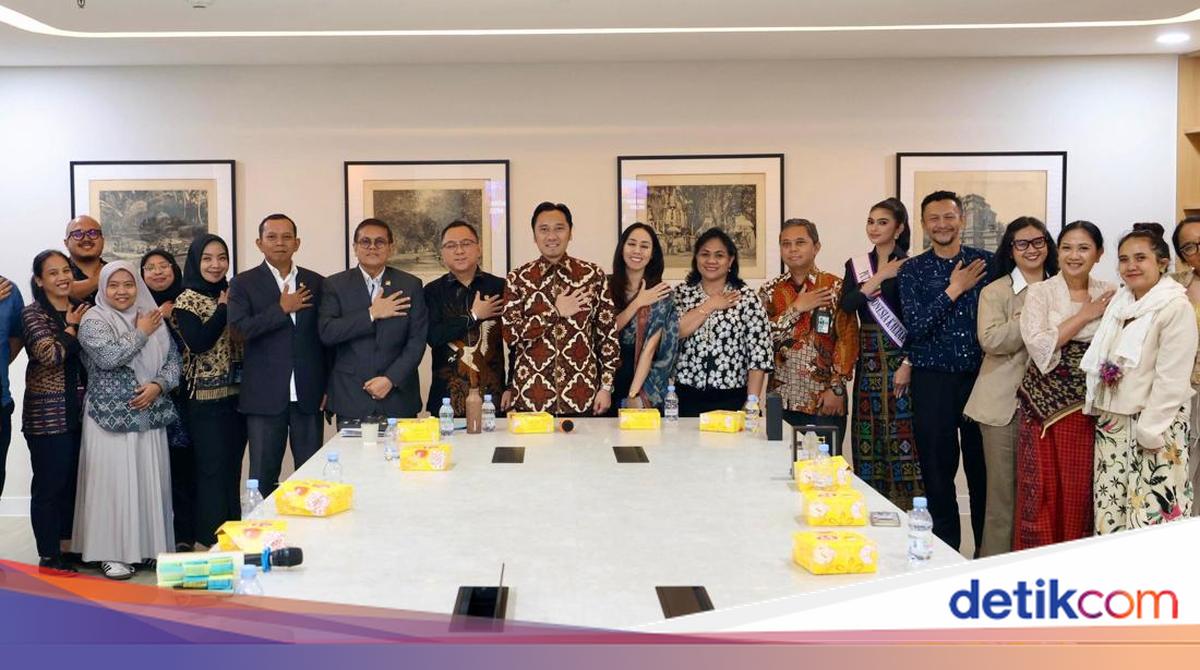
Deputy Chairman of the MPR RI, Edhie Baskoro Yudhoyono (Ibas), emphasised the importance of strengthening creative arts and culture as national identity as well as a force to drive national development. Ibas stated that Indonesia possesses vast historical and cultural wealth that must be continuously preserved and developed.
“Indonesia has extraordinary potential in arts and culture. From various dances, music, to fine arts, and performances. We have wealth that should be strong domestically and can be elevated to the international stage,” Ibas said in his statement on Thursday (16/4/2026).
This was conveyed by Ibas while attending an audience titled ‘Creative Arts and Culture as National Identity: Preserving and Revitalising Indonesian Cultural Heritage’ at the National Museum of Indonesia, Jakarta, in commemoration of World Arts Day, held on Tuesday (15/4).
The event was attended by arts and culture practitioners. The forum served as a national dialogue space to discuss the role of arts in national development.
He also assessed that strengthening the creative arts and culture industry is important not only as an affirmation of national identity but also as a national economic opportunity that can fill the entertainment industry space domestically and globally.
Ibas also invited the younger generation not only to admire foreign cultures but to love, preserve, and develop Indonesian culture.
“We must teach the younger generation not only to preserve culture but also to develop and advance it. We do not only want to conserve, but also to enhance and accelerate the benefits of our culture,” Ibas stressed.
He emphasised that cultural preservation needs to be carried out with a more innovative and creative approach, including by combining cultural heritage with relevant innovations in the digital era.
Amid rapid global developments and digitalisation, Ibas highlighted the challenges faced by Indonesian arts and culture, including technological advancements such as artificial intelligence (AI), NFTs, and digital galleries.
“These technologies can be a great opportunity but also a threat if not managed wisely,” he stated.
Therefore, he assessed that collaboration between Indonesian cultural traditions, both classical and modern pop, with technological innovations needs to be strengthened so that Indonesian arts and culture remain relevant and able to compete in the global market.
Ibas also highlighted the challenges faced by arts practitioners, from limited market access to low economic appreciation of artworks. According to him, the arts and culture sector is not only related to artistic expression but also to efforts to enlighten national life and improve community welfare.
“Arts workers must receive protection for intellectual property rights and policies that favour them, so they can develop their works without worry,” he added.
To strengthen the arts and culture ecosystem, Ibas proposed several strategic steps. Among them are cross-country promotion, strengthening the role of SOEs in the tourism and culture sectors, and improving the quality of human resources in arts and culture such as curators and tour guides.
He also gave special attention to museum management to remain relevant in the digital era. According to him, digitisation of collections, development of interactive features based on technology such as AI and video mapping, and strengthening digital platforms that integrate museums across Indonesia need to be encouraged.
“Museums must become living places, not just static spaces. Technology enables us to present more engaging and educational experiences,” Ibas said.
Ibas affirmed that arts are the successor to the nation’s civilisation as well as an instrument to strengthen national unity and sovereignty.
“Arts is a universal language capable of penetrating any boundaries and becoming a connector between nations. Arts is not only a symbol of national identity but also a reflection of values of tolerance, inclusivity, and social justice in national and state life,” he added.
In the forum, several arts practitioners also conveyed aspirations regarding the challenges they face. Bayu Genia Chrisby from the National Gallery highlighted the limitations of gallery infrastructure. Pradetya Novitri from the Titimangsa Foundation mentioned that theatre arts are increasingly popular with the public but still require sustained state support. Dewi Ratna Ningsih, Putri Indonesia 2025, emphasised the importance of welfare guarantees for arts practitioners, including insurance.
In addition, Nyoman Trianawati highlighted the need for support in space and funding for the preservation of traditional dance. Kathalizsa and Agung Sentausa touched on limited access to funding, weak professional arts management, and the need for regulatory renewal in labour that is more adaptive to creative industry developments.
These views affirm the importance of synergy between the government, legislature, and arts community to build a sustainable cultural ecosystem. The Democrat Party Faction also conveyed several strategic views, including state favouritism through the Dana Indonesiana 2.0 programme and the importance of regulations protecting the intellectual property rights of arts practitioners.
As a form of support for the National Museum of Indonesia, Ibas handed over symbolic assistance to the Head of the National Museum, Indira Estianty Nurjadin. The assistance is expected to support the museum’s operations and development.
Ibas also invited participants to tour the museum, including trying the AI-based interactive feature ‘Paras Nusantara’ that scans visitors’ faces, as well as viewing iconic collections such as the Bhairawa Statue and the Homo erectus fossil that has returned to Indonesia after more than 130 years.
This event affirms that strengthening the arts and culture sector is not only the responsibility of the government but also requires support from the private sector, society, and cultural institutions. Collaboration is deemed important to build a sustainable ecosystem and encourage Indonesia to become a centre for creative culture.