
Hyperscale Green Data Centres Drive Acceleration of Indonesia's Green Industry
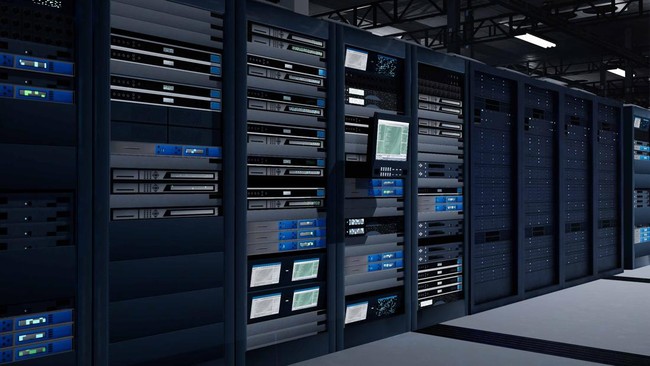
Indonesia holds a strategic opportunity rarely available to any developing nation. On one hand, the digital economy is expanding rapidly and demanding large-scale computing infrastructure. On the other, Indonesia possesses abundant natural resources that form the foundation of the global battery and solar energy industries. If these two strengths converge through the development of hyperscale green data centres powered by solar panels and battery energy storage systems, the result would be more than just a data centre—it would be a complete and competitive green industrial ecosystem.
From a business logic perspective, industries do not grow merely from the availability of raw materials. They grow because stable, large, and long-term market demand exists.
Hyperscale data centres with capacities exceeding 10 megawatts possess precisely these characteristics. Their energy requirements are enormous and operate twenty-four hours a day, three hundred and sixty-five days a year.
When such data centres are designed with significant solar energy penetration and supported by large-scale batteries to maintain supply stability, demand for solar panels and batteries becomes tangible and sustainable.
Demand for hundreds of megawatts of solar panels and tens to hundreds of megawatt hours of batteries is sufficient to stimulate domestic manufacturing investment. Investors do not build factories based on abstract market potential. They require certainty of buyers. Green data centres provide credible anchor demand because their customers are global companies with long-term contracts and operational needs that cannot be deferred.
Indonesia occupies a unique position in the global battery value chain. The country is one of the world’s largest nickel producers, which is a primary material for various lithium-ion battery types. For years, other nations have captured the greatest added value because Indonesia has primarily exported raw materials.
Downstream integration policies have begun reversing this pattern by encouraging the development of refining and manufacturing facilities. However, for Indonesia’s battery industry to truly mature, the country needs a strong domestic market so it does not rely solely on export markets.
To date, the national battery narrative has largely centred on electric vehicles. Yet stationary energy storage batteries have equally large market potential and greater stability because they are tied to electrical infrastructure and industry.
Hyperscale green data centres using large-scale energy storage systems can become major consumers of stationary batteries. Thus, Indonesia’s battery industry would not depend solely on the global automotive industry cycle but would have a solid and resilient domestic demand foundation.
The same applies to the solar panel industry. Indonesia is not yet a dominant player in global solar module manufacturing. However, with high irradiance levels and consistent large project requirements, opportunities abound to build domestic production capacity for modules, support structures, cables, inverters, and system integration.
As hyperscale projects continue to emerge, demand volume creates the economies of scale necessary for local manufacturing to become truly competitive.
In the clean energy industry, scale is the key to cost reduction. The larger the production volume, the more efficient manufacturing becomes and the lower the per-unit cost.
Without large projects that absorb products in significant quantities, domestic industry struggles to develop and compete with imports. Hyperscale green data centres solve this problem by delivering demand in large quantities that meets international quality standards, compelling local industry to advance.
Because these data centres target global enterprise customers with strict ESG standards, the solar panels and batteries used must meet global certification and specifications. This pressure becomes a blessing because it drives technology transfer, improves production standards, and strengthens national engineering capacity. Local industry grows not only in quantity but also in quality—two challenges that have historically been difficult to achieve simultaneously.
The economic impacts are multilayered, beginning at the construction stage with solar and battery installation projects that create jobs for technicians, electrical engineers, construction workers, and systems integration specialists. Then in the operational stage, maintenance personnel, energy performance analysts, control systems operators, and efficiency optimisation experts are needed.
In manufacturing, battery and solar panel factories employ production workers, process engineers, researchers, and supply chain personnel. All of these are skilled-based green jobs with real long-term prospects.
Green jobs are more than merely a popular term. They reflect the shift in economic structure from raw-commodity-based sectors to technology and value-added sectors.
When Indonesia connects nickel mining with battery factories, then links them to energy storage systems for solar-powered data centres, the value chain forms entirely within the country. Each link absorbs labour, generates tax revenue, and enhances national technological capacity.
Strengthening domestic battery and solar panel industries also reduces import dependence. In an uncertain global geopolitical environment, supply chain resilience becomes a strategic issue. Countries with their own production capacity are more resilient to external disruptions. With a strong domestic market from the data centre and renewable energy sectors, Indonesia has a compelling economic justification to build more independent production capacity.