
Hydrogen Turbine Without Compressor Breaks Operating Record, Surpasses NASA Achievement
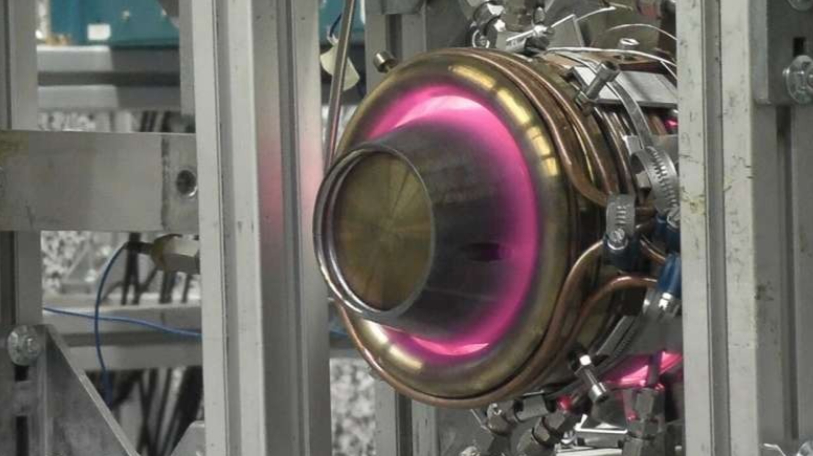
Researchers from the Karlsruhe Institute of Technology (KIT) in Germany have achieved a breakthrough in clean energy technology. Their hydrogen-fuelled gas turbine without a compressor successfully operated for 303 seconds, breaking the previous world record held by NASA at 250 seconds.
This success marks a new chapter in engine efficiency. Unlike conventional turbines, this system requires no mechanical compressor, allowing the energy produced to be utilised fully and more optimally.
According to Daniel Banuti, Director of the Institute of Thermal Energy Technology and Safety (ITES), this achievement represents a step towards utilising hydrogen as an efficient and flexible energy source for the future.
“This is an important step towards a fossil fuel-free energy system that makes more efficient use of hydrogen,” he stated in a report cited from Tech Xplore.
In conventional gas turbines used in power plants and aircraft engines, approximately half of the generated energy is used to compress air before combustion occurs. The energy used for this compression process ultimately cannot be harnessed to generate electricity, which is one reason conventional turbines have efficiency limitations.
The compressor-free turbine technology developed by the KIT team addresses this problem through a different approach. The system employs pressure-gain combustion—a combustion method capable of generating high pressure without mechanical compressor assistance.
Rather than using a compressor, this new technology harnesses detonation waves that form within the combustion chamber. These waves arise from fluid flow instability that creates wave patterns and vortices within the system. This process naturally increases pressure so air does not need prior compression. Consequently, the turbine has fewer moving components, requires less energy, and can significantly improve overall system efficiency.
Although this technology can theoretically use various types of fuel, hydrogen is considered the most ideal choice. This is because hydrogen has a very high combustion reaction speed, enabling it to generate stable pressure increases within the combustion chamber.
These advantages open possibilities for developing turbines that are lighter, cheaper, and highly efficient. In the short term, this technology can be utilised for power generation, whilst in the long term it has potential applications in aviation.
Beyond longer operational duration, the KIT research team also achieved another significant accomplishment: directly generating electricity from the compressor-free turbine.
Connecting the turbine to the combustion chamber presented a major technical challenge. The extremely rapid and intense combustion process made stable energy transfer to the turbine difficult. However, the KIT team successfully overcame this challenge and became the first to operate this type of turbine whilst simultaneously generating electricity from the system.