
Huntara residents of Kayu Pasak receive meat ahead of Eid al-Fitr
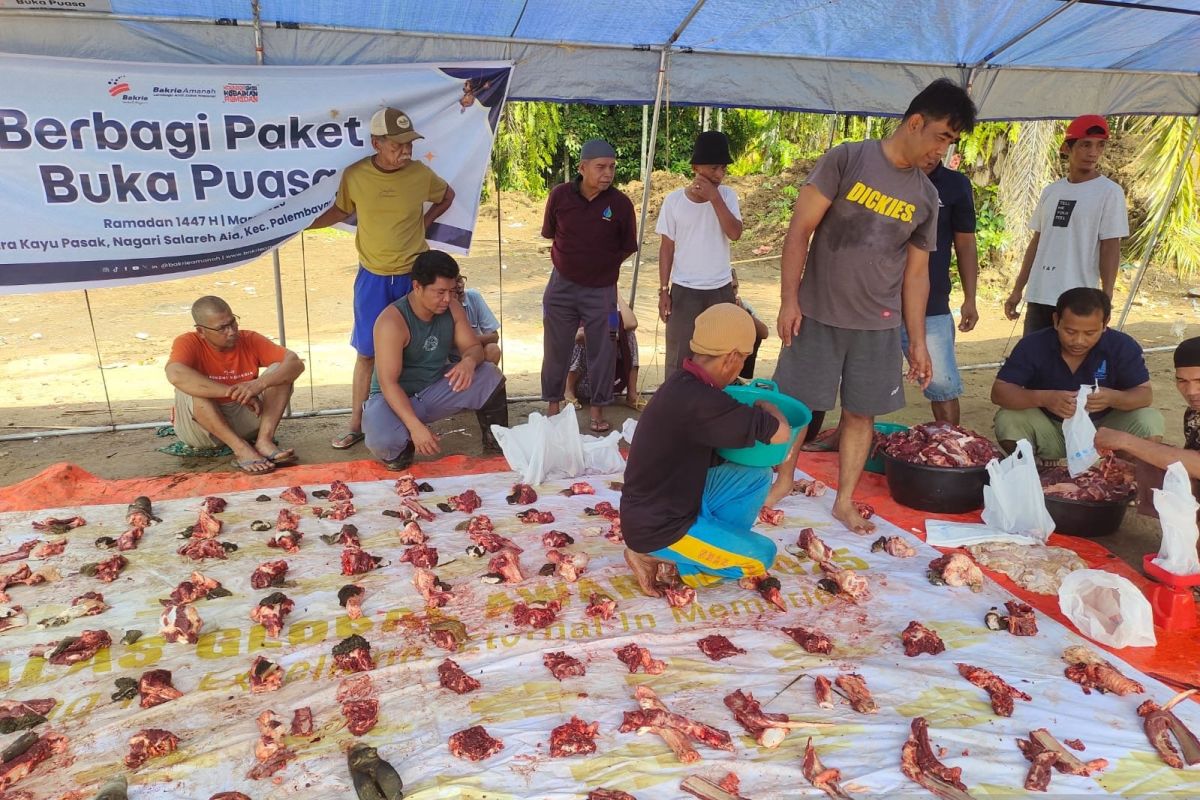
The head of Jorong Kayu Pasak, Nofril Harman, explained to ANTARA on Tuesday evening that “mahantam” is a traditional practice of pooling money to purchase cattle or buffalo for slaughter ahead of Eid al-Fitr.
However, due to residents’ difficult economic conditions following the disaster, the mahantam tradition was at risk of not being carried out. Nevertheless, residents of Jorong Kayu Pasak received funding assistance from a private company to maintain the tradition.
The cattle were slaughtered on Tuesday morning and immediately distributed among all 117 families living in the temporary housing. With the cattle weighing 115 kilogrammes, each resident received approximately one kilogramme, consisting of half a kilogramme of meat and half a kilogramme of other cattle parts.
“The Bakrie Group provided funding. Three cattle were given, with weights of 115 kilogrammes. Plans are to distribute two of them to Nagari Maninjau, since we have three cattle,” he said.
He added that meat is indeed one of the mandatory dishes during Eid celebrations and has long been a tradition observed every year. “Here during the holiday, three things come to mind: clothes for Eid, cakes, and meat. Even in difficult circumstances, meat must still be present. On the first day of the festival, meat dishes are essential,” he explained.
Evi, one of the temporary housing residents of Kayu Pasak, explained that she always follows the mahantam tradition and is grateful to continue it at the huntara despite the changed circumstances. Evi will cook the meat into rendang, as is customary with mahantam dishes.
“The important thing is that the tradition continues, even in these circumstances. Of course, we must accept the situation—what matters is that conditions improve. When permanent housing is available, we can continue the tradition,” said Evi.