
Hundreds of Post-Disaster Pustu in Sumatra Have Resumed Operations
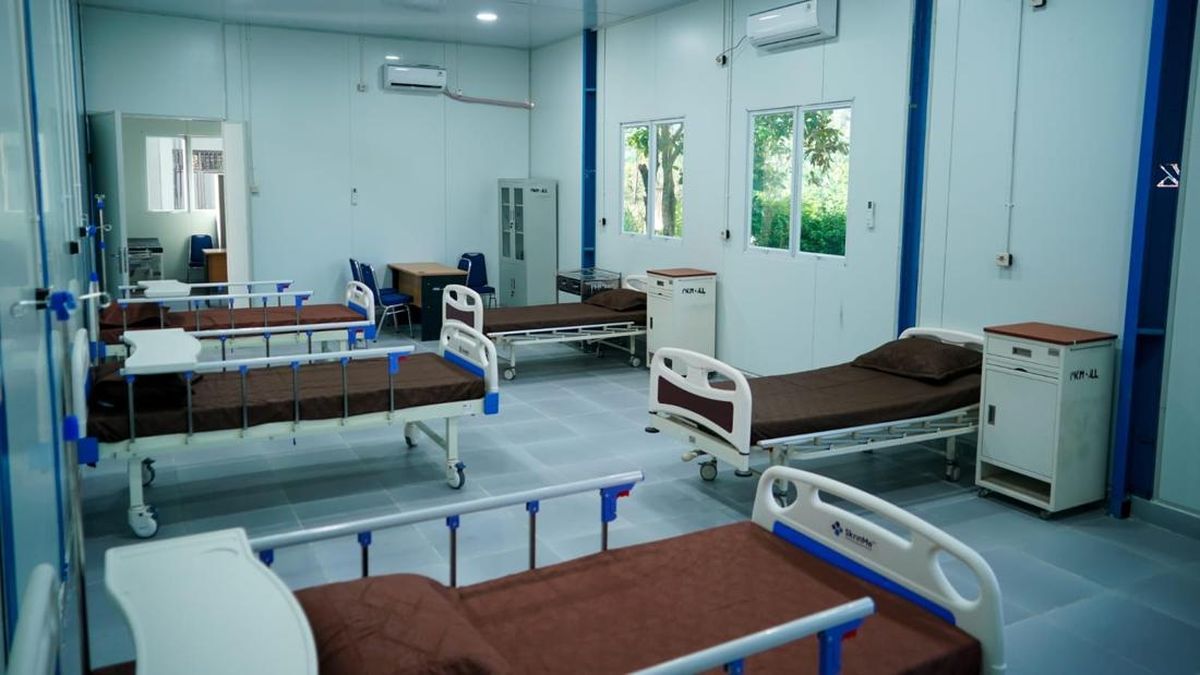
Hundreds of Puskesmas Pembantu (Pustu) in Sumatra have now resumed operations, alongside the ongoing recovery of health facilities in disaster-affected areas. Healthcare services are increasingly accessible to survivors, reaching down to the community level.
According to data from the Satgas PRR, out of a total of 2,952 Pustu in Aceh, North Sumatra (Sumut), and West Sumatra (Sumbar), 2,522 units were impacted by the disaster. At the start of the response phase on 1 December 2025, operations at 148 Pustu had been halted due to severe damage.
With accelerated rehabilitation efforts, that number has significantly decreased. By early April 2026, only 21 Pustu remained non-operational. The latest data from Satgas PRR as of 17 April 2026 shows that the number of Pustu still in rehabilitation has dropped to just 12 units.
These 12 Pustu are distributed across Aceh and Sumut. In Aceh, the units still under handling are located in East Aceh, such as Pustu Blang Seunong, Seunuebok Bayu, Bandar Baro, Alue Tuwi, up to DK 1 Peunaron Baru and Tanjung Tok Blang, with progress involving new construction, cleaning, and renovation.
In Sumut, the Pustu still in process include those in Sibolga City and Central Tapanuli Regency, such as Pustu Hutabarangan, Po Simargarap, Sibuluan Nalambok, Sibio-bio, Sigiring-giring, and Huraba, most of which are in the stages of reconstruction and renovation completion.
Meanwhile, all Pustu in West Sumatra have fully resumed operations, indicating even recovery progress in that region.
Beyond Pustu, the overall recovery of health facilities shows encouraging results. Out of 130 government hospitals in the three provinces, 87 were affected by the disaster. In early December 2025, nine hospitals had temporarily ceased operations, but all have now returned to normal functioning.
At the primary care level, out of 1,265 puskesmas, 867 were impacted, leading to 152 puskesmas being non-operational at one point. Currently, all puskesmas have resumed serving the public, restoring full access to district-level healthcare services.
This accelerated rehabilitation is inseparable from cross-ministerial and institutional collaboration, particularly the active role of the Ministry of Health, which has been directly involved in the field alongside volunteers and healthcare workers to ensure services resume.
Head of Satgas PRR, Muhammad Tito Karnavian, expressed appreciation for these swift actions. He emphasised the importance of continuous healthcare services for survivors.
“I give high appreciation to the Health Minister for personally going down to the field and truly working to manage everything with volunteers and his team, so that in less than a month, all public hospitals are 100 percent operational,” said Tito in Jakarta recently.
Tito stated that recovering health facilities down to the lowest level is key to maintaining community social resilience post-disaster.
“Then also the puskesmas, which were 867—not a small number— are now 100 percent operational. Only the Puskesmas Pembantu (Pustu) remain to be completed; this is important for treatment and so on,” he concluded.