
Hundreds of Hazardous Waste Containers Held Up, Batam Environment at Risk
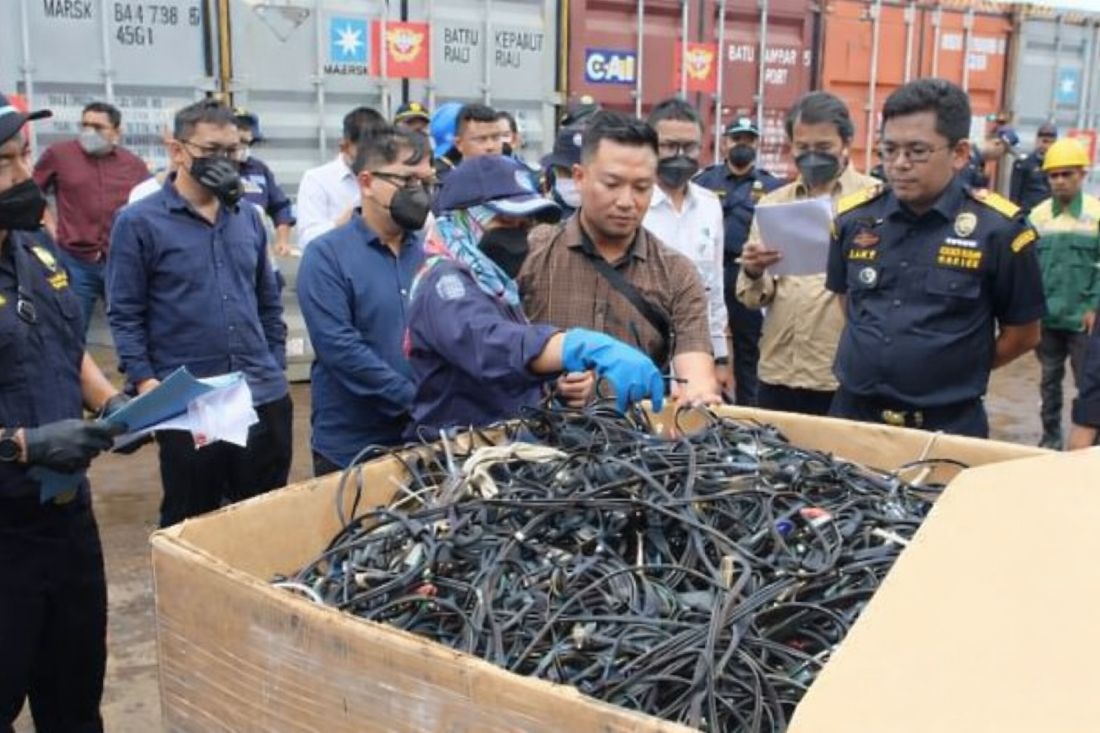
The government faces a policy dilemma with no truly comfortable solution. Hundreds of containers of hazardous and toxic waste (B3) originating from the United States are still held at Batu Ampar Port in Batam, Riau Islands. This accumulation not only burdens the port’s capacity but also increases the risk of environmental pollution in the coastal area.
As of Wednesday (8/4), the repatriation (re-export) process for the waste is progressing slowly. Data from the Compliance and Information Services Division of Batam Customs records that out of a total of 914 containers that entered since the end of 2025, only 98 containers have been successfully returned to the country of origin.
This situation has raised concerns among various parties, particularly regarding the potential for environmental damage. The electronic waste stored in open areas is vulnerable to corrosion due to exposure to sea air and saltwater.
Founder of the environmental community Akar Bhumi, Hendrik Hermawan, stated that corrosion on electronic materials could release harmful chemicals into the surrounding environment.
“This is hazardous waste. If left too long, the materials will corrode, and their elements could contaminate the soil and waters around the port,” he said on Wednesday (8/4).
In addition to the pollution threat, this issue also leaves uncertainty regarding responsibility. The legal status of several importer companies is said to be unclear, including PT Esun Internasional Utama Indonesia.
Referring to the polluter pays principle, the cost of repatriation should be borne by the importer. However, if the company is no longer active, the burden could potentially shift to the state.
“If the company no longer exists, who will be responsible? We are worried that the government will ultimately have to bear the costs with state funds,” he said.
WAITING FOR APPLICATION
Meanwhile, Batam Customs affirmed its position as merely an operator in the re-export process. Head of the Compliance and Information Services Division of Batam Customs, Setiawan Rosyidi, stated that they are still awaiting official applications from the importer companies along with approvals from relevant agencies.
“We are only operators. If permits from BP Batam and the Environmental Agency are available, we will process them. Currently, we are still waiting for those submissions,” he said.
This case emerged following a report from the Basel Action Network (BAN) received by Indonesia’s representative in Geneva regarding alleged illegal shipment of waste from the United States to Batam. The Ministry of Environment and Forestry had previously classified the material as B3 waste with code A108d since October 2025.
Although the re-export process began in January 2026, no significant acceleration has been seen to date. Environmental activists are urging the central government to take firm steps immediately so that the waste accumulation does not turn into a larger pollution crisis.
Without quick handling, the hundreds of waste containers are feared to become a “time bomb” for Batam’s coastal environment.