
Hundreds of Culinary SME Operators in Bandung Join Food Bank Association
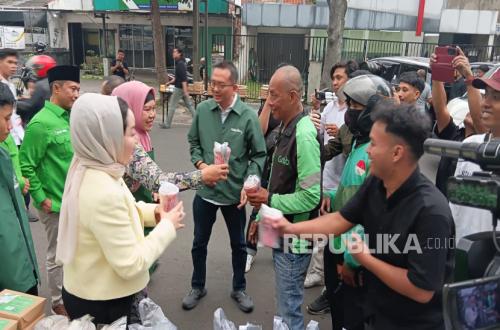
Approximately 350 culinary SME operators in Bandung have formally established an association and cooperative programme under the Food Bank initiative. The formation of this traders’ association was initiated by the West Java regional leadership of the PKB party.
The programme seeks to enhance business quality and expand market reach. According to Syaiful Huda, chair of the PKB’s West Java regional board, this step represents the institutionalisation phase of the Food Bank programme, which previously consisted solely of a voluntary movement to purchase UMKM products for social activities.
“Now, the owners of small food stalls are brought together in a single organisation so that they have collective strength in improving product quality and business competitiveness,” said Huda on Saturday, 14 March 2026.
According to Huda, the Food Bank programme, which was initiated two weeks earlier, has now begun to focus on strengthening institutional capacity through the formation of associations and cooperatives of culinary SME operators. This platform is important so that small business operators no longer work in isolation but can become acquainted with one another, collaborate, and improve product quality collectively.
“Alhamdulillah, the Food Bank programme has now reached the institutional level. The owners of food stalls have agreed to establish an association and cooperative. This way they can get to know each other and collaborate to improve product quality,” he said.
Through this platform, Huda said, the West Java Food Bank team is also preparing various mentoring programmes for culinary SME operators. One initiative involves engaging professional trainers to provide coaching to the stall owners, covering improvements to hygiene standards, enhancement of food flavour, and product packaging improvements.
Huda stated that the training is designed so that culinary products from SME operators are not only suitable for sale in their immediate surroundings but can also compete in broader markets.
“We will conduct coaching sessions with professional chefs. The aim is for them to learn how to improve hygiene, food taste, and packaging. So their products become higher quality,” he asserted.
Once product quality improves, he said, SME operators participating in the association and cooperative are expected to no longer rely solely on sales in their immediate vicinity or wait for customers to visit their stalls. They are being encouraged to target larger markets, such as supplying meals for parliamentary committee meetings, catering government regional activities, collaborations with companies, and other large-scale events.
“We want this association and cooperative to be able to raise both quality and boost their sales to a mid-level market,” he said.
In its initial phase, the programme has brought together approximately 350 culinary SME operators in Bandung as pioneers. However, the Food Bank movement is expected to expand to all districts and cities across West Java.
All PKB parliamentary members and party structure leaders at the district level have been asked to implement similar programmes in their respective regions.
“Around 350 in Bandung. Actually, this programme also exists in all districts and cities because all PKB parliamentary members and party structure leaders must implement the Food Bank in their respective regions,” he said.