
Hundreds Join Traditional Hair-Washing Ritual in Cisadane River Ahead of Ramadan
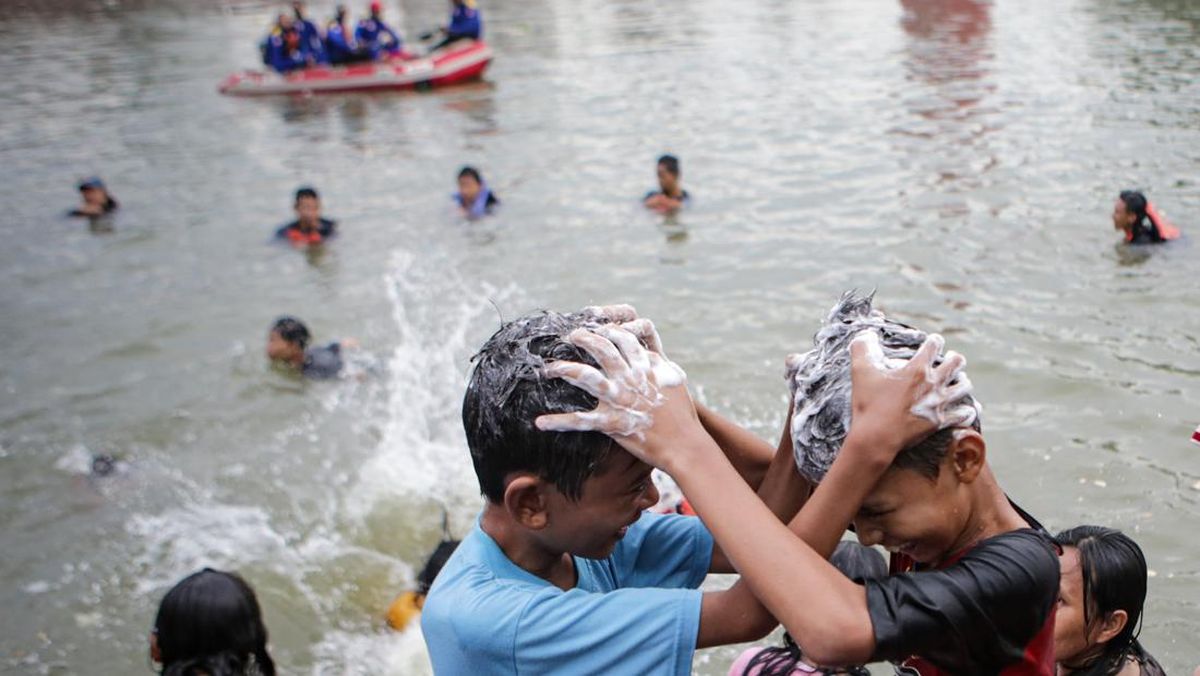
Hundreds of residents of Babakan, Tangerang City, took part in a communal hair-washing tradition in the Cisadane River on Tuesday afternoon (17 February). The annual ritual was held as part of celebrations welcoming the holy month of Ramadan.
Residents appeared enthusiastic about the activity, which has been passed down through generations. Although the Cisadane River had recently been contaminated by chemical waste, the communal hair-washing tradition was carried out with great spirit and a festive atmosphere.
Community members of all ages, from toddlers to adults, gathered on the banks of the Cisadane River to participate in the tradition. In addition to washing their hair, some residents plunged into the river under the supervision of officers standing by in rubber boats.
One resident, Titi, said the tradition is routinely held every year ahead of Ramadan. She said she remained confident about participating because the river water had reportedly been tested beforehand.
“This is customary — bathing and washing hair together ahead of the fasting month every year. There are also residents from outside the area. The water was tested before the event,” said Titi.
Meanwhile, Supendi, Head of the Cultural Affairs Division at Tangerang City’s Culture and Tourism Agency (Disbudpar), said the communal hair-washing tradition has been designated as intangible cultural heritage belonging to Tangerang City.
He noted that test results showed the water quality of the Cisadane River had returned to normal levels.
“Today marks a historic moment, particularly for the residents of Babakan Sub-district, Tangerang District, as part of the communal hair-washing tradition welcoming the holy month of Ramadan,” he said.
“Regarding the previous contamination, research by the regional water utility (PDAM) and the police has confirmed there are no negative effects, although fish from the river are still not recommended for consumption,” said Supendi.
The communal hair-washing tradition is regarded as an effort to preserve generational cultural heritage whilst strengthening social bonds among residents in the area.