
Hundreds Evict Cultivators from Mosque Endowment Land in West Lombok
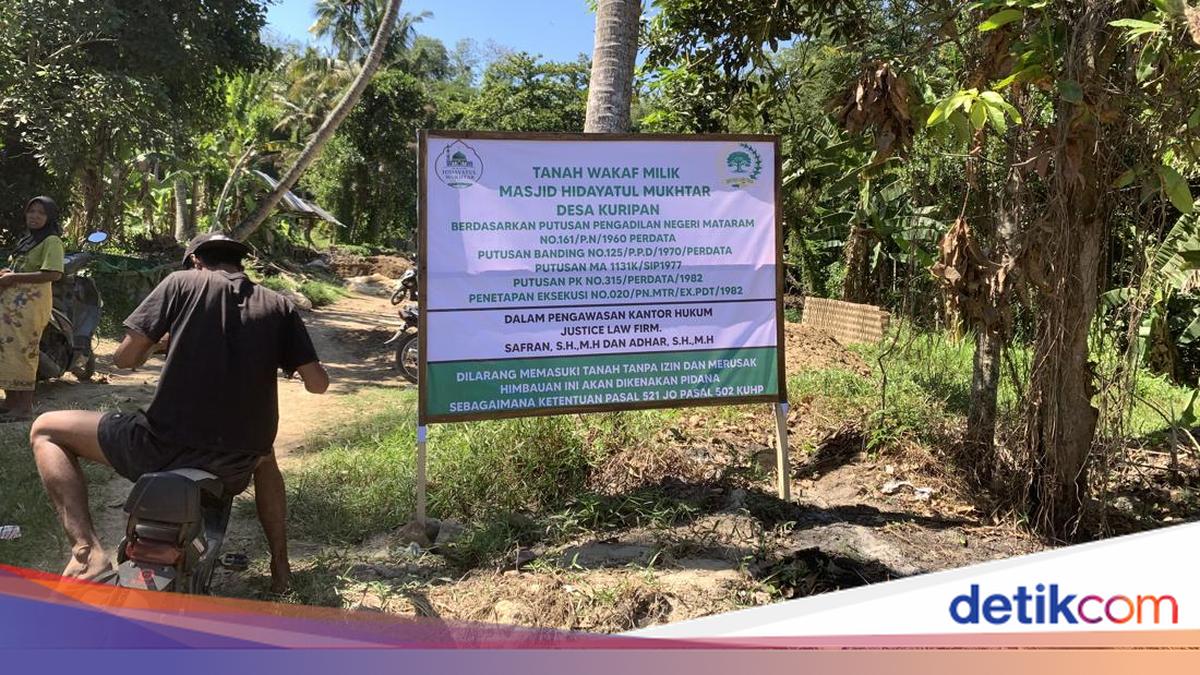
Hundreds of residents descended upon the Hidayatul Mukhtar Mosque endowment land in Kuripan Village, Kuripan District, West Lombok, on Thursday to clear the area and install signboards. The land, covering approximately four hectares, has been cultivated by residents from Babussalam Village in Gerung District. The crowd, comprising mosque administrators and Kuripan villagers, erected six signboards asserting the mosque’s claim to the land as a religious endowment and demanded it be vacated. Kuripan Village Head Hasbi stated that the eviction was based on Mataram District Court Decision No. 161/P-N/1960/Perdata. He explained that the land had been worked by ten farmers from Bilekedit Hamlet, Babussalam Village, who were merely cultivators. ‘We are clearing it so that it is not claimed as private property. They are only cultivators,’ he said. The eviction was rejected by the farmers. One cultivator, Bahar, argued that the action could not be carried out without a court-ordered execution mechanism. He objected to the process being based solely on a notification letter regarding the clearance of the mosque’s endowment land, issued by the mosque’s legal counsel. ‘An execution should be carried out through the court, not just based on a letter from their lawyer,’ he stated. Bahar also questioned the validity of the endowment status, citing the lack of clarity regarding the original donor who bequeathed the land to the Hidayatul Mukhtar Mosque. He noted that he had cultivated the land for decades and had been paying taxes on it. The farmers’ legal representative, Ahmad Syaifullah, assessed that the eviction was not conducted according to legal procedure. He insisted that any execution of a disputed object must be carried out through the court and involve a bailiff. ‘Any takeover and handover of the object referred to in the ruling must go through the court. It cannot be taken over directly like this, as it triggers social conflict,’ he said. Syaifullah did not dispute the existence of the 1960 Mataram District Court ruling that declared the land as mosque endowment property. However, he argued that the issue lay in the execution mechanism. He also stated that a constatering, or physical verification of the object, was necessary because the physical condition and boundaries of the land have changed over more than six decades. ‘It is not certain that the object described in the 1960 ruling is exactly the same as the physical land controlled by the residents for decades,’ he stressed. According to Syaifullah, if the mosque wishes to enforce the ruling, it should file an execution request with the court so that a constatering can be conducted first. He also suggested that, given the land has been occupied by the heirs for decades, the party claiming the right to the land could file a lawsuit for unlawful act to legally test the status of the disputed object before requesting execution.