
Human Rights Minister to Launch Human Rights Classes for Journalists and Writing Competition
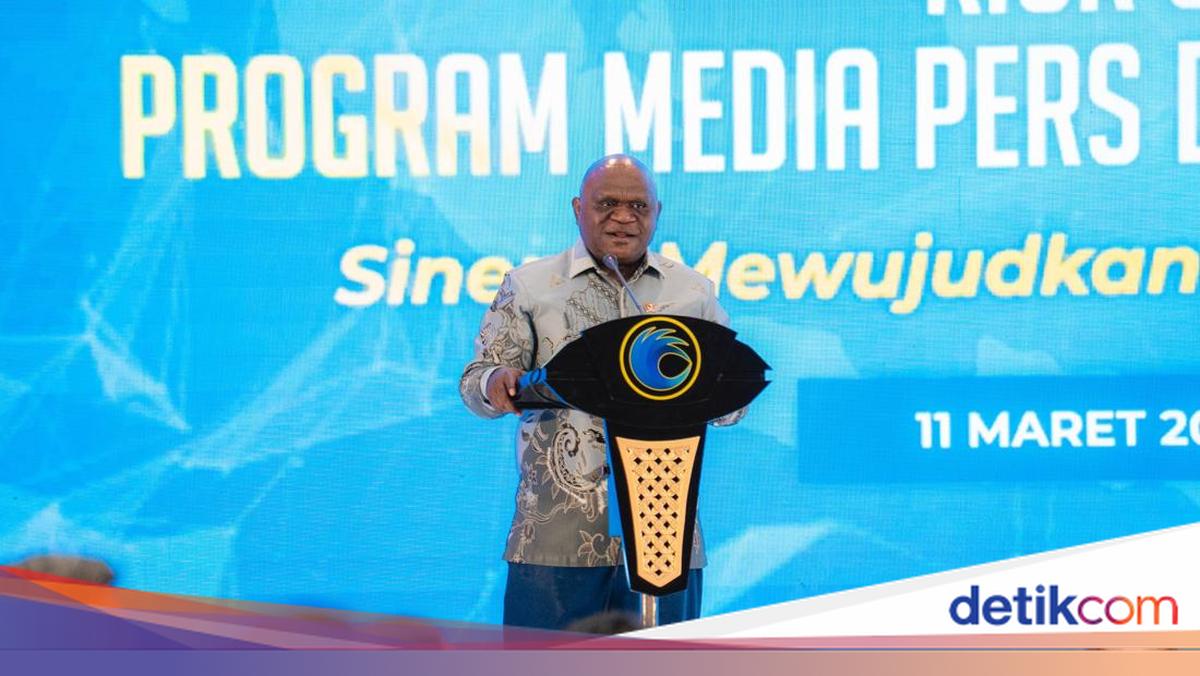
Mass media is recognised as playing a crucial role in strengthening the development of human rights civilisation in Indonesia. Beyond serving as a source of educational information, the press is viewed as instrumental in public oversight and fostering societal awareness of human rights values.
The government remains committed to collaborating with media in building public awareness and reinforcing democratic practices throughout the nation. This was stated by Human Rights Minister Natalius Pigai during a presentation at the “Kick Off and Launch of the Media Press and Human Rights Civilisation Development Programme in Indonesia” event.
“Without involving the media community and the press, it is difficult. In any case, the press is one of the greatest forces capable of building human rights civilisation development in our country, the Republic of Indonesia. Therefore, the press is a vital pillar in developing human rights civilisation,” he said in a written statement on Thursday 12 March 2026.
He assessed that media holds an important role in campaigning for human rights development across various sectors, ranging from civil and political spheres to economic, social, and cultural domains.
“Media must be able to campaign positive matters about national development, especially human rights development in civil and political fields, in economic, social, and cultural spheres,” he added.
Pigai further noted that collaboration between the government and media is expected to open space for constructive dialogue whilst strengthening public participation in efforts to advance human rights. Similar cooperation is also anticipated from ministries, institutions, and local governments to expand media involvement in building a civilisation that respects human rights.
As part of these efforts, the Ministry of Human Rights is preparing several national programmes targeting journalists. These programmes include human rights education classes and competitions and awards for journalism works featuring human rights themes.
According to Pigai, these programmes aim to strengthen the press’s role in promoting human rights civilisation development in Indonesia.
“We will conduct Human Rights Classes for Journalists. So all journalists in Indonesia will be able to access special classes for journalists, at least in terms of knowledge,” he explained.
Furthermore, Pigai explained that the Ministry of Human Rights also plans to hold a journalism competition featuring human rights issues. Works highlighting human rights problems and efforts to deliver justice will be evaluated in the competition.
“So journalists’ works containing human rights content, uncovering facts of suffering, grievances, and those bringing justice and others will be used for evaluation and there will be awards for that,” he said.
On this occasion, he also acknowledged that government and media relations are often perceived as distant. However, according to him, both play complementary roles in democratic life.
“We want to convey that the government has goodwill towards the press. Our relationship is one of interdependent symbiosis, mutually respecting independence but also collaborating,” he stated.
Moreover, Pigai cautioned that developing human rights civilisation cannot proceed effectively without the support of the media community and press, which have significant influence in shaping public consciousness.
Similarly, Deputy Minister of Communication and Digital Affairs Nezar Patria explained that the National Commission on Human Rights has previously recognised mass media as part of human rights defenders.
“The National Commission on Human Rights has stated that journalists are also human rights defenders. This means that journalists are also defenders of human rights,” explained Nezar.
He assessed that this role stemmed from the journalist’s duty to report various incidents of human rights violations whilst monitoring the exercise of power.
“The press is also seen as promoting advocacy and defence for communities that are victims of human rights violations,” he concluded.
The event, held on Wednesday 11 March, was also attended by human rights figure Jimly Asshidiqie, human rights activists, Chairman of Commission XIII Willy Aditya, Deputy Chairman of the Press Council, and leaders of major media outlets.