
Human Rights Activist Haris Azhar Urges Pigai to Debate Police Violence Instead
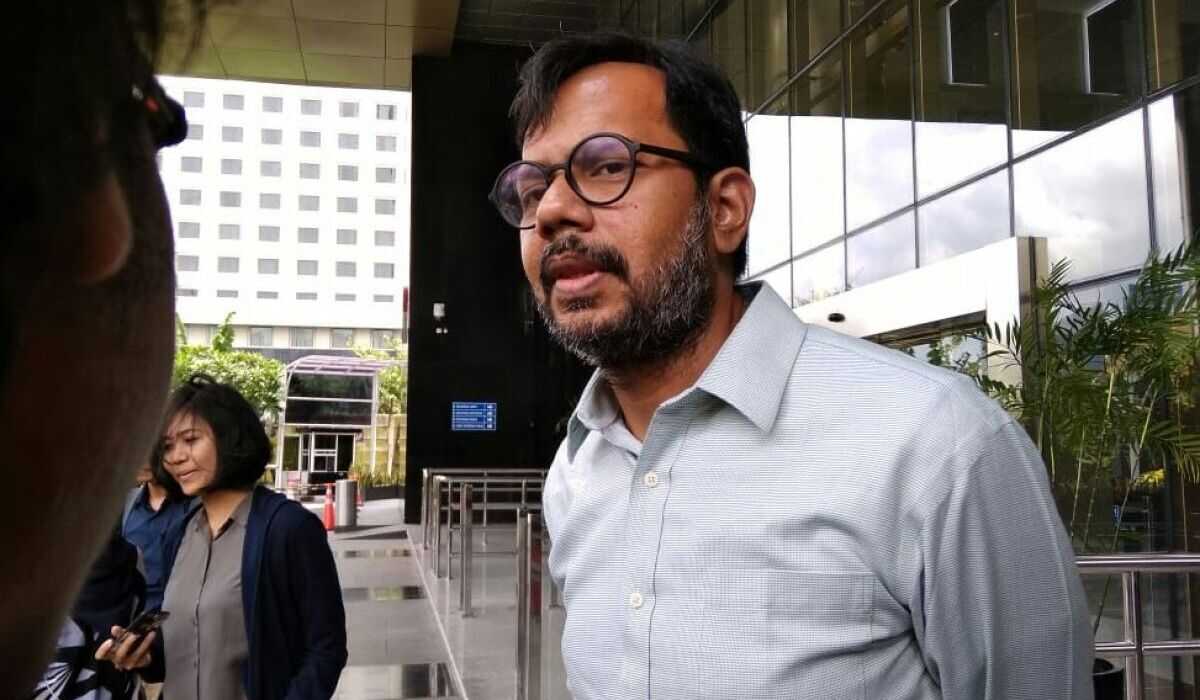
Human rights activist Haris Azhar has responded to a public debate challenge issued by Human Rights Minister Natalius Pigai to UGM Professor Zainal Arifin Mochtar (commonly known as Uceng). According to Haris, the proposed debate is unnecessary and would only benefit human rights violators.
“In my view, both are people who work on human rights issues, but they hold different positions today. A debate between these two will only please those who violate human rights. There is no serious issue between them,” Haris stated on Saturday (28 February 2026).
Haris highlighted concerns about Pigai’s claim that there were no human rights violations in the implementation of the MBG programme before a court ruled otherwise. According to Haris, debating the MBG issue would be ineffective since Pigai bears no responsibility for its implementation.
Furthermore, Haris argued that Pigai should accept input and criticism from academics like Uceng with an open mind rather than challenging them to a debate. He noted that even if Uceng won the debate, it would not change Pigai’s policies as Minister.
“If Prof Uceng were to win this debate, Minister Pigai would still be unable to change policies that are not his responsibility. As for claiming to have studied human rights from age five, that is merely personal experience. Neither Uceng nor I were with Pigai when he was five years old. For the Minister, there is no need to engage in this debate hastily, because the real point may be about accepting criticism, and that is where it matters—the Minister listening to critique. Especially from the human rights community, so he should be accustomed to hearing criticism from an expert like Prof Uceng,” Haris said.
Haris further suggested that Pigai would be better served using his time and energy to address issues regarding policing and natural disasters.
“His energy should instead be used to debate companies that contribute to natural disasters, police units that continue to commit violence, those who incorrectly apply the new criminal code, and military and police personnel who occupy civil service positions,” he stated.
The debate challenge originated from an exchange on social media platform X (formerly Twitter) between Pigai and Uceng, who promised to discuss individual controversial human rights cases.
The exchange began when Uceng expressed willingness to learn about human rights from Pigai.
“I agree with you, professors are often overrated. I would like permission to learn to understand human rights from you. I want to discuss and debate each human rights case in Indonesia that you claim to already understand very well. Please name when and where I can learn,” Uceng wrote on his X account (@zainalamochtar) on Thursday (26 February).
Pigai immediately responded and agreed to a live debate format on a national television channel.
“I agree on a national TV and live. You invite me, then you prepare it. We will speak in academic terms. I truly want to teach you about human rights so you understand,” Pigai replied.
He also suggested that Uceng watch his YouTube content with Fadli Zon beforehand as additional learning material, expressing hope that Indonesians would watch the debate to assess the depth of a professor’s human rights knowledge.
“But please watch this first for some additional human rights learning before debating with me. Honestly, I really want Indonesians to watch how knowledgeable a professor is about human rights,” he stated.
Uceng then requested that Pigai contact the television station, claiming he had no power to arrange media coverage.
“I don’t have that power, sir. Hopefully a national TV can facilitate it. If you approach them, it might carry more weight,” Uceng replied.
He also cited his experience as a human rights researcher at the Centre for Human Rights Studies at the Islamic University of Indonesia (UII) in Yogyakarta for three years and his Master’s degree in Human Rights Law from the United States, affirming his readiness to learn further.
“Thank you for the YouTube content. I have only three years of experience as a researcher at the HAM Centre at UII Yogyakarta and studied a Master’s in Human Rights Law in America. I would certainly enjoy learning,” he added.
Through his X account on Saturday (28 February 2026), Pigai emphasised that he only desired an academic and substantive debate regarding human rights knowledge, not merely a discussion of his ministry’s core duties and functions (Tupoksi).
Pigai argued that assessment of Tupokski falls within the purview of the President and Parliament, not individuals. He also questioned Uceng’s reluctance to engage in academic argument.
“Hopefully it is not because you fear or doubt engaging in a debate on human rights knowledge and then want to shift to the matter of Tupoksi. By now I understand your capacity. I have decided! Case closed,” Pigai wrote in his post.
Responding to this statement, Uceng questioned the Minister’s integrity through his personal account. Uceng alleged that Pigai had intervened with senior journalist Rosianna Silalahi (Mbak Rosi), who was meant to moderate the debate on a national television channel.
“Answer Mbak Rosi—she was told not to ask certain questions. How does the host get intervened by Minister Pigai? At around 4 p.m.? Intervention? But don’t worry sir, I won’t say that attempting to intervene with Mbak Rosi reflects your quality. I hope you were just joking. So, we will still meet, yes?” Uceng replied.
Furthermore, Uceng challenged Pigai to prove his claims about his human rights understanding, which Pigai frequently asserts he has studied since childhood. According to Uceng, the debate is actually necessary to address these claims.