
Human Resource Readiness is a Key Point for Indonesia to Have Reliable Cyber Security
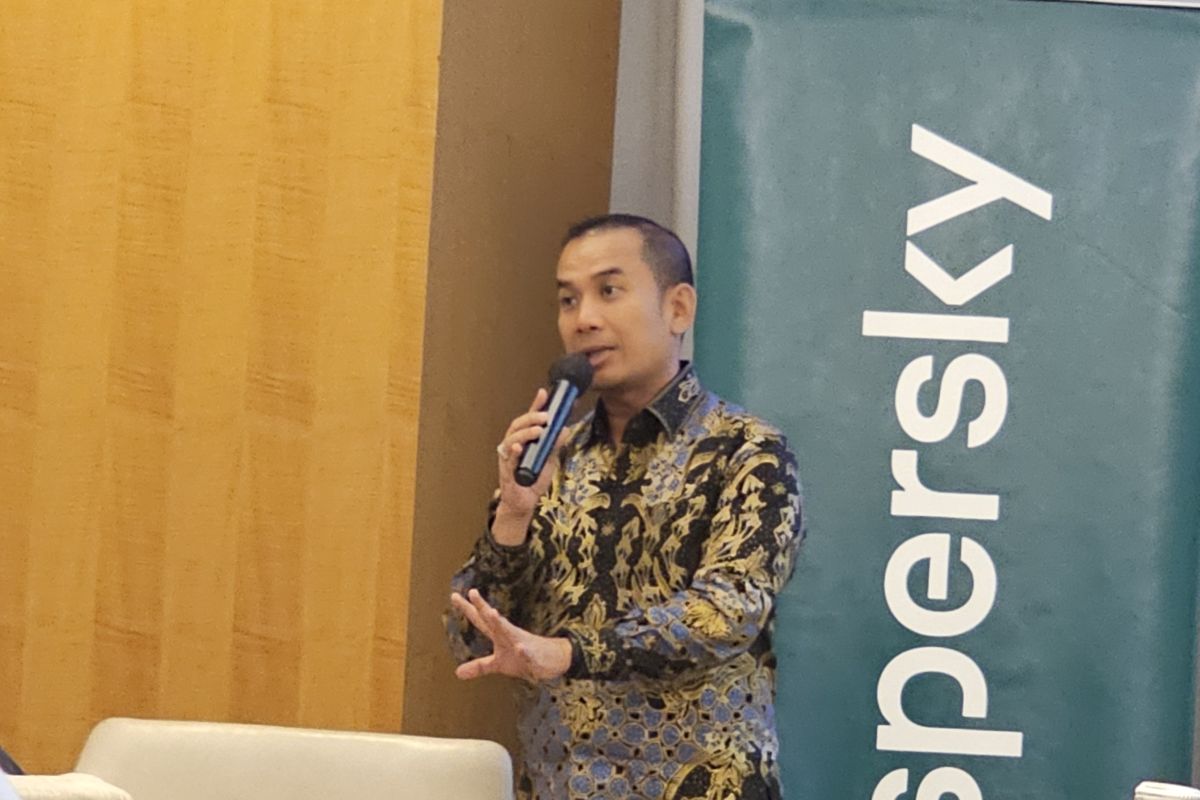
Jakarta - Country Manager of Kaspersky Indonesia, Defi Nofitra, stated that the readiness of human resources (HR) is a crucial point for Indonesia to possess a reliable cyber security system.
According to him, the current number of digital talents in Indonesia who specifically study cyber security through formal education pathways is still insufficient to meet industry needs, particularly in the business world, which frequently encounters cyber attack issues.
“I want to highlight the human resources aspect. It must be acknowledged that Indonesia is still quite low (in HR). Meaning, the number of people who understand cybersecurity is still small,” said Defi in a brief interview in Jakarta on Wednesday.
He stated that development is needed from the education side so that awareness and the need for cyber security can grow well in Indonesia.
Currently, according to him, Indonesia only has a handful of universities that specifically make cyber security a dedicated educational programme, one of which is Telkom University in Bandung.
The situation in the industry is that workers in the cyber security field are filled by graduates from unrelated disciplines such as Electrical Engineering or Mechanical Engineering, and they usually only learn cyber security independently.
With that condition, it can be said that Indonesia is still not optimal in addressing the need for digital talents in the cyber security field for the industry.
“So, many of their bachelor’s degrees are in IT, and only at the master’s level do they specialise in cybersecurity. We rarely find talents who are directed to delve into cybersecurity from their bachelor’s level. So, one of our missions is to build those cyber security talents,” said Defi.
In terms of cyber security issues, Kaspersky recorded that in 2023, there were 370,000 new malware variants globally every day. Then, two years later, in 2025, the number of cyber attacks reached 500,000 malware variants every day.
In Indonesia itself, in 2025, there were 14,909,665 cyber attacks. With the total number of spyware identified by Kaspersky reaching 85,560.
It was also identified that 20 percent of companies in Indonesia experienced cyber attacks on their supply chain systems last year. The cause of cyber attacks can surprisingly stem from vulnerabilities in the most trusted parties by the company.
It is recorded that 22 percent of companies in Indonesia experienced cyber attacks due to such relational vulnerabilities.
Reflecting on all these findings, enhancing human resources is important so that in the future, cyber security in Indonesia can be handled by reliable domestic digital talents.